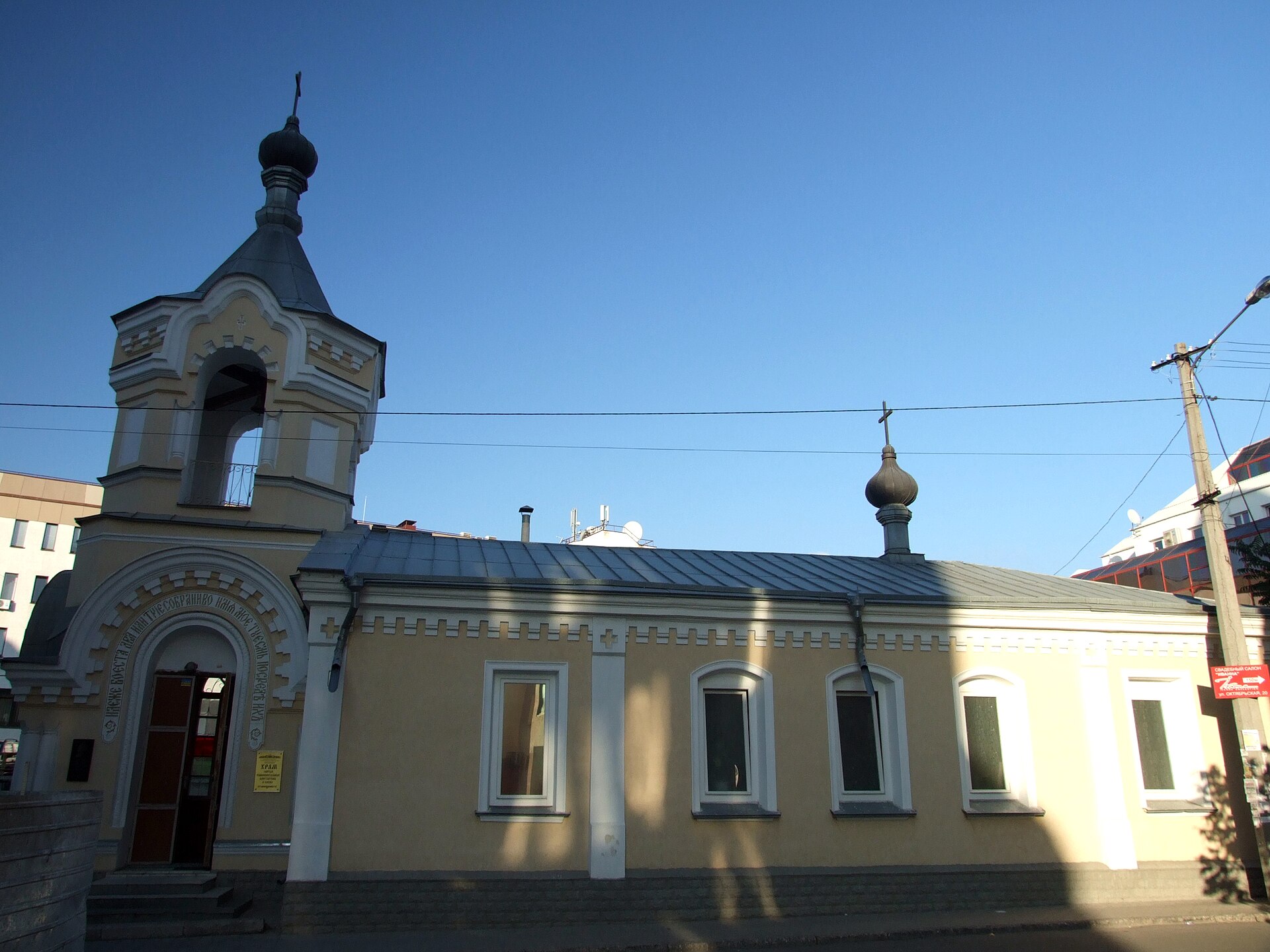
The Church of Saints Constantine and Helena in Simferopol is one of those quiet places where the past lingers in the air, untouched by the rush of modern life. Built in the mid-19th century, it stands on a street corner that once hummed with the energy of the old city, now a quiet witness to the lives that unfolded around it. Though small in size, the church carries a weight far beyond its modest dimensions—it has become a symbol of faith and resilience, surviving wars, revolutions, and the slow march of time.
The architecture is simple yet striking, a blend of traditional Orthodox design with subtle local influences. White stone walls rise to a single dome, unassuming but elegant, while the interior avoids grandeur in favor of something more intimate. The iconostasis, crafted in a classic style, and the faded frescoes on the walls create an atmosphere of quiet reflection. There’s a sense that time moves differently here, as if the outside world’s noise fades into the background the moment you step inside.
The church’s history is woven into the fabric of Simferopol itself. Constructed in 1848, when the city was growing into a cultural and administrative hub of Crimea, it served as more than just a place of worship. For the merchants, officials, and military officers who settled here, it was a gathering spot—a place to pray, to talk, to find solace. Like many religious sites, it suffered during the Soviet era, but unlike some, it was spared destruction. Perhaps its small size kept it off the radar, or maybe it was simply luck.
Today, the Church of Saints Constantine and Helena remains an active place of worship, drawing not only the faithful but also those curious about the city’s past. Unlike the crowded tourist spots, it offers a sense of calm, a chance to pause and take in the details without the pressure of a schedule. The absence of crowds makes it feel more personal, as if the building itself is sharing its stories with those who take the time to listen.
What makes the church particularly charming is its surroundings. It sits in one of Simferopol’s older districts, where 19th-century houses still line narrow streets and courtyards are shaded by tall trees. Walking through this neighborhood, it’s easy to imagine the city as it was a century and a half ago. Nearby, small cafes and shops add to the atmosphere, while locals relax in the nearby squares. The church fits seamlessly into this setting, as if it has always been part of the landscape.
Inside, the dim light of candles flickers against the icons, many of which date back to the 19th century. The faces in the paintings seem to watch over visitors, carrying the memories of everyone who has ever crossed the threshold. There’s no opulence here, just a quiet authenticity—a sense that this place has always been about something deeper than appearances.
The Church of Saints Constantine and Helena doesn’t claim to be Simferopol’s most famous landmark, and that’s part of its appeal. It doesn’t try to impress or overwhelm; it simply exists, quietly and with dignity. For some, it might be just another stop on a tour, but for others, it becomes a moment of stillness in an otherwise busy day. Either way, it’s a place worth noticing, a small piece of history that refuses to be forgotten.