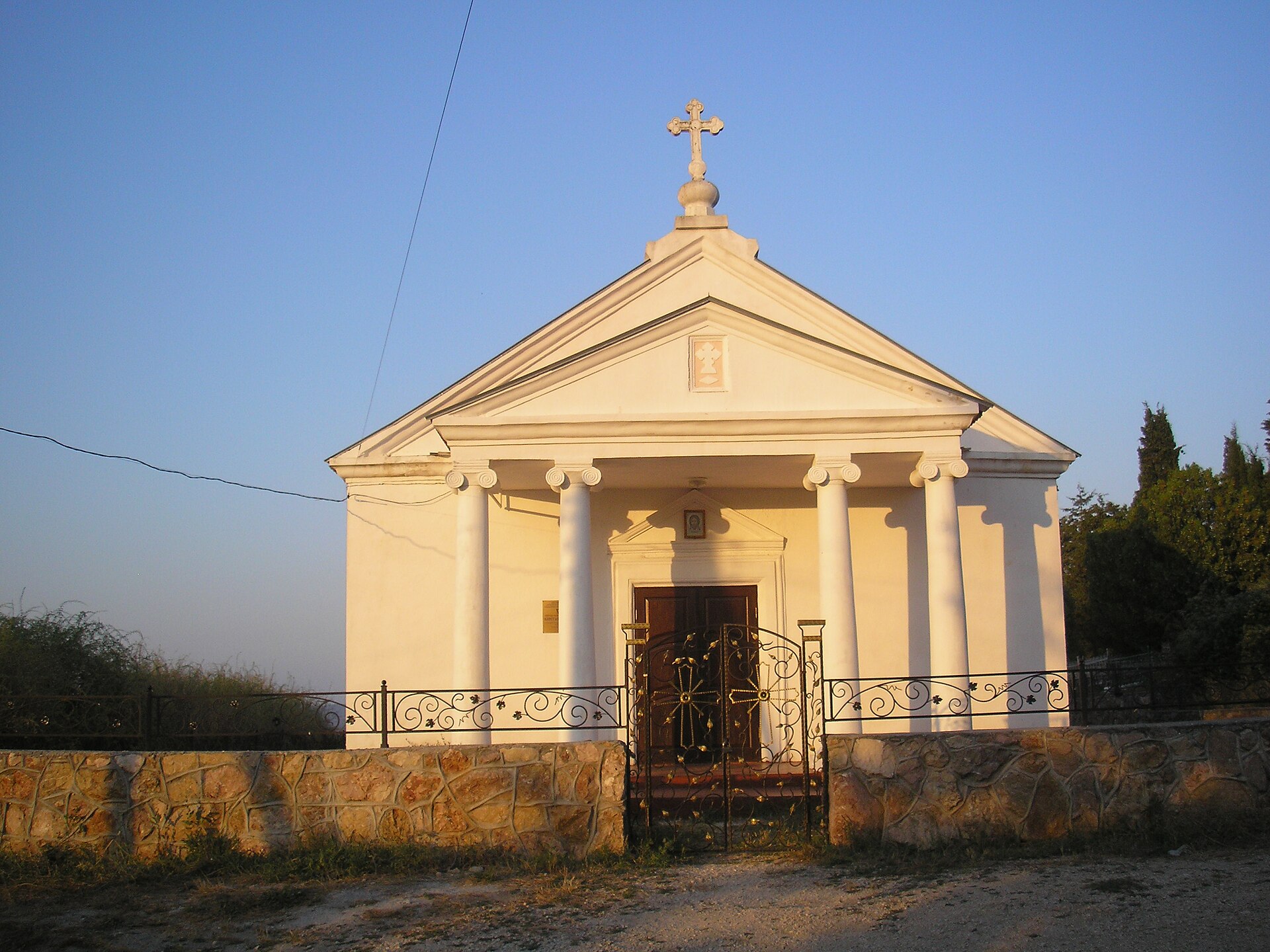
Perched on a quiet hill in Sevastopol’s Ushakova Balka district, the Church of Constantine and Helena feels like a place where time has paused, allowing the past to linger just beneath the surface of the present. Built in the mid-19th century, this modest white-stone church has watched over the city for generations, its low dome and arched windows framing views of the bay and the surrounding neighborhoods. It’s not a grand cathedral, nor does it draw the crowds that flock to Sevastopol’s more famous landmarks, but that only adds to its quiet charm. Here, history isn’t just remembered—it’s still alive, woven into the daily rhythms of the city.
The church’s architecture reflects the neoclassical and neo-Byzantine influences popular in the Russian Empire during the Romantic era. Its design is simple yet elegant, with clean lines and a sense of understated dignity. The white stone walls, though sturdy, give the building a lightness, as if it’s barely touching the ground. Inside, the space is intimate, almost domestic in scale. The iconostasis, painted in traditional styles, and the aged icons on the walls create an atmosphere of quiet reflection, far removed from the noise of modern life.
Like much of Sevastopol, the church bears the marks of the Crimean War. During the siege, it served as more than just a place of worship—it was a gathering point for locals, a refuge where people came together in the face of hardship. After the war, the church was restored, but its trials weren’t over. It survived revolutions, wars, and the Soviet era, when many religious sites were either destroyed or repurposed. Yet through it all, the Church of Constantine and Helena endured, its doors remaining open to those who sought solace within its walls.
Today, the church is still an active place of worship, though it attracts a different kind of visitor as well. There are no tour groups here, no souvenir stands or crowds jostling for the best photo. Instead, you’ll find locals lighting candles, strangers sitting quietly in the pews, or an elderly woman murmuring a prayer. The absence of tourist hustle makes it feel like a secret spot, a place where you can step out of time for a little while. The sound of the bells, ringing out over the neighborhood, carries a weight that feels both ancient and immediate.
For many in Sevastopol, the church is more than just a building—it’s a symbol of resilience. It has seen the city at its best and its worst, yet it remains a constant, a thread connecting past and present. On feast days, the church comes alive with services, drawing parishioners from across the district. On ordinary days, it settles into a slower pace, its doors open to anyone who needs a moment of peace. Some come to pray, others simply to sit in the quiet, away from the rush of the city.
The area around the church is just as unassuming as the building itself. The streets here are a mix of old and new—low fences, overgrown gardens, and the occasional Soviet-era apartment block. It’s a part of Sevastopol that tourists rarely see, where life moves at its own pace. Walking these quiet lanes, you get the sense that the city’s history isn’t just confined to museums or monuments. It’s in the air, in the way the light falls on the cobblestones, in the stories that the walls of the church could tell if they could speak.
What makes the Church of Constantine and Helena special isn’t its size or its fame, but the way it has remained a living part of the city. It’s not a relic to be admired from a distance, but a place that still serves its original purpose, unchanged by time. That authenticity is rare in a world where so many historic sites have been turned into attractions. Here, you’re not just an observer—you’re a participant, even if only for a little while.
Sevastopol is often called a city of heroes, and its history is written in grand narratives of war and sacrifice. But places like this church remind you that history is also made up of smaller, quieter moments—the daily acts of faith, the shared silences, the way a community comes together in times of need. The Church of Constantine and Helena may not be the most famous landmark in the city, but it’s one of the few where you can still feel the weight of those moments, as if they happened just yesterday.