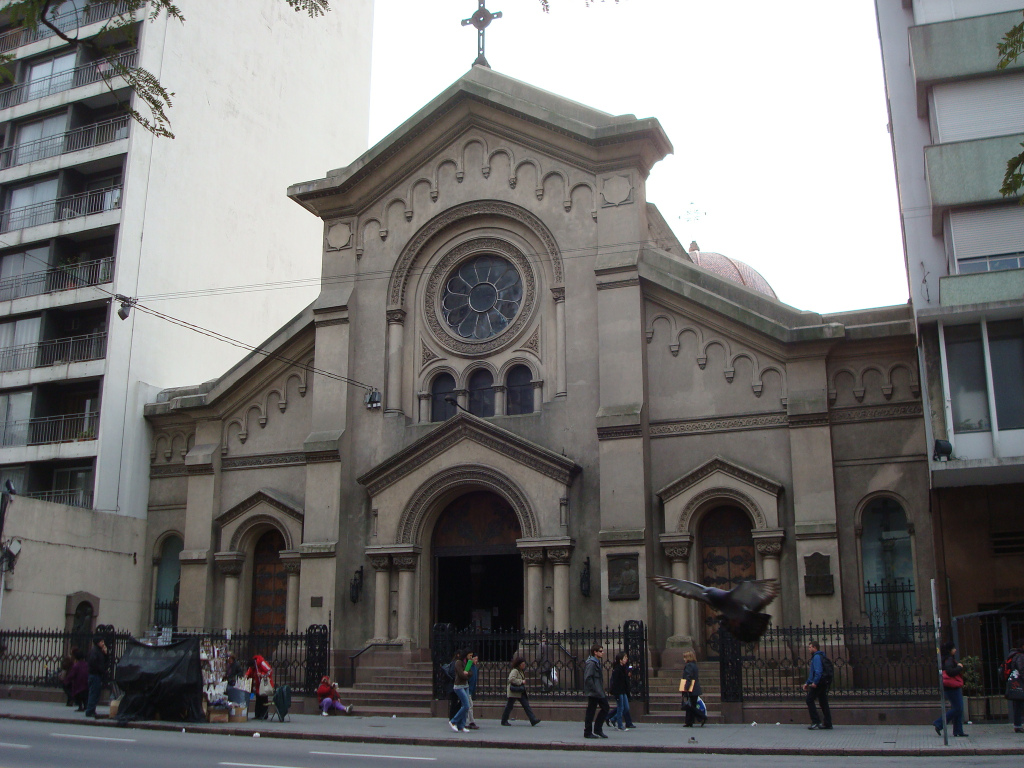
Nestled in the quiet streets of La Unión, the Church of Our Lady of Carmel is one of those places that doesn’t demand attention but lingers in memory long after you’ve left. It stands slightly apart from the bustle of Montevideo’s more frequented spots, its unassuming white facade blending into the neighborhood rather than standing out. There’s no grandiosity here—no towering spires or ornate carvings—but that simplicity is precisely what makes it feel so genuine. This is a church that has grown alongside the community, a place where faith and daily life have intertwined for generations.
La Unión itself was once a separate town, a working-class suburb that took shape in the mid-19th century as immigrants from Spain and Italy settled in Uruguay, drawn by the promise of a better life. Many arrived with little more than their traditions and their faith, and the need for a place of worship quickly became apparent. The first chapel here was built in the 1860s, but it soon proved too small for the growing population. By 1870, plans were underway for a proper church, and within a few years, the building took on the form it still holds today.
The architecture is typical of Uruguayan churches from that era—modest, functional, and unpretentious. The single nave is straightforward in its design, with a rectangular layout and a symmetry that feels deliberate without being showy. The facade is marked by a simple pediment and two low bell towers, their understated height giving the building a sense of balance rather than dominance. Inside, the church retains much of its original character: wooden pews, a plain altar, and a handful of aged icons. The most striking feature is the fresco above the main entrance, depicting Our Lady of Carmel, the patron saint of sailors—a nod to the many residents of La Unión who once worked along the river or in the nearby port.
For the people of this neighborhood, the church has always been more than just a place of worship. In the late 19th and early 20th centuries, it served as a gathering spot where families celebrated milestones, sought solace in hard times, and passed down traditions from one generation to the next. During periods of political upheaval or economic struggle, it remained a steady presence, a place where people could find a moment of quiet reflection. Even now, long after La Unión was absorbed into Montevideo, the church continues to play that role for those who grew up here.
Over the years, the church has undergone a few renovations, but each change was made with care to preserve its original spirit. In the 1920s, side chapels were added to accommodate more worshippers, and in the mid-20th century, the building was restored to reinforce its structure and refresh its facade. Yet these updates were done thoughtfully, ensuring that the church still feels much as it did when it was first built. The walls may have been repainted, but the sense of history remains intact.
Stepping inside, you’re struck by the stillness. Even when the streets outside are lively, the church feels like a world apart. Light filters through the tall windows, casting soft shadows across the wooden pews and stone floor. Occasionally, the space hosts small concerts of sacred music or exhibitions on the neighborhood’s past. If you’re curious about the church’s history, the locals are often happy to share stories—some passed down through their own families.
La Unión isn’t the kind of place most visitors seek out. There are no luxury hotels or trendy cafes here, just the everyday rhythm of Montevideo’s working-class life. The streets are narrow, the houses modest, and the markets sell fresh produce and homemade cheese. The Church of Our Lady of Carmel fits seamlessly into this setting, a quiet witness to the lives that have unfolded around it. It’s a reminder that history isn’t always made in grand cathedrals or palaces—sometimes, it’s found in the places where ordinary people have lived, loved, and left their mark.
If you find yourself in La Unión, take a moment to step inside. Sit on one of the pews, listen to the silence, and let the space settle around you. There’s something about this church—something unspoken but deeply felt—that captures a side of Uruguay you won’t find in guidebooks. It’s the kind of place where time seems to slow down, just enough to let you catch your breath.