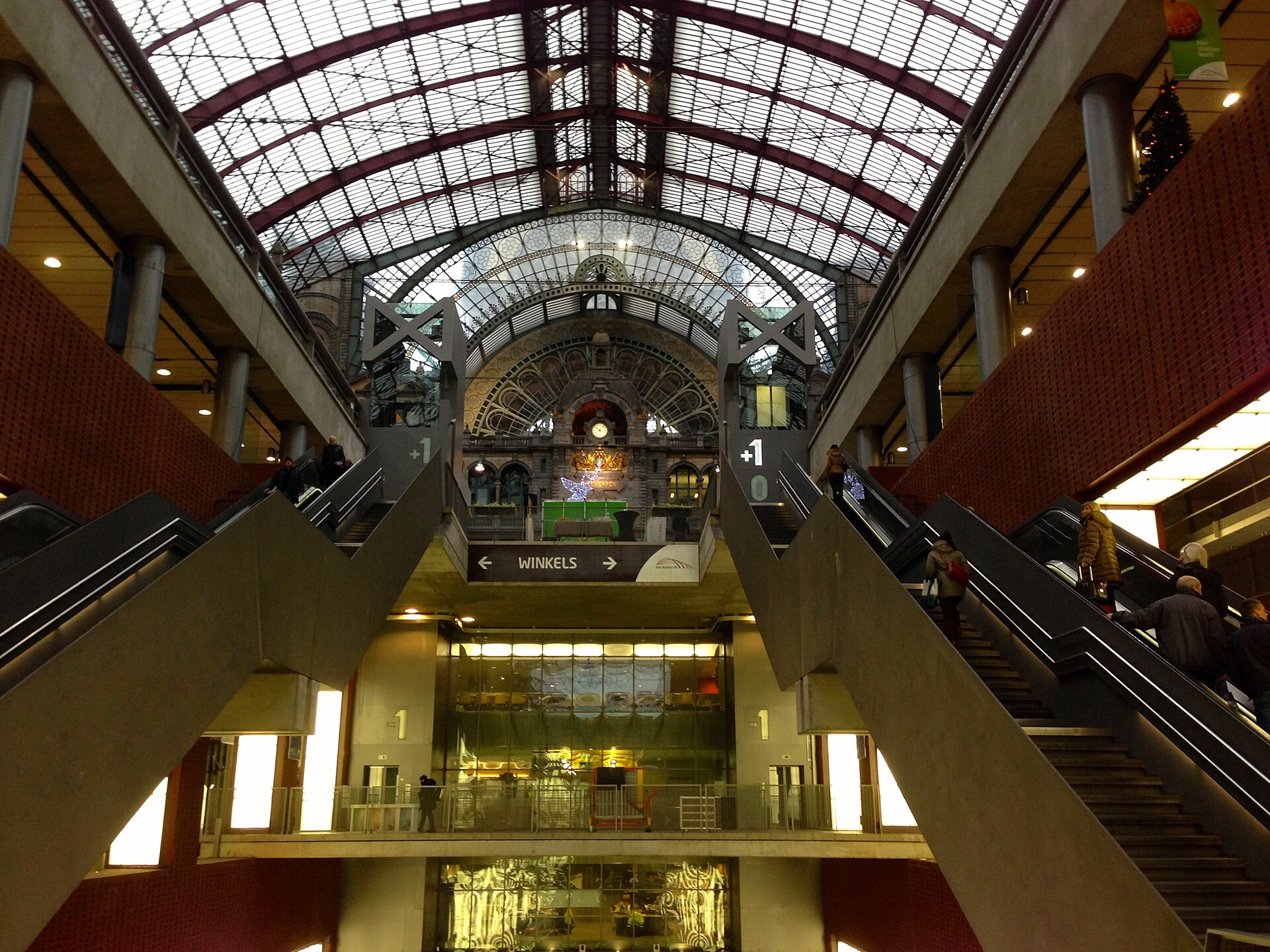
Antwerp’s Central Station is one of those rare places where architecture feels like a living piece of history, not just a backdrop for hurried travelers. Built at the turn of the 20th century, it was designed to be more than a transit hub—it was a statement of the city’s wealth and ambition during Belgium’s golden age. The station’s grand hall, with its soaring iron-and-glass dome, was a marvel of engineering when it opened in 1905, a time when rail travel was still a novelty for many. The architect, Louis Delacenserie, drew inspiration from classical and Renaissance styles, blending them into something uniquely Belgian: imposing yet elegant, functional yet theatrical. The result is a space that still commands attention, even when the platforms are crowded with commuters and tourists.
The station’s exterior is just as striking, with a facade that looks more like a palace than a railway terminal. The main entrance is framed by a massive arched window, flanked by towers that give it the air of a medieval fortress. Inside, the contrast between the raw industrial materials—steel, glass, and stone—and the ornate decorative details creates a sense of drama. The walls are lined with marble, the ceilings adorned with intricate mosaics, and the grand staircase, which sweeps upward from the main hall, feels like something out of an opera set. It’s easy to imagine the station in its early days, when well-dressed passengers would arrive for journeys to Paris or Brussels, their footsteps echoing under the vaulted ceilings.
What makes Antwerp Central Station unusual is how it has managed to retain its original character despite the demands of modern travel. Unlike many historic stations that have been stripped of their charm in the name of efficiency, this one has been carefully preserved. The platforms, for instance, are still covered by the original iron canopies, their delicate filigree patterns casting shifting shadows as the light changes throughout the day. Even the newer additions, like the underground levels added in the early 2000s to accommodate high-speed trains, were designed to complement rather than overshadow the old structure. The result is a station that feels both timeless and alive, where the past and present coexist without friction.
Beyond its architectural beauty, the station is a microcosm of Antwerp itself. The city has long been a crossroads of trade and culture, and the station reflects that diversity. In the main hall, you’ll hear a mix of languages—Dutch, French, English, and others—as travelers from all over Europe and beyond pass through. The shops and cafes that line the concourse offer everything from Belgian chocolates to quick bites for those in a hurry, while the occasional street musician adds a touch of spontaneity to the atmosphere. It’s a place where the rhythm of daily life is on full display, whether it’s the early morning rush of commuters or the late-night quiet when only a handful of people remain.
The station’s location also makes it a natural starting point for exploring Antwerp. Just a short walk from the historic center, it sits at the edge of the diamond district, where the city’s long tradition of gem trading is still visible in the polished storefronts and the occasional glimpse of a jeweler at work. From here, it’s easy to wander into the old town, with its cobbled streets and medieval guildhalls, or to head toward the Scheldt River, where the port’s industrial past meets the city’s modern waterfront. The station itself is a reminder that Antwerp has always been a city in motion, shaped by the comings and goings of people and goods.
For all its grandeur, Antwerp Central Station is also a place of small, human moments. It’s where a tired traveler might pause to admire the play of light on the marble floors, or where a local resident stops to chat with a neighbor while waiting for a train. The station has seen its share of history—through two world wars, economic booms and busts, and the slow evolution of a city that has always looked outward. Yet it remains a constant, a place where the daily rituals of arrival and departure unfold against a backdrop of enduring beauty.
There’s something almost poetic about the way the station balances its roles. It’s a monument to the past, a functional part of the present, and a gateway to the future. Whether you’re passing through on your way to another destination or taking the time to linger, it offers a glimpse into what makes Antwerp special: a city that values both its heritage and the energy of the modern world. The station doesn’t just connect people to places—it connects them to the idea of travel itself, to the anticipation of what lies beyond the next platform. And in that sense, it’s more than just a building. It’s a symbol of movement, of possibility, and of the quiet dignity of a city that has always known how to welcome the world.