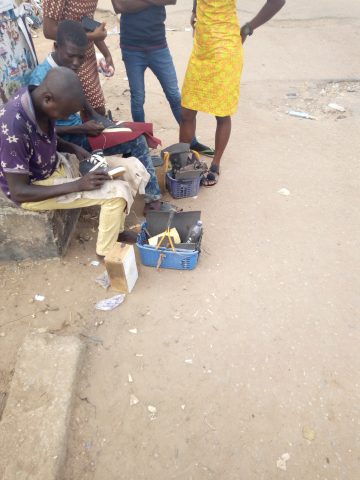
Abeokuta’s central market is one of those places where the city’s pulse beats strongest. It’s not just a marketplace—it’s a living archive of daily life, trade, and tradition that has shaped the region for generations. Nestled in the heart of the city, the market sprawls across a labyrinth of stalls, alleys, and open spaces, where the air hums with the sounds of bargaining, laughter, and the occasional bleating of goats. For centuries, this has been the commercial core of Abeokuta, a place where farmers, artisans, and traders from across southwestern Nigeria converge to exchange goods, stories, and news.
The market’s origins trace back to the early 19th century, when Abeokuta itself was founded as a refuge for people fleeing the turmoil of the Yoruba wars. The city’s strategic location—perched on rocky terrain and surrounded by protective hills—made it an ideal hub for trade. The market grew organically alongside the settlement, evolving from a modest gathering of local producers into one of the most important trading centers in the region. By the time British colonial administrators arrived in the late 1800s, the market was already a well-established institution, its rhythms dictated by the seasons, festivals, and the ebb and flow of agricultural harvests.
Walking through the market today, you’re immediately struck by its sheer scale and diversity. The stalls are a riot of color and texture, piled high with everything from fresh produce to handwoven textiles, carved wooden masks, and bundles of dried herbs. The scent of spices mingles with the earthy aroma of yams and plantains, while the sharp tang of smoked fish cuts through the air. One section might be devoted entirely to bolts of vibrant ankara fabric, their patterns swirling in bold geometric designs, while another is filled with stacks of handmade pottery, their surfaces smoothed by generations of use. There’s a sense of abundance here, but also of resourcefulness—every item, no matter how small, has a purpose.
The market isn’t just a place to buy and sell; it’s a social space where relationships are forged and maintained. Traders often know their customers by name, and regulars might stop for a cup of palm wine or a plate of pounded yam and egusi soup at one of the makeshift food stalls tucked between the rows. The market operates on a system of trust and reputation, where a handshake can seal a deal just as effectively as a written contract. For many families, trading here is a tradition passed down through generations, with children learning the ropes alongside their parents, absorbing the nuances of negotiation and the art of reading a customer’s needs.
Architecturally, the market is a fascinating study in adaptability. There are no grand buildings or ornate facades—just a patchwork of structures that have grown and shifted over time. Some stalls are little more than wooden frames draped with tarpaulins, while others are more permanent, with corrugated metal roofs and concrete floors. The layout is fluid, with new sections sprouting up to accommodate demand, whether for electronics, secondhand clothing, or imported household goods. The market’s organic growth means it can feel chaotic at times, but there’s an underlying order to it, a logic that locals understand instinctively. You might get lost in the maze of alleys, but you’ll always find your way back to the main thoroughfares, where the crowd is thickest and the energy most electric.
What makes Abeokuta’s central market particularly special is its role as a cultural crossroads. The city has long been a melting pot of Yoruba traditions, Islamic influences, and colonial-era trade networks, and the market reflects this diversity. You’ll find Hausa traders from the north selling leather goods and kola nuts alongside Yoruba women hawking locally grown cocoa and cassava. The market is also a place where old and new collide—where a farmer might sell handmade brooms next to a stall offering the latest smartphones. This blend of the traditional and the modern gives the market its unique character, a place where the past and present coexist in a constant, dynamic exchange.
Visiting the market is an immersive experience, one that engages all the senses. The heat of the midday sun is tempered by the shade of towering stacks of goods, while the cool evening air brings a different kind of energy as traders pack up for the day. The sounds are just as varied—the clatter of metal bowls, the rhythmic pounding of yam in a mortar, the occasional blare of a car horn as a motorcycle weaves through the crowd. There’s a sense of urgency here, but also of patience, as people take the time to greet one another, share a joke, or debate the price of a bundle of firewood. It’s a place where time moves differently, where the hours stretch and contract depending on the flow of customers and the rhythm of the day.
For outsiders, the market can feel overwhelming at first, but it’s worth taking the time to explore slowly. Start at one end and let yourself be drawn deeper into the maze, following the scent of roasting corn or the sound of a trader calling out their wares. Don’t be afraid to ask questions—most vendors are happy to explain the uses of a particular spice or the significance of a hand-carved figurine. If you’re lucky, you might even be invited to share a meal or a cup of strong, sweet Nigerian tea. The market is a place of generosity as much as commerce, where hospitality is as much a part of the transaction as the goods being exchanged.
Beyond its economic importance, the market is a symbol of Abeokuta’s resilience. The city has weathered wars, colonial rule, and economic shifts, and the market has been there through it all, adapting and enduring. It’s a place where the community gathers not just to trade, but to celebrate, to mourn, and to mark the passage of time. During festivals like the annual Lisabi Day, which honors Abeokuta’s founding, the market becomes a stage for performances, parades, and communal feasts. Even on ordinary days, it’s a place where the city’s identity is reinforced, where the stories of its people are told and retold in the language of commerce and connection.
There’s no grand entrance or exit to Abeokuta’s central market—just a gradual merging of the market’s chaos with the quieter streets of the city. As you leave, the sounds and smells fade, but the impression lingers. It’s the kind of place that stays with you, not just as a memory of a bustling marketplace, but as a reminder of how deeply trade and culture are intertwined. The market isn’t just a destination; it’s a living, breathing part of Abeokuta, a place where the city’s past and future come together in the simple, timeless act of buying and selling.