Belgorod’s Central Park of Culture and Rest is one of those rare places in a city where the usual rush fades into the background, replaced by the quiet rustle of leaves and the unhurried rhythm of everyday life. Tucked in the heart of the city, it has long been more than just a green space—it’s a living part of Belgorod’s identity, a place where history and modern life intersect without fanfare. There are no flashy attractions or loud entertainment here, just open paths for walks, benches for conversations, and the kind of quiet that invites you to slow down, whether alone or with someone close.
The park’s origins trace back to the mid-20th century, a time when Belgorod was rebuilding after the devastation of war. The city needed more than just new buildings and roads; it needed spaces where people could breathe, relax, and reconnect. The park was designed as one of those spaces—a green refuge amid the urban landscape. Over the decades, it has become woven into the memories of generations. Some remember it from childhood, when it hosted festivals and open-air concerts, while others discovered it later, stumbling upon its tranquility by accident. It has a way of feeling familiar, even to those who visit for the first time.
The park’s design is simple and unassuming, but that’s part of its charm. Wide paths, lined with benches, wind through rows of linden and maple trees, their canopies offering shade in the summer and a golden glow in the autumn. At the center, a large circular plaza serves as a gathering spot year-round—flooded in winter for ice skating, alive with music and dancing in the summer. Nearby, a modest fountain draws children and photographers, its gentle spray adding a touch of movement to the stillness. There’s nothing grandiose about it, yet it feels just right for the space.
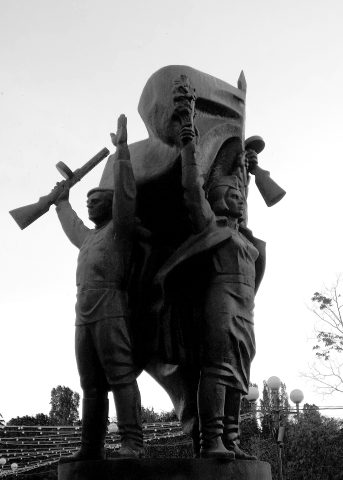
One of the park’s most significant areas is its memorial zone, dedicated to those who lost their lives in the Great Patriotic War. A monument to fallen soldiers stands here, alongside an eternal flame, a place of quiet reflection and remembrance. On holidays, the memorial hosts ceremonies and concerts, but even on ordinary days, people come to lay flowers or simply stand in silence. It’s a space that carries weight, not for spectacle, but for the stories it holds and the respect it commands.
Beyond the memorial, the park offers small but meaningful pleasures. A pond, nestled among the trees, is a favorite spot for feeding ducks or sitting by the water’s edge. In the summer, you can rent a rowboat and glide across the surface, while in winter, the frozen pond becomes an impromptu skating rink. Nearby, a playground keeps children occupied with swings and slides, giving parents a moment to rest. These simple features make the park a place where life unfolds naturally, without the need for grand gestures.
The park’s atmosphere shifts with the seasons, each bringing its own character. In spring, the air is filled with the scent of fresh leaves and blooming shrubs, while petals drift onto the paths like confetti. Summer brings laughter, the hum of voices, and the occasional strains of music from a distant concert. Autumn transforms the park into a sea of red and gold, the crunch of leaves underfoot making every walk feel like a small adventure. Winter, with its frost-covered branches and cleared paths, turns the park into a serene winter wonderland, perfect for skating or a quiet stroll.
More than just a place to relax, the park has become a cultural hub for Belgorod. Throughout the year, it hosts festivals, open-air exhibitions, workshops, and sports events. In the summer, the central plaza often stages concerts by local musicians, while winter brings holiday fairs and communal celebrations. It’s a space where creativity and community thrive, whether through a quiet book reading on a bench or joining in a spontaneous dance. The park doesn’t demand attention—it simply offers a place where people can come together or find solitude, depending on what they need.
Despite its central location, the park has a way of making the city’s hustle feel distant. There’s something about it that feels timeless, as if it has preserved the slower, more intimate pace of old Belgorod. You don’t come here with an agenda; you come to sit, to watch, to let the moment unfold. It’s a place that welcomes everyone—first-time visitors, regulars, families, and those who consider it a second home. There’s no pressure to do or see anything in particular; the park’s greatest gift is the freedom to simply be.
Over time, the Central Park of Culture and Rest has grown into more than just a green space—it’s a symbol of the city itself. It bridges generations, with young families pushing strollers alongside elderly couples reminiscing, and teenagers finding their own corners for quiet conversations. The park is a living archive of Belgorod’s history, its trees and paths bearing witness to decades of change. It may not be the most famous or ornate park in Russia, but for those who know it, it means something deeper. It’s a place where the city’s heart beats a little slower, where life feels a little simpler, and where anyone can find a moment of peace.