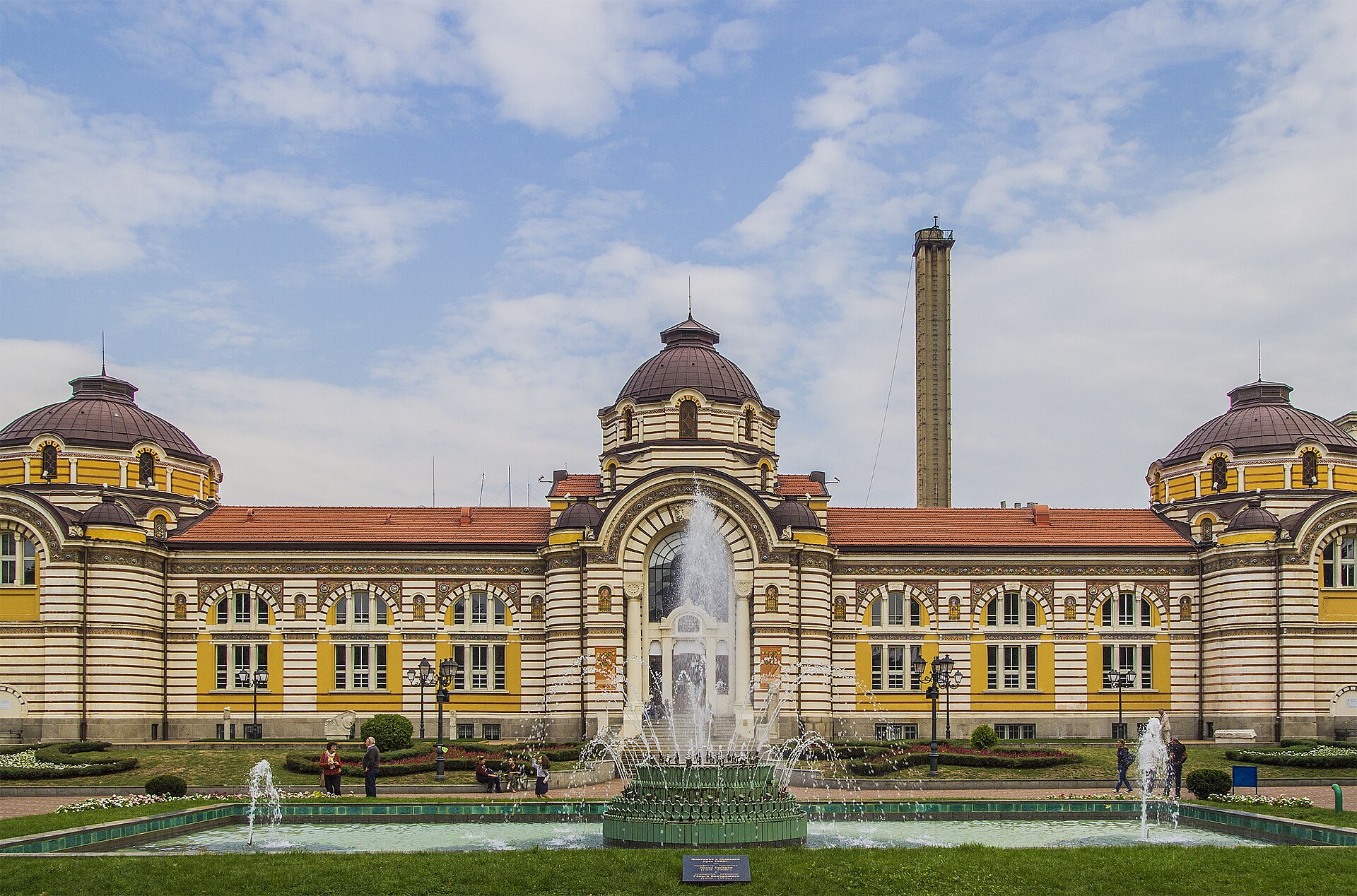
The Central Mineral Baths in Sofia stand as a quiet witness to the city’s layered past, a place where history seeps through the walls like the mineral-rich waters that once flowed through its pipes. Built in the early 20th century, the bathhouse was designed in the ornate Secession style, a nod to the European influences that shaped Bulgaria’s capital during its modernisation. The architects, Petko Momchilov and Friedrich Grünanger, blended local traditions with Viennese elegance, creating a building that feels both grand and intimate. Its façade, adorned with ceramic tiles and intricate stonework, hints at the care taken to make public health not just functional but beautiful—a rare luxury for its time.
For decades, the baths were the heart of Sofia’s daily life. Locals would gather here not just to bathe, but to socialise, gossip, and escape the city’s hustle. The waters, rich in minerals and believed to have healing properties, drew people from all walks of life. The building’s interior, with its high vaulted ceilings and mosaic floors, was designed to feel like a temple of wellness, where even the act of washing became something ceremonial. The baths remained in use until the late 20th century, when changing habits and the rise of private bathrooms made such public spaces less essential.
After years of neglect, the Central Mineral Baths found new purpose. In the early 2010s, the building was carefully restored, preserving its original charm while adapting it for modern use. Today, it houses the Sofia History Museum, a decision that feels fitting—what better place to tell the story of a city than in a building that once served as its communal hearth? The museum’s exhibits trace Sofia’s evolution from a Roman settlement to a thriving capital, using artefacts, photographs, and interactive displays to bring the past to life. The baths themselves, with their restored pools and steam rooms, are no longer in operation, but their presence lingers in the architecture, a reminder of the rituals that once took place here.
Walking through the museum, it’s easy to imagine the sounds that once filled these halls—the murmur of conversations, the splash of water, the occasional laughter echoing off the tiled walls. The building’s layout, with its separate sections for men and women, reflects the social norms of its time, while the grand central hall, where people would gather before and after their baths, speaks to the communal spirit that defined the place. Even now, the air carries a faint mineral scent, as if the walls themselves remember the waters that once flowed through them.
Beyond its historical significance, the Central Mineral Baths are a testament to Sofia’s resilience. The city has been rebuilt and reinvented countless times, yet places like this endure, carrying the stories of those who came before. The baths sit at the edge of the city centre, near the ancient ruins of Serdica and the modern bustle of Banski Square, a bridge between eras. For visitors, the building offers more than just a glimpse into the past—it’s a chance to step into the rhythm of a city that has always found ways to adapt without losing its soul.
The surrounding area, too, is worth exploring. Just a short walk away, the mineral springs that fed the baths still bubble up from the ground, their waters now channelled into public fountains where locals and tourists alike fill bottles to take home. The nearby City Garden, with its shady paths and open-air cafés, provides a quiet contrast to the grandeur of the baths, while the nearby markets offer a taste of Sofia’s vibrant present. The baths themselves are no longer the social hub they once were, but their legacy lives on in the way the city continues to gather, change, and endure.
What makes the Central Mineral Baths special is not just their architecture or their history, but the way they embody the spirit of Sofia—a city that has always been a crossroads of cultures, ideas, and people. Whether you come to admire the mosaics, learn about the past, or simply sit in the courtyard and watch the world go by, the baths offer a moment of reflection in a city that is always moving forward. They remind us that even in a place as old as Sofia, the past is never truly gone; it’s just waiting to be rediscovered.