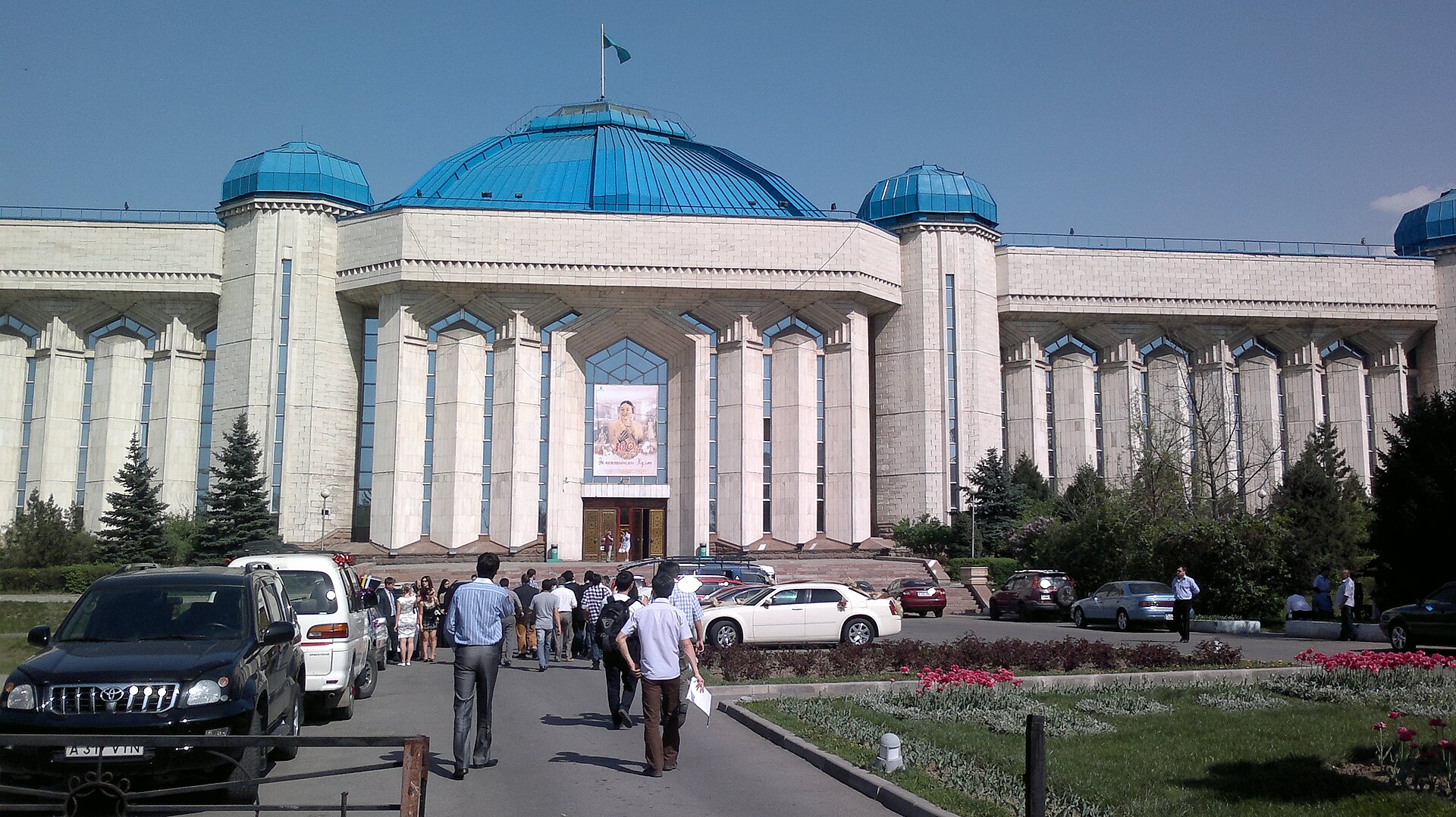
The Central State Museum of the Republic of Kazakhstan is one of those rare places in Almaty where time seems to slow down, allowing visitors to step away from the city’s usual pace. It isn’t just a repository of artifacts—it’s a carefully curated journey through the nation’s past, where every exhibit, from ancient relics to modern documents, tells a fragment of Kazakhstan’s story. The museum stands in the heart of the city, housed in a building that is itself a piece of cultural heritage. Its architecture blends Soviet monumentalism with Kazakh motifs, featuring high ceilings, expansive halls, and light-filled galleries that emphasize the significance of what lies within.
The museum’s origins trace back to the late 19th century, when the first city museum opened in Verny, as Almaty was then known. That early collection was modest, focusing on the natural history and daily life of the Semirechye region. Over the decades, the museum grew, moving between locations until it found its permanent home in 1985 on Abai Avenue. Today, it holds over three hundred thousand items, each a silent witness to a different era—whether a Bronze Age stone tool or a photograph capturing the birth of independent Kazakhstan.
Walking through the museum is like moving through time. The exhibits are arranged chronologically, beginning with halls dedicated to ancient history. Here, visitors can see rock carvings from the Tamgaly Gorge, pottery from the Saka tribes, and golden ornaments unearthed from the Issyk and Besshatyr burial mounds. The centerpiece is a reconstruction of the "Golden Man," a warrior clad in armor that has become one of Kazakhstan’s national symbols. These artifacts don’t just illustrate the lives of nomadic peoples—they reveal a sophisticated culture that thrived long before the written word.
The medieval period is represented by items from cities like Otrar, Turkestan, and Sairam, once key stops along the Great Silk Road. Coins, ceramics, and fragments of architectural structures hint at the region’s role as a crossroads of trade and culture. A particularly striking collection of weapons and armor showcases the military prowess of Turkic tribes, evoking the bustle of caravans and the clatter of hooves that once filled these lands.
A separate hall is devoted to the formation of Kazakh statehood, featuring documents, photographs, and personal belongings of figures like Abai Kunanbayev, Chokan Valikhanov, and Abulhair Khan. The exhibits from the early 20th century, including weapons, pamphlets, and images of rebellion, carry a quiet weight, reminding visitors of the struggles that shaped the nation’s path to independence.
The Soviet era is documented in detail, with models of early collective farms and factories, records of collectivization, and photographs of World War II veterans. A standout section focuses on the Virgin Lands Campaign, which transformed Kazakhstan’s landscape. Tools, personal items, and images of the first harvests evoke both pride in the era’s achievements and reflection on the human cost behind them.
Modern Kazakhstan is represented through documents marking independence, state symbols, and gifts from foreign leaders. Exhibits on recent economic and cultural developments sit alongside displays of traditional Kazakh clothing and household items, highlighting the country’s rich cultural heritage. The contrast between past and present is striking, offering a glimpse into how far the nation has come.
The museum’s building is an attraction in its own right. Designed by architects Yury Ratushny and Zinaida Mustafina, it embodies the grandeur of Soviet-era Almaty while incorporating Kazakh ornamental motifs. The high ceilings and spacious halls create an atmosphere of reverence, inviting visitors to linger rather than rush. There are no flashy interactive displays here—just a quiet space to absorb history at your own pace.
What makes the Central State Museum special is its ability to make the past feel tangible. It doesn’t just present facts; it invites reflection, allowing each visitor to piece together Kazakhstan’s story in their own way. Whether you spend an hour or an afternoon here, the experience lingers, offering a deeper understanding of the land and its people. In a city that’s always moving forward, this museum remains a place where history comes alive.