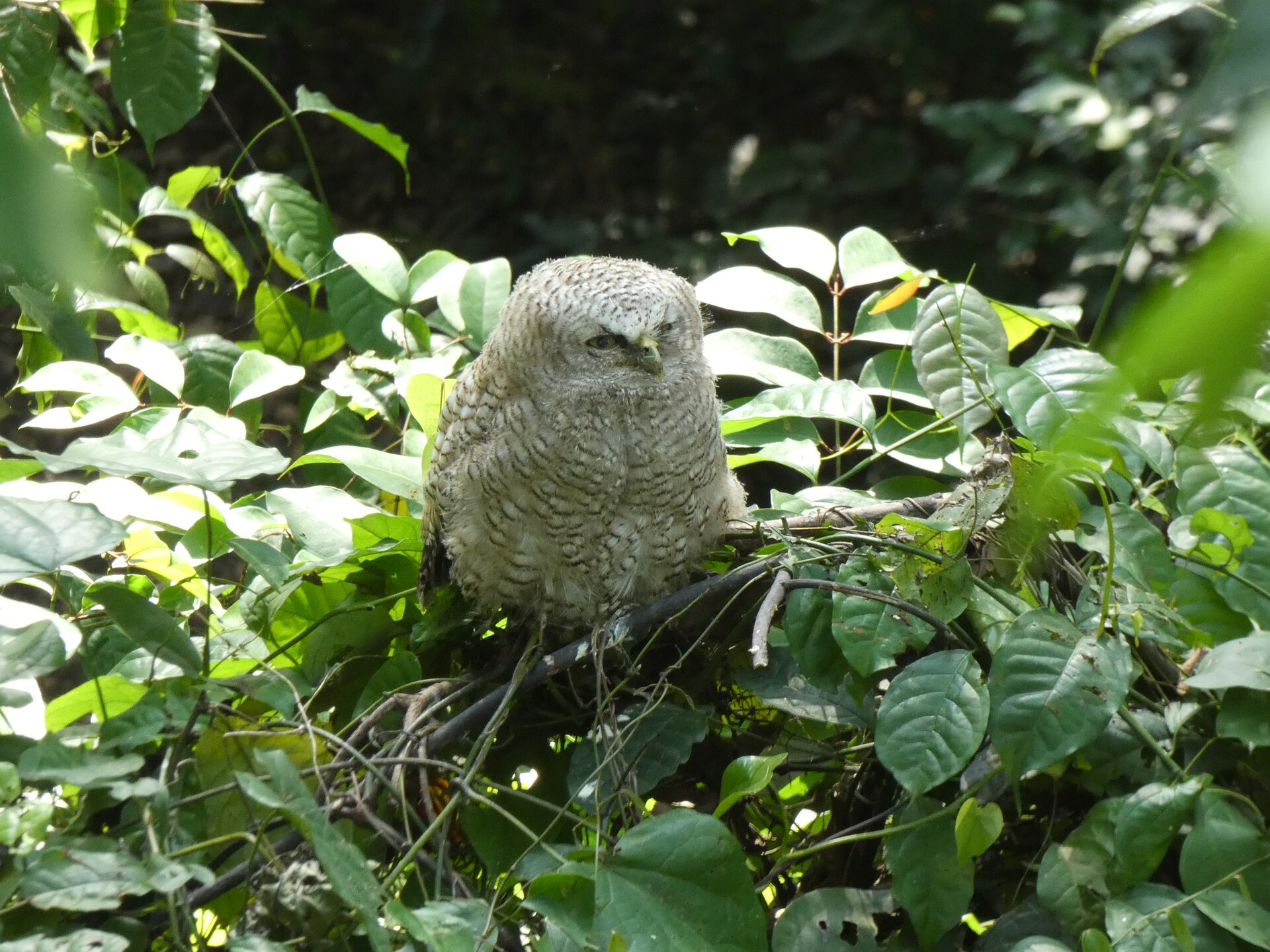
Bunso Eco Park feels like stepping into a part of Ghana that time has mostly forgotten. Unlike the country’s more famous national parks, where trails are marked and wildlife is curated for visitors, this place exists almost as it always has—wild, unscripted, and quietly alive. It sits just outside Koforidua, not as a manicured attraction but as a stretch of forest that happens to welcome those who wander in. There are no grand entrances, no signs pointing the way, just the slow reveal of trees, vines, and the occasional rustle of something unseen moving through the undergrowth.
The park began not as a tourist destination but as a research station, a place where scientists studied the rhythms of the local ecosystem. That legacy still lingers. Even now, you might come across students crouched over plant samples or researchers tracking the movements of birds. For most visitors, though, the appeal lies in the absence of spectacle. There are no guided tours, no souvenir stands, no promises of Instagram-worthy moments. Instead, the park offers something simpler: the chance to walk through a forest that doesn’t perform for anyone. The paths here are little more than suggestions, winding up gentle slopes and down to shallow streams, sometimes fading into the earth as if the land itself isn’t entirely sure where they should go.
What makes Bunso different is its refusal to tidy itself up. There are no imported plants, no landscaped gardens, no attempts to make the place more photogenic. The trees are the same ones that have stood here for decades—tall, broad-canopied, their roots twisting into the damp soil. Orchids cling to their trunks, and bamboo thickets rise in dense clusters. Monkeys move through the branches, but they’re not tame; they keep their distance, watching from a safe height. The forest changes with the seasons. In the wet months, the air is thick with the scent of damp earth, and the canopy closes in overhead, turning the light green and diffuse. When it’s dry, the leaves thin out, and the ground hardens underfoot, but the place never loses its sense of quiet vitality.
For some, the lack of amenities might feel like a drawback. There are no cafes, no shaded benches, no places to buy water or snacks. A few wooden shelters offer shelter from sudden rain, but otherwise, you’re left to your own devices. The streams are clear, but drinking from them isn’t advised. Yet this austerity is part of the park’s charm. It’s a place for those who don’t mind trading comfort for authenticity. You might spend an hour sitting on a fallen log, listening to the chorus of birds and insects, or simply watching the way sunlight filters through the leaves. There’s no agenda, no rush—just the slow, steady pulse of the forest.
Bunso isn’t a place you’ll find in most travel guides. It doesn’t draw crowds, and that’s precisely why it feels special. On weekends, local families sometimes come for picnics, spreading out blankets under the trees, but on weekdays, you might have the whole place to yourself. There are no tour buses, no vendors hawking trinkets, no queues for anything. It’s the kind of spot that rewards patience, where the best experiences often come from doing nothing at all. If you’re looking for a version of Ghana that exists beyond postcards and curated experiences, this is it—a patch of land that hasn’t been polished for outsiders.
Of course, the park isn’t for everyone. There are no zip lines, no safari drives, no dramatic waterfalls to pose in front of. If you’re after adrenaline or constant entertainment, you’ll likely leave disappointed. But if you’ve ever wanted to step off the well-trodden path and into a place that feels untouched, Bunso delivers. It doesn’t try to impress. It doesn’t need to. The forest has its own rhythm, and visitors are just temporary guests, allowed to move through it without leaving a trace.
There’s no set schedule here, no closing time, no pressure to rush. You can arrive in the morning and stay until dusk, or just drop in for a couple of hours. The drive from Koforidua takes about half an hour, and it’s best to arrange transport in advance—public buses don’t come this way, and while local taxis know the route, it’s wise to confirm a pickup time before heading in. The roads leading to the park are unpaved in places, and in the rainy season, they can get muddy, so a sturdy vehicle helps.
What stays with you after a visit to Bunso isn’t a checklist of sights or a collection of photos. It’s something quieter—a sense of having been somewhere real. The park doesn’t make grand statements about conservation or sustainability. It doesn’t need to. The trees grow, the animals go about their lives, and the land breathes, all without fanfare. Maybe that’s why leaving feels a little like waking from a dream. For a while, you were part of something older and wilder than the places most travelers see. And then, just as quietly, you step back into the world beyond the trees.