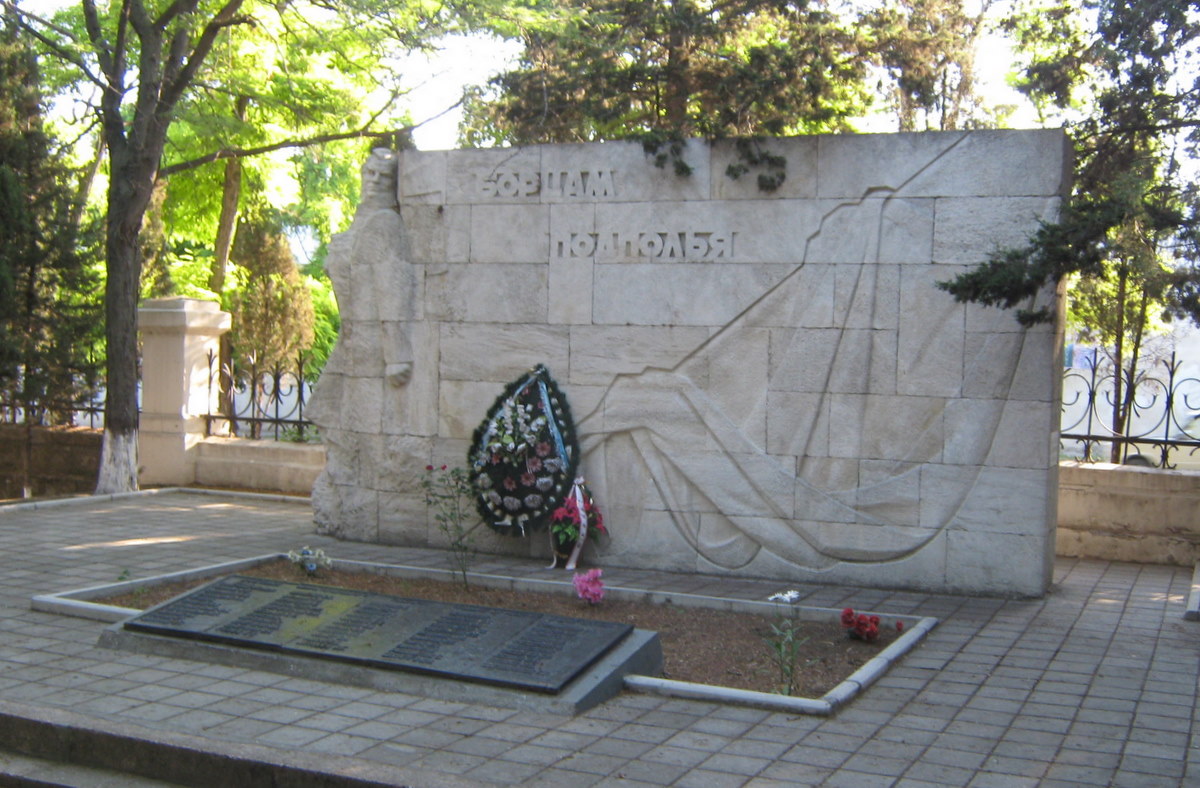
Perched on Communist Hill in Sevastopol, a quiet memorial stands where the city’s underground resistance fighters were laid to rest. There are no grand monuments here, no sweeping arches or towering statues—just a simple granite stele, its surface etched with the silhouette of a grieving woman. The restraint of the place makes it all the more powerful. This is where the stories of those who fought in the shadows during the Nazi occupation are kept alive, not in marble or bronze, but in the memory of a city that refuses to forget.
The resistance in Sevastopol began in the autumn of 1941, when German forces closed in on the city. Sevastopol was preparing for a siege, but the odds were overwhelming. When the city fell, a small group of locals and stranded soldiers chose not to surrender. Instead, they went underground, forming a network that would operate for nearly two years under the noses of the occupiers. Their work was dangerous and often unseen: gathering intelligence, printing leaflets, sabotaging factories that supplied the enemy. They helped prisoners escape, disrupted supply lines, and passed critical information to Soviet forces. Every action was a gamble, every day a risk.
The occupation was brutal. The city was crawling with Gestapo agents and collaborators, and the resistance operated in constant fear of betrayal. Yet they persisted, driven by the belief that even small acts could weaken the enemy. By the spring of 1944, their luck ran out. The Gestapo uncovered the network, and arrests followed. Many were tortured before being executed. Some were hanged in public squares as a warning to others. The survivors were sent to camps, where few lived to see liberation.
After the war, the remains of the fallen resistance fighters were gathered from scattered graves across the city and reburied here, on Communist Hill. The memorial was designed to be understated—a place for reflection rather than spectacle. The trees planted around the grave were meant to grow with the memory of those who died, their branches casting shifting shadows over the stone. Over the decades, the site has become a quiet corner of remembrance, where the past feels closer than elsewhere in the city.
Sevastopol is a place where history is never far away. The scars of war are visible in its streets, its monuments, its very air. But this memorial is different. There are no battle reenactments here, no dramatic retellings of heroism. Instead, there is silence. The kind of silence that makes you slow your steps, lower your voice. Visitors leave flowers—sometimes a single stem, sometimes a whole bouquet. Veterans come on anniversaries, standing for long moments with their hands clasped behind their backs. Schoolchildren arrive in groups, listening as their teachers recount the stories of those who fought in secret.
The memorial is not just a marker of the past; it is part of the city’s living memory. On Victory Day and the anniversary of Sevastopol’s liberation, small gatherings take place here. Veterans, relatives of the fallen, and local officials stand in a loose circle, speaking in hushed tones. Someone reads a poem. A wreath is laid. The speeches are brief, the emotions restrained. It feels less like a ceremony and more like a private conversation with history.
What makes this place remarkable is its lack of pretense. There are no grand narratives here, no attempts to glorify war. Instead, there is the quiet acknowledgment of sacrifice—of ordinary people who chose to resist when resistance seemed impossible. The memorial does not demand attention; it earns it. The trees rustle in the wind, the flowers fade, and the stone endures. The story it tells is not one of victory, but of endurance.
Sevastopol has many monuments, but few are as intimate as this one. It is a place where the weight of history is felt not in the scale of the memorial, but in the small, human details—the way the light falls on the stone, the way the names on the plaque are worn smooth by time. It is a reminder that heroism is not always loud. Sometimes, it is the quiet defiance of those who refuse to accept defeat, even when the odds are against them. And in a city that has seen so much war, that kind of memory is worth preserving.