The Botanic Gardens of St. Vincent is one of those rare places where time seems to slow down, as if nature itself has paused to show off its finest creations. Perched on a hillside overlooking Kingstown, it’s more than just a green space in the capital—it’s a living piece of the island’s history, stretching back over two centuries. Founded in 1765, it holds the distinction of being the oldest botanical garden in the Western Hemisphere, and that age is palpable in every corner. The towering trees, their canopies stretching far beyond what most people imagine possible, the stone pathways laid down in colonial times, and the quiet that lingers in the air all speak to a place that has witnessed generations come and go.
The garden was established by General Robert Melville, then governor of the Windward Islands, with a practical purpose in mind: to acclimatize and study plants that could benefit the colonial economy. In the 18th century, the British Empire was deeply invested in transplanting useful species across its territories, and St. Vincent became a key site for these experiments. One of the earliest and most famous introductions was the breadfruit tree, brought from Tahiti by Captain Bligh in the late 1700s. Today, descendants of those original trees still stand in the garden—massive, sprawling specimens with heavy, starchy fruits—serving as a reminder of an era when botany was as much about empire-building as it was about science.
The layout of the garden is unassuming but deliberate. A central avenue leads from the entrance to a small pond, where lotuses and water lilies float on the surface, surrounded by ferns and orchids. Signs along the paths identify rare species, though most visitors wander without paying much attention to the labels. There are no rigid flowerbeds or geometric designs here; the plants grow as they please, their roots and branches intertwining to create a sense of wild, yet carefully tended, nature. The most striking features are the giant ceiba and fig trees, their trunks resembling ancient temple columns, their canopies reaching dozens of meters into the sky.
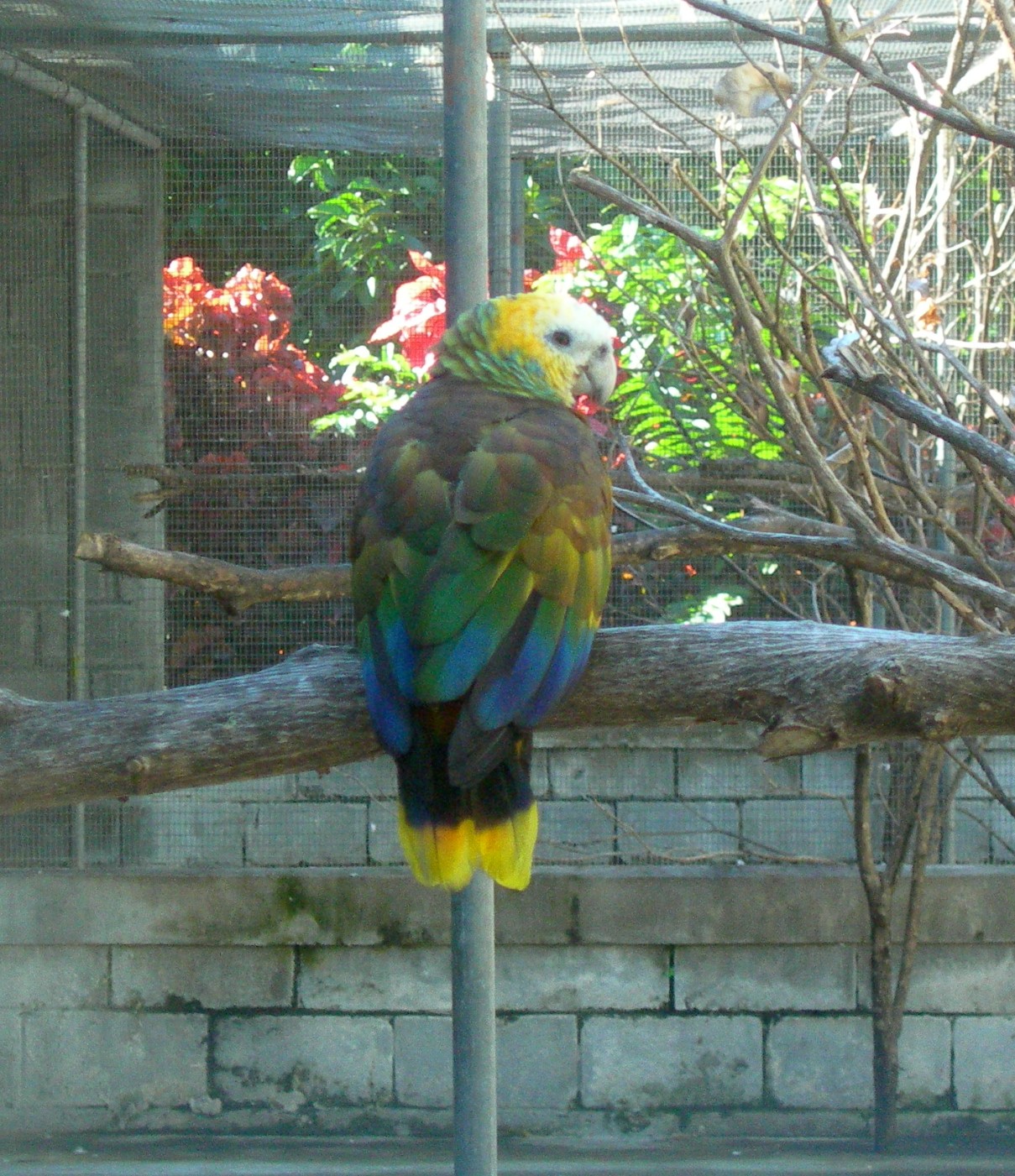
One of the garden’s most iconic residents is the St. Vincent amazon parrot, a vibrant bird with emerald-green plumage and a splash of red on its chest. Once on the brink of extinction, conservation efforts have helped restore its population, and the garden now serves as a sanctuary for the species. A small aviary allows visitors to see the birds up close, though they often fly freely across the grounds, their calls mixing with the rustle of leaves and the murmur of streams. The effect is like stepping into a pocket of jungle that has somehow survived in the middle of the city.
Beyond the plants, the garden holds a few other treasures. There’s a modest museum dedicated to the island’s botanical history, filled with old maps, engravings, and artifacts from 18th- and 19th-century expeditions. Nearby, an old greenhouse still stands, its wooden shelves lined with pots, the air thick with the scent of earth and damp wood. The place has a slightly worn-in feel, as if the scientists who once worked here have just stepped out for lunch and might return at any moment. It’s this sense of timelessness that gives the garden its charm—less a polished attraction than a place that has quietly endured.
For locals, the Botanic Gardens is more than just a tourist spot; it’s a part of daily life. On weekends, families picnic under the trees, students sketch the landscape, and elderly couples stroll along the shaded paths. There’s a relaxed, unhurried atmosphere here, far removed from the crowds that flock to more famous attractions. The lack of tourist hordes is part of what makes the garden special—you can spend hours wandering without feeling rushed, discovering hidden corners as if you were the first to find them, even though the place has long been woven into the fabric of the island.
St. Vincent’s climate is perfectly suited for tropical flora, and the garden showcases this in abundance. The warm, humid air and fertile soil allow plants to thrive, and the variety is staggering. Alongside native species, you’ll find trees and shrubs from South America, Africa, and Asia—mangoes, guavas, cinnamon, nutmeg, and countless types of orchids and ferns. Some bloom year-round, while others flower for just a few weeks, but the garden always offers something new to see, no matter when you visit.
From the higher elevations of the garden, there’s a sweeping view of Kingstown and the bay beyond. The city, with its colorful buildings and bustling port, looks small and almost toy-like from this vantage point, while the sea stretches endlessly toward the horizon. On clear days, you can even make out the Grenadine islands in the distance, a reminder that St. Vincent is just one part of a vast archipelago where nature has always been the true ruler. The garden feels like a bridge between the urban and the wild, between the past and the present, between human ambition and the natural world it seeks to preserve.
Today, the Botanic Gardens of St. Vincent remains both a historical landmark and an active center for research and education. Conservation programs aim to protect endangered species, and school groups often visit to learn about the island’s unique ecosystems. Yet for most people who come here, it’s simply a beautiful place to escape the noise of the city. There are no luxury resorts or flashy attractions, just quiet paths, dappled shade, and the sense that the world around you is alive in its own slow, steady rhythm. That’s what makes the garden truly special—not grand gestures, but the quiet magic of a place where nature has been allowed to flourish, undisturbed, for centuries.