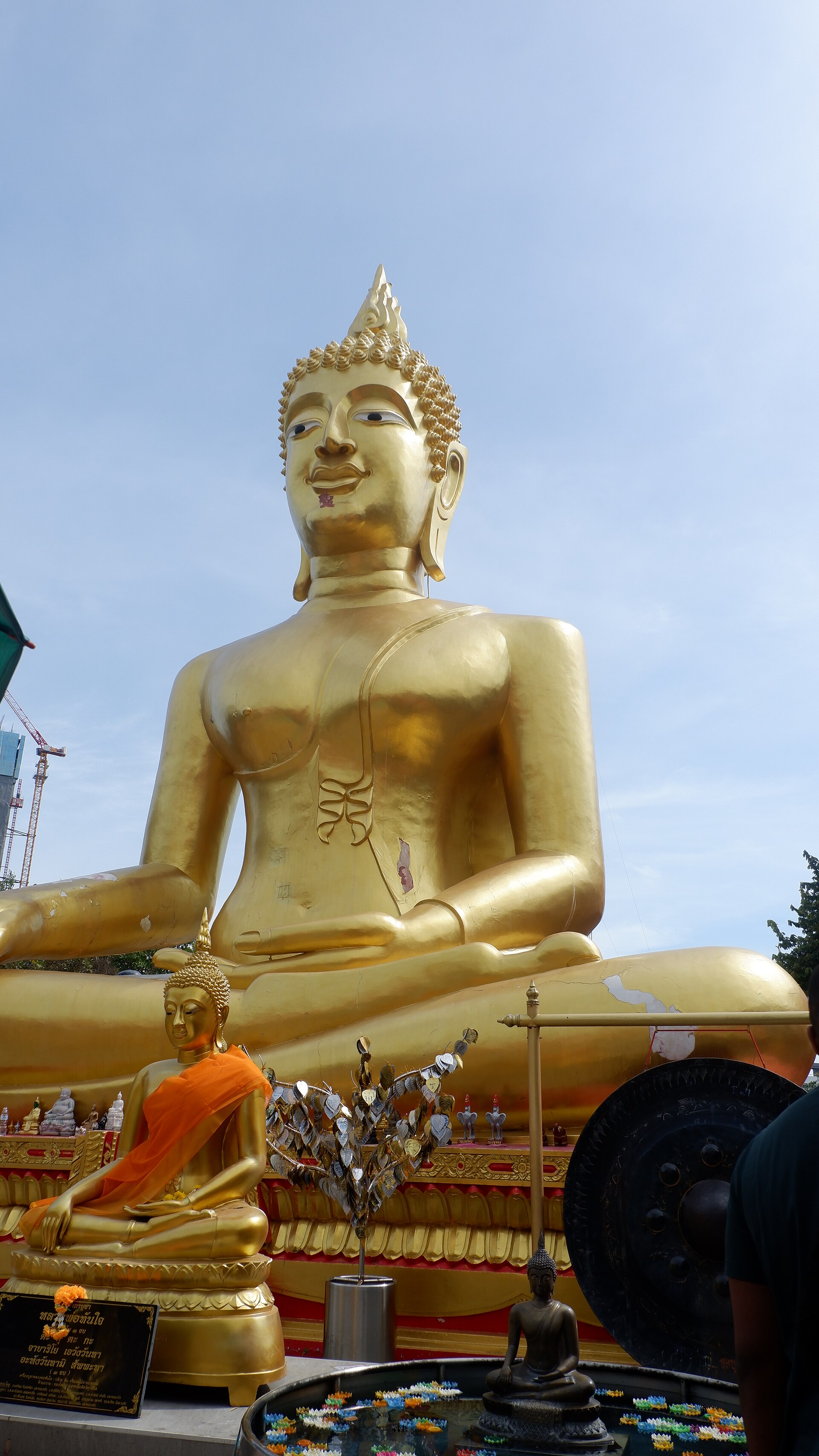
Perched on a quiet hill overlooking the restless energy of Pattaya, the Big Buddha feels like a secret the city keeps to itself. It doesn’t announce itself with neon lights or crowded promenades, yet those who make the climb find something rare in this part of Thailand—a stillness that lingers even as the city hums below. From here, the view stretches across the Gulf of Siam, where the water meets the horizon in a soft blur. The statue itself, known locally as Phra Yai, stands with a quiet dignity, its serene expression unchanged since it was erected in 1977. Fifteen meters tall, it’s modest by the standards of Buddhist monuments, but up close, its presence is undeniable. The figure sits in meditation, hands resting on its lap, a posture that seems to invite visitors to pause, if only for a moment.
The climb up the steps is gentle but steady, winding through a small park where the air smells of frangipani and damp earth. On a hot day, the ascent can feel like a small pilgrimage, but the reward is worth it. From the top, Pattaya looks almost unrecognizable—not the brash resort town of bars and beachfronts, but a sleepy coastal settlement hugging the shoreline. In the late afternoon, when the sun dips low, the light turns the water into liquid gold, and the city below begins to flicker with lights. It’s a view that makes the climb feel like a discovery, a reminder that there’s more to this place than its reputation.
At the base of the statue, the temple complex moves at its own unhurried pace. Unlike the crowded temples of Bangkok or Chiang Mai, this one feels intimate, almost domestic. Monks in saffron robes drift between tasks—sweeping leaves, tending to the gardens, murmuring prayers. Sometimes they pause to offer a blessing or a smile to visitors, their gestures unassuming. There are no guided tours or scripted explanations here, just the quiet rhythm of daily life. For many, it’s a first brush with Buddhist traditions, one that doesn’t come with lectures or performances, but with the simple act of being present.
The Big Buddha’s story is woven into Pattaya’s transformation. Decades ago, this was little more than a fishing village, a quiet backwater where outsiders rarely ventured. Then came the 1960s, and with them, the tourists—first a trickle, then a flood. Bars, hotels, and nightclubs sprouted along the shore, reshaping the town into something louder, brighter, and far removed from its origins. The statue, built just as this change was taking hold, became a counterpoint to the noise, a quiet assertion that Pattaya’s identity wasn’t just about entertainment. Today, it stands as a bridge between the old and the new, a place where the past and present coexist without fanfare.
There’s no grand ceremony to visiting the Big Buddha. No strict dress code, though covering shoulders and knees is a sign of respect. No entrance fee, though donations for the temple’s upkeep are welcome. The best times to come are early morning or late afternoon, when the heat isn’t so oppressive. If you’re lucky, you might catch the monks chanting or performing a ritual—not as a spectacle, but as part of their daily routine. It’s a glimpse into a world that operates on a different rhythm, one that doesn’t revolve around tourists or schedules.
The gardens around the statue are a place to linger. Shaded by trees and dotted with flowers, they’re often filled with locals—families on outings, couples strolling, children playing. Sometimes, people bring food and spread out blankets for a picnic, turning the space into something more than just a tourist stop. For them, this isn’t a landmark to tick off a list; it’s a part of their lives, a place to unwind. That sense of familiarity seeps into the air, making the hill feel less like a foreign destination and more like a neighbor’s backyard.
What the Big Buddha lacks in grandeur, it makes up for in authenticity. There are no gilded spires or ancient ruins here, no dramatic backdrops like those in Ayutthaya or Bangkok. Instead, there’s a quiet humility, a sense that this place exists not to impress, but to offer something simpler—a moment of peace, a connection to something deeper. It’s a reminder that Pattaya, for all its reputation as a playground, is also a city with roots, with people who call it home. And perhaps that’s why, even after seeing the country’s most famous sights, some travelers find themselves drawn back here, to this hill where the view is wide and the air is still.