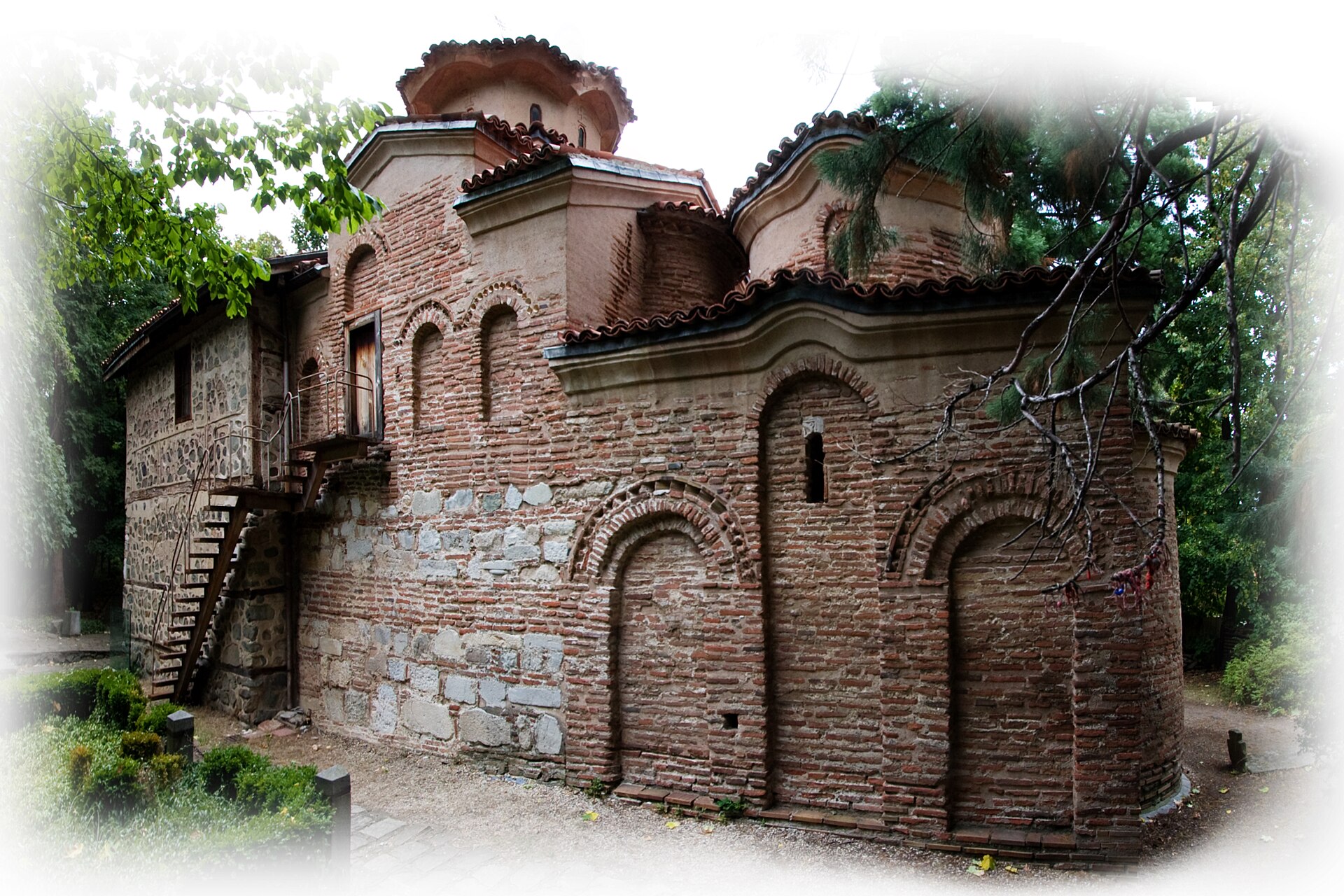
The Boyana Church sits quietly on the outskirts of Sofia, tucked against the slopes of Vitosha Mountain as if trying to avoid the noise of the city. It’s a small medieval structure, easy to overlook at first glance, but those who take the time to visit soon realize it holds something rare. The church is one of the few surviving examples of medieval Bulgarian art, a place where history feels almost tangible, preserved in layers of frescoes that have endured for centuries.
Built in stages between the 10th and 19th centuries, the church is actually a complex of three connected buildings. The oldest part, the eastern church, dates back to the late 10th or early 11th century, a time when Bulgaria was a powerful medieval kingdom. Its simple stone walls and arched windows reflect the architectural style of the period, unassuming yet sturdy. Over the centuries, two more sections were added—the second church in the 13th century and a final extension in the 19th century—each reflecting the needs and tastes of the time. The result is a structure that tells a story not just of faith, but of the people who shaped it.
What makes the Boyana Church truly remarkable, however, are its frescoes. Painted in 1259, they are considered one of the most important collections of medieval art in the Balkans. The artists, whose names have been lost to time, filled the walls with scenes from the life of Christ, portraits of saints, and even depictions of contemporary figures, including the Bulgarian tsar Constantine Tikh and his wife Irina. The frescoes stand out for their realism and emotional depth, a departure from the more stylized religious art of the period. The faces of the saints and biblical figures are expressive, almost lifelike, as if the artists were trying to capture not just their likeness, but their humanity.
The church’s most famous fresco is the portrait of Saint Nicholas, which adorns the northern wall. Unlike the stern, otherworldly depictions common in medieval art, this Saint Nicholas has a gentle, almost weary expression, as if he’s seen too much of the world’s suffering. The attention to detail is striking—every fold of his robe, every strand of his beard, is rendered with care. Nearby, the Last Judgment scene unfolds in vivid colors, with angels and demons locked in a cosmic struggle, a reminder of the medieval worldview that saw life as a battle between good and evil.
The Boyana Church was not always a place of quiet reflection. For much of its history, it served as a parish church for the local community, a place where people gathered for worship, baptisms, and funerals. The 19th-century extension, added when the church was already centuries old, reflects the changing needs of its congregation. This newer section is larger and more ornate, with a wooden ceiling and a small bell tower, a sign of the growing prosperity of the area. Yet even as the church evolved, its medieval core remained untouched, a silent witness to the passage of time.
In the 20th century, the Boyana Church gained recognition as a cultural treasure. It was declared a UNESCO World Heritage Site in 1979, a designation that helped protect it from the encroaching modern world. Today, visitors must pass through a small visitor center before entering the church itself, a measure to control humidity and light levels that could damage the fragile frescoes. The interior is dimly lit, the air cool and still, as if the centuries have settled into the stone. There’s a sense of stepping into another era, one where time moves more slowly.
The church’s location, on the edge of Sofia, adds to its appeal. Vitosha Mountain looms in the background, its slopes covered in forests that change color with the seasons. In winter, the church is often dusted with snow, its stone walls standing in stark contrast to the white landscape. In summer, the air is filled with the scent of pine and wildflowers, and the sound of birdsong drifts through the trees. It’s a place that feels far removed from the bustle of the city, even though Sofia is just a short drive away.
For those interested in history, the Boyana Church offers a glimpse into Bulgaria’s medieval past, a time when the country was a center of Orthodox Christianity and a bridge between East and West. The frescoes, in particular, are a testament to the skill of Bulgarian artists, who managed to create something enduring in an era of constant change. But even for those who aren’t history buffs, the church has a quiet charm. It’s a place to pause, to look closely at the details, and to wonder about the hands that painted them so many centuries ago.
The Boyana Church isn’t a grand cathedral or a towering monument, but that’s part of its appeal. It’s a humble structure, built by and for ordinary people, yet it has outlasted empires and wars. In its walls, you can sense the continuity of life—the same hopes, fears, and faith that have shaped human history for millennia. Whether you visit for the art, the history, or simply the chance to step away from the modern world for a while, the church leaves an impression that lingers long after you’ve left.