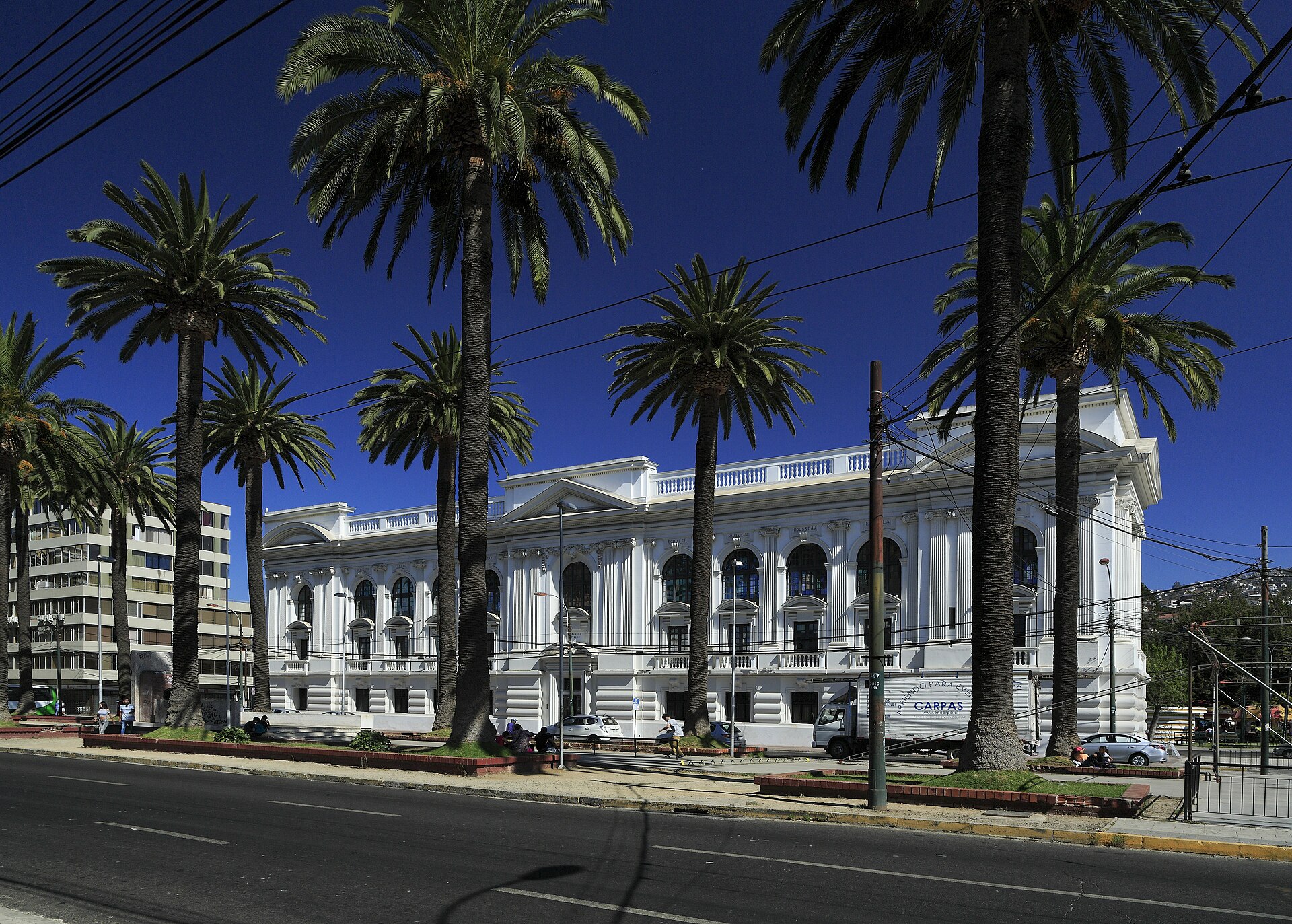
The Santiago Severín Library in Valparaíso is one of those rare places that tells the story of a city not through grand declarations, but through the quiet weight of its presence. Tucked into the heart of the port district, it stands where merchants, sailors, and immigrants once crowded the streets, bringing with them languages, customs, and ideas from across the globe. The building itself is a relic of an era when Valparaíso was one of the Pacific’s most vital harbors, a time when Chile’s economy surged and the city thrived as a crossroads of trade and culture. Inside, beneath soaring ceilings and among towering wooden shelves, the past lingers—not as a museum piece, but as something alive, breathing. Though the library has long since expanded beyond its original purpose, it remains a place where history and modern life intersect, where the scent of old paper mingles with the hum of conversation and the occasional clatter of a coffee cup.
The library’s origins trace back to the late 19th century, a period of rapid growth for Valparaíso. As the city flourished, local intellectuals and business leaders began to consider how to preserve knowledge for future generations. The driving force behind the library’s creation was Santiago Severín, a prominent civic figure and philanthropist whose name it still bears. Severín didn’t just fund the construction; he also donated part of his personal book collection, laying the foundation for what would become a vast repository of written works. At the time, libraries were a rarity in provincial cities, and the opening of such an institution was a landmark event for Valparaíso. It wasn’t just a place to borrow books—it was a symbol of progress, a testament to the belief that education and culture should be accessible to all.
The building itself is a striking example of neoclassical architecture, a style that dominated Chilean design in the late 1800s. The façade is adorned with columns and intricate moldings, while the interior retains much of its original character, from the polished marble staircases to the stained-glass windows that cast a soft, diffused light. The reading room is particularly impressive, with its high ceilings, tall windows, and antique chandeliers, all of which seem to slow time to a crawl. Over the years, the library has undergone renovations, blending its historic charm with modern amenities like digital catalogs and workspaces for laptops. Yet even with these updates, the building retains a sense of timelessness, as if the past and present coexist effortlessly within its walls.
The library’s collections are nothing short of remarkable. Among its holdings are rare 19th-century books in Spanish, French, English, and German, reflecting the cultural diversity that defined Valparaíso during its golden age. The archives are a treasure trove for anyone interested in Chilean and Latin American history, offering everything from old newspapers and maps to personal memoirs, scientific works, and even handwritten manuscripts. Researchers and casual visitors alike can delve into these materials, uncovering stories of the past that might otherwise be forgotten. But the library isn’t stuck in history—its shelves are constantly refreshed with new acquisitions, including contemporary literature and academic publications, ensuring that it remains a relevant resource for today’s readers.
Beyond its role as a repository of books, the Santiago Severín Library has become a vibrant cultural hub. It hosts exhibitions, lectures, literary readings, and workshops that draw both locals and visitors. Some of the most popular events are the talks by Chilean writers and poets, many of whom have deep ties to Valparaíso. In recent years, the library has strengthened its collaborations with universities and cultural institutions, organizing joint projects that explore history, art, and science. For younger audiences, there are educational programs designed to foster a love of reading and learning from an early age. These initiatives have helped the library evolve into more than just a place to study—it’s a gathering spot, a venue for ideas, and a bridge between different generations of Valparaíso’s residents.
Valparaíso is a city of contrasts, where grand mansions stand alongside humble workers’ quarters, and where steep, winding streets lead to breathtaking viewpoints. The Santiago Severín Library sits at the intersection of these worlds, offering a quiet counterpoint to the city’s chaotic energy. It’s within walking distance of the port and the historic center, where Art Nouveau buildings, vibrant street art, and endless staircases create a landscape that feels both timeless and ever-changing. Many visitors combine a trip to the library with a stroll through the city, taking their time to explore its nooks and crannies. Valparaíso rewards those who wander, and the library is often a starting point—or a pause—in that journey.
In an age where books can be summoned with a tap on a screen, the Santiago Severín Library reminds us of the enduring value of physical spaces dedicated to knowledge. It’s a place where the hush of a reading room, the rustle of turning pages, and the faint aroma of old paper create an atmosphere that digital formats can’t replicate. For many locals, the library is a second home, a refuge from the noise of daily life where they can lose themselves in a book or simply enjoy a moment of quiet. For travelers, it offers a chance to connect with the city’s soul, to see Chile not just as a land of stunning landscapes, but as a place with a rich and layered cultural heritage.
Valparaíso is often called Chile’s cultural capital, and the Santiago Severín Library is one of the reasons why. It doesn’t just house books—it preserves the memory of the city, its people, and their enduring pursuit of knowledge. You could spend an hour here or return time and again, each visit revealing something new. That’s the quiet magic of places like this: they don’t age, they simply accumulate stories, waiting for those who are willing to listen. In a world that moves faster every day, the library stands as a reminder of the value of slowing down, of taking the time to explore, to learn, and to connect with the past.