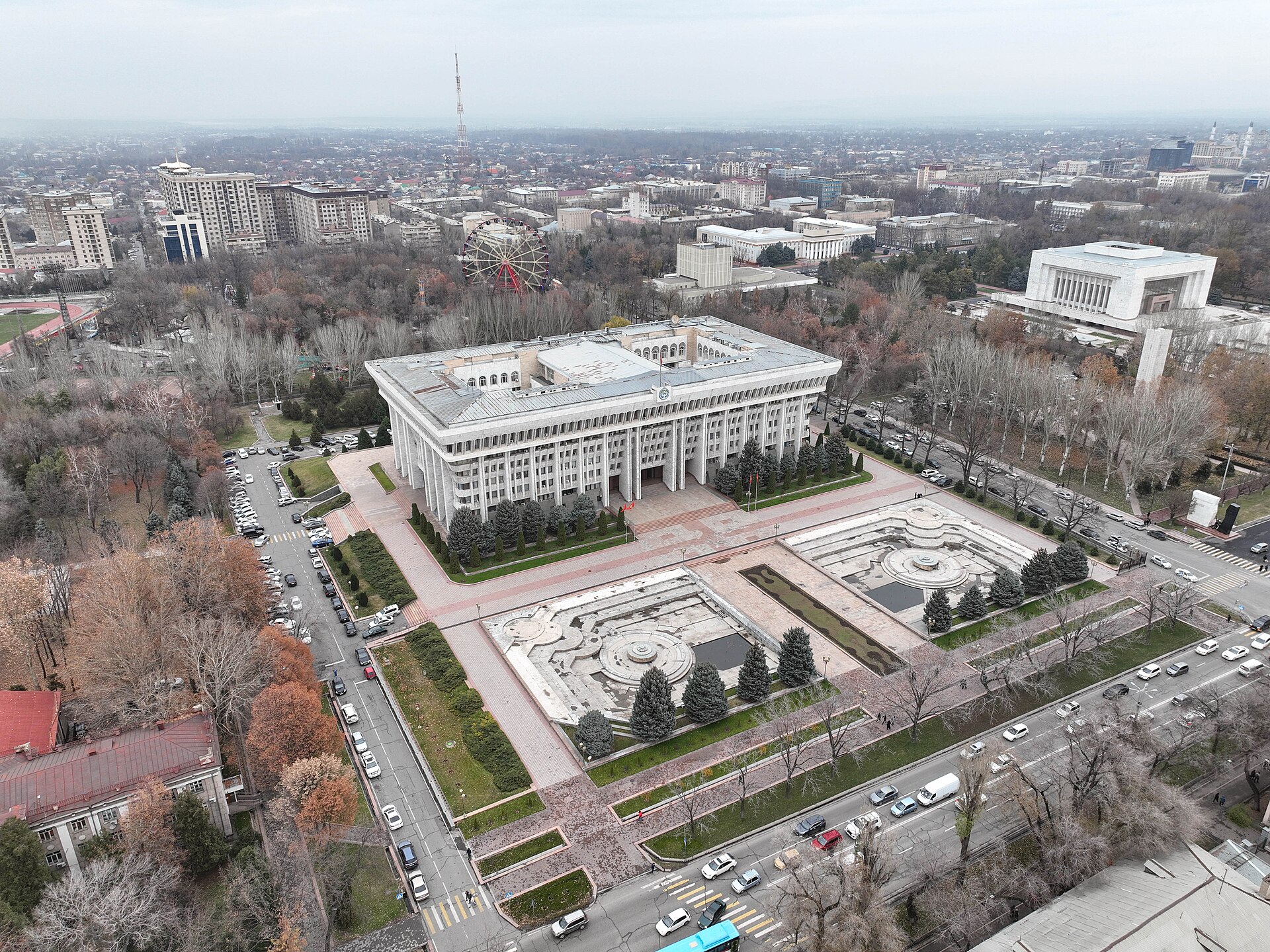
The White House in Bishkek stands as one of the most recognizable buildings in Kyrgyzstan, a structure that carries both political weight and architectural significance. Built in the 1980s during the Soviet era, it was originally designed as the headquarters of the Communist Party of the Kyrgyz SSR. Its imposing presence in the heart of the capital reflects the Soviet approach to monumental architecture—grand, symmetrical, and meant to convey authority. The building’s white marble facade, from which it gets its name, gives it a stark, almost austere appearance, softened only by the surrounding greenery of Ala-Too Square.
Over the decades, the White House has witnessed some of the most pivotal moments in Kyrgyzstan’s modern history. It became the official residence of the country’s president after independence in 1991, a symbol of the new republic’s sovereignty. Yet its walls also bear the scars of political upheaval. In 2005 and again in 2010, the building was at the center of mass protests that led to the ousting of presidents. The most dramatic of these events saw crowds storm the compound, leaving behind a trail of damage—burned documents, shattered windows, and graffiti that spoke to the public’s frustration. These moments have embedded the White House in the national consciousness as more than just an administrative center; it is a place where history has been made, often in turbulent ways.
Architecturally, the White House is a product of its time, blending Soviet modernism with elements of Kyrgyz design. The structure is massive, with a central tower flanked by two wings, creating a sense of balance and order. The use of marble was a deliberate choice, meant to evoke permanence and strength, while the interior reportedly features grand halls and ornate details that contrast with the building’s otherwise utilitarian purpose. The surrounding area, including Ala-Too Square, was designed to complement the White House, with wide boulevards and open spaces that allow the building to dominate the skyline. This layout was typical of Soviet urban planning, where public spaces were intended to serve as stages for state ceremonies and parades.
For visitors, the White House is not just a political landmark but also a piece of living history. While access to the interior is restricted, the exterior and the square in front of it are open to the public. The building’s facade, especially when lit at night, takes on a different character—less imposing, more like a relic of a bygone era. The square itself is a popular gathering place, where locals and tourists alike come to walk, take photos, or simply soak in the atmosphere. On weekends, it’s not uncommon to see families strolling, street vendors selling snacks, or groups of young people meeting up before heading out into the city.
The White House’s role in Kyrgyzstan’s political life means it is often associated with the country’s struggles and aspirations. It has been a backdrop for protests, celebrations, and moments of national reflection. The 2010 revolution, in particular, left a lasting mark on the building and the city. After the unrest, efforts were made to restore the White House, though some signs of the damage remain—a reminder of the fragility of stability in a young democracy. For many Kyrgyz, the building is a symbol of resilience, a place that has weathered storms and continues to stand, even as the country around it changes.
Beyond its political significance, the White House is also a part of Bishkek’s urban fabric. The city itself is a mix of Soviet-era architecture and more recent developments, with the White House serving as a focal point. Nearby, you’ll find other landmarks like the State Historical Museum and the statue of Manas, the legendary Kyrgyz hero, which add layers to the city’s identity. The area around the White House is also home to government offices, embassies, and cultural institutions, making it one of the most important districts in Bishkek. Walking through this part of the city, you get a sense of how the past and present coexist—where Soviet monuments stand alongside modern cafes and shops.
For those interested in Kyrgyzstan’s history, the White House offers a tangible connection to the country’s journey from Soviet republic to independent nation. It’s a place where the ideals of statehood, democracy, and national identity have been tested and redefined. While the building itself may not be open for tours, its presence is felt throughout Bishkek. Whether you’re watching the changing of the guard at the eternal flame nearby or simply observing the daily life that unfolds in Ala-Too Square, the White House remains a silent witness to the country’s evolution.
Visiting the White House is less about ticking off a tourist attraction and more about understanding the context in which Kyrgyzstan exists today. It’s a place where history is not just remembered but actively shaped. The building’s stark white facade, the stories of those who have passed through its doors, and the events that have unfolded in its shadow all contribute to its mystique. For anyone trying to grasp what Kyrgyzstan is about, the White House is a good place to start—not just as a symbol of power, but as a reflection of a nation finding its way.