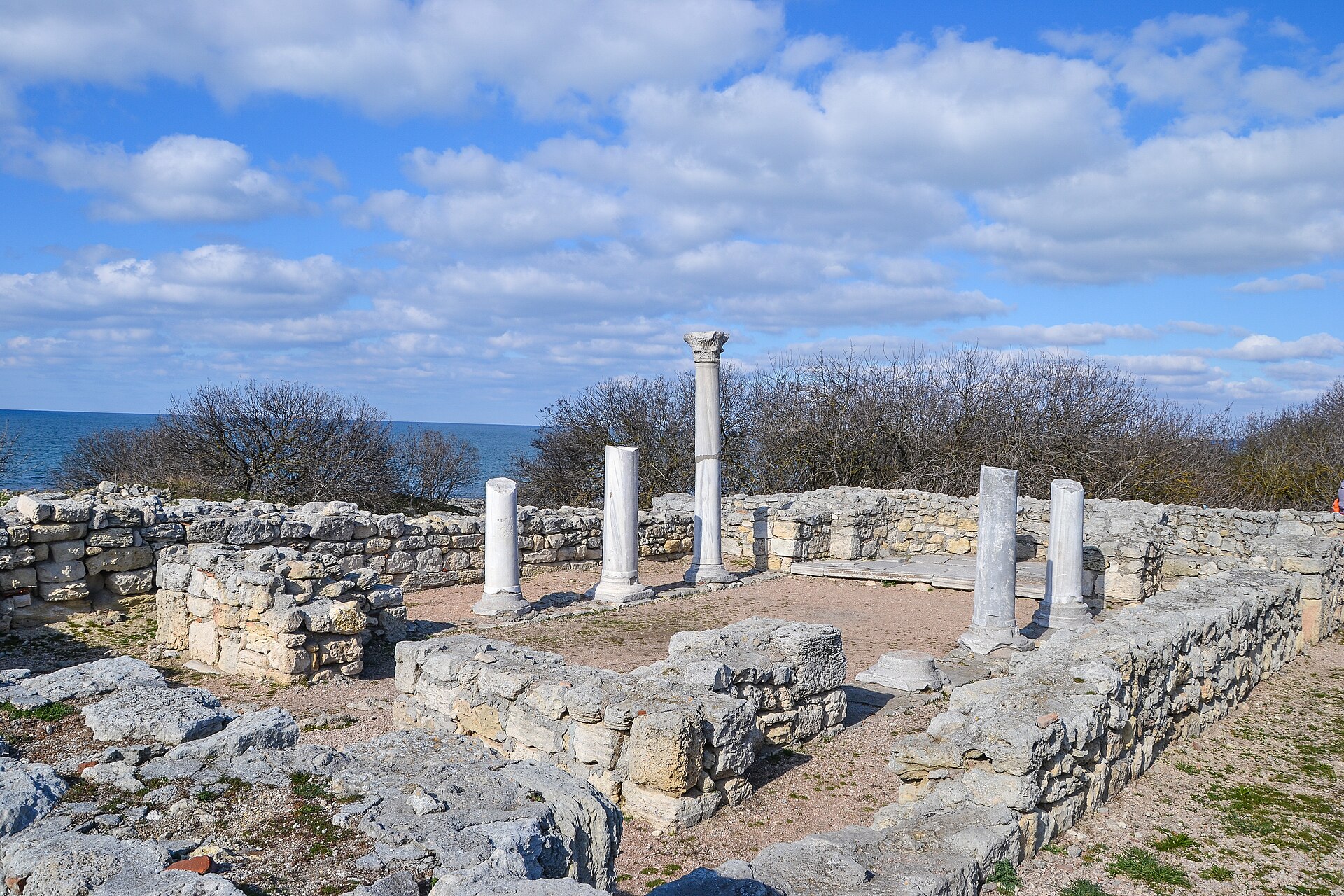
In the heart of Sevastopol, where history isn’t just preserved in museums but seeps through the very stones underfoot, there’s a place known as the Basilica within a Basilica. It’s not merely an architectural monument—it’s a layered chronicle of time, where each level tells its own story. Here, within the boundaries of the Chersonesus Museum-Reserve, an ancient basilica built in the 6th century lies sheltered under a glass canopy, and inside it, another even older one, dating back to the 4th century. This rare coexistence of two Christian churches, separated by centuries, makes the site unique not just for Crimea but for all of Eastern Europe.
The younger of the two basilicas was erected during the height of the Byzantine Empire, when Chersonesus—then known as Cherson—served as a vital outpost of Christianity on the empire’s northern frontier. Its walls, built from local limestone, once bore floors adorned with mosaics, fragments of which can still be glimpsed beneath protective glass panels. The older basilica was discovered by archaeologists only in the mid-20th century, hidden beneath layers of later construction as if time itself had chosen to preserve it for future generations. Despite the centuries between them, both churches share a common purpose: they were not just places of worship but symbols of Byzantine power, faith, and cultural influence in the region.
Chersonesus itself is a city of legends. Founded by the Greeks in the 5th century BCE, it flourished and declined, passing through Roman, Byzantine, and Genoese hands. It was here that Prince Vladimir was baptized, where Greek, Latin, and Slavic prayers mingled, and where cultures and destinies intertwined. The Basilica within a Basilica is just one fragment of this vast mosaic, yet it offers a direct connection to the core of history. Standing inside the glass pavilion, you walk on floors trodden by people a millennium and a half ago, surrounded by walls that witnessed crusades, nomadic invasions, and the revival of Christianity in these lands.
The architecture of the basilicas is typical of the early Christian period—simple, almost austere forms, a three-aisled layout, and an apse facing east. It’s this very simplicity that makes them special. There’s no grandeur of Gothic cathedrals or the ornate flourishes of Baroque here, but instead, a sense of authenticity, the spirit of Christianity’s earliest centuries when faith had not yet been weighed down by ritual and decoration. The interior of the later basilica was once divided by columns, of which only the bases remain. In the older one, traces of frescoes and remnants of an altar have been found, offering a glimpse of what this place looked like during services.
Today, the Basilica within a Basilica is not an active church but an open-air museum exhibit. The glass canopy shields the ancient walls from the elements but not from the eyes of visitors. Unlike the crowded cathedrals of Europe, this site offers a quiet intimacy with history, where the only sounds are the whisper of the wind and the distant murmur of tour guides. Time moves differently here—minutes stretch, and for a moment, you half-expect a Byzantine merchant or a Greek priest to round the corner, hurrying to prayer.
Visiting this place is more than a walk through ancient ruins; it’s an immersion in context. The Chersonesus Reserve, sprawling along the Black Sea coast, offers far more than just the basilicas. Here, you can wander the streets of an ancient city, see the remains of theaters, baths, and residential quarters, and explore a museum filled with artifacts unearthed during excavations. Yet it’s the Basilica within a Basilica that draws people in, a magnet for those who want to understand how the people of these lands lived, what they believed in, and what they held dear centuries ago.
The best time to visit is early morning, when the sun has just begun to warm the stones and the sea still holds the night’s coolness. Or late in the afternoon, when shadows grow long and the light turns golden. At these hours, the basilicas feel especially alive, as if the walls themselves are whispering their stories. There’s no need for audio guides or explanatory plaques—just standing and looking is enough to feel the breath of the past.
The Basilica within a Basilica is more than an architectural monument; it’s a testament to the fragility and resilience of human civilization. It has survived wars, invasions, the rise and fall of religions and empires, yet it has retained its essence. Today, it reminds us that history is not just a collection of dates and events but a living fabric woven from the lives, hopes, and disappointments of countless people. Perhaps that’s why this place holds such a pull—it offers a chance to touch something timeless, something beyond the reach of time.