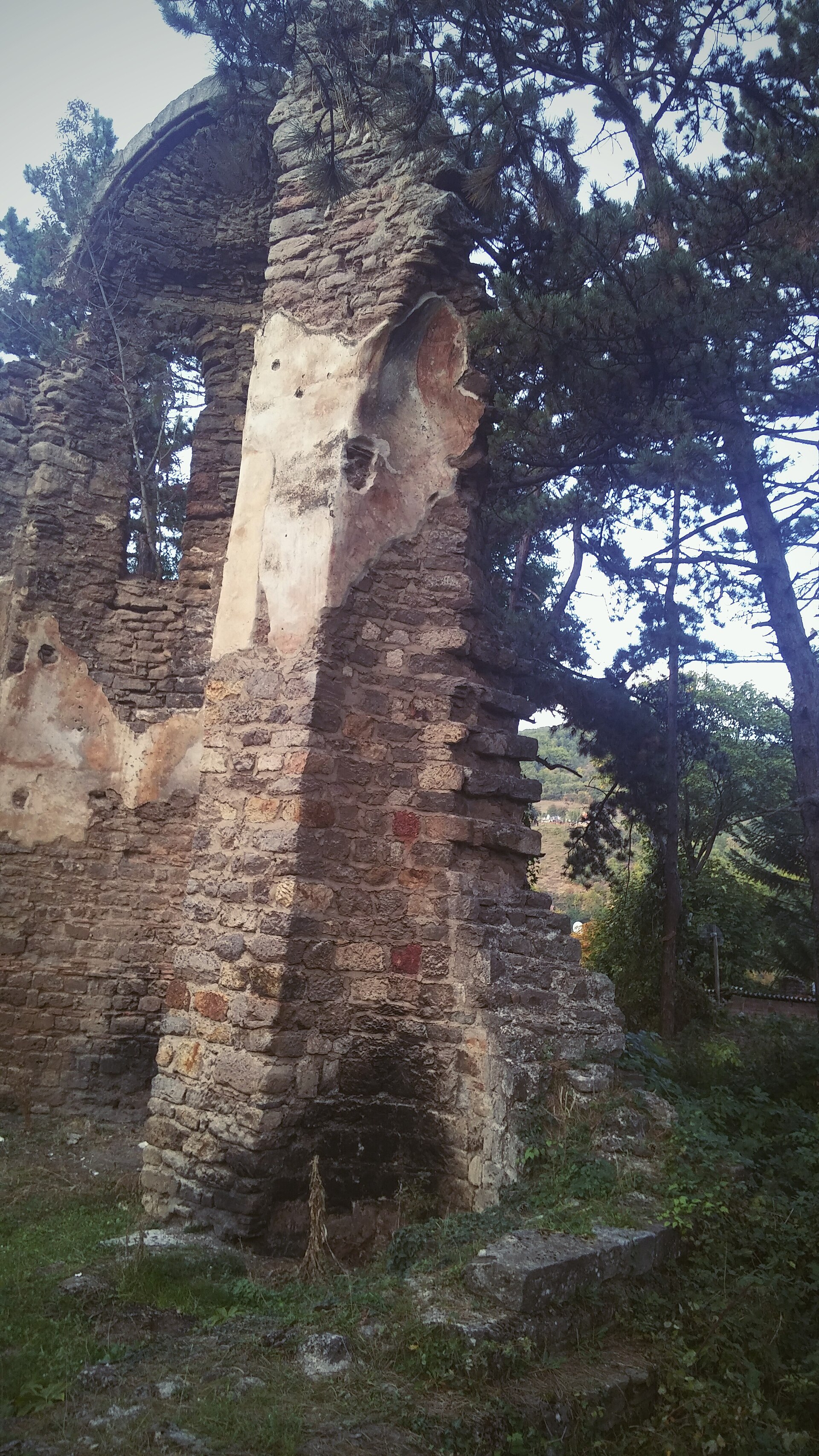
Novo Brdo is one of those places history remembers but travelers often overlook. Tucked away in the hills of Kosovo, this town was once a center of trade and craftsmanship, its wealth built on silver mines and skilled artisans. Today, it feels like an echo of the past, where medieval walls and forgotten buildings tell stories of a time when this was one of the most important cities in the Balkans. Among these ruins stands the Church of St. Peter, a reminder of Novo Brdo’s former significance.
The church was built in the 14th century, when Novo Brdo thrived under Serbian rule. The city minted its own coins, traded with Venice and Dubrovnik, and attracted merchants and craftsmen from across the region. The church reflects that era, when faith and daily life were intertwined. Unlike grand cathedrals, St. Peter’s was built for the people who lived here, a place where they gathered for prayer and community.
Architecturally, the church is simple. A single nave with a semicircular apse, constructed from local stone. Inside, the walls hold fragments of a different time. Faded frescoes depict saints and biblical scenes, their colors softened by centuries. The most striking image is that of Christ Pantocrator in the apse, a classic motif in Byzantine art. These paintings survive from the medieval artistic traditions of Kosovo. Over the years, some were plastered over or damaged, but enough remains to imagine how the church once looked.
The church’s history mirrors the past of Novo Brdo. In the 15th century, the Ottomans took the city, and St. Peter’s was converted into a mosque. Later, it was returned to Christian use. The walls bear the marks of these changes—bricked-up windows, altered doorways, layers of history etched into the stone. It’s a place where the passage of time feels tangible.
Today, the church stands apart from the usual tourist trails. There are no crowds, no souvenir stalls, no guided tours. Instead, there’s silence, broken only by the wind and the occasional call of a bird. The surrounding ruins—crumbling walls, the foundations of old houses, ancient wells—hint at the scale of Novo Brdo in its prime. Walking through them, you can picture the city as it once was: a hub where miners, merchants, and priests went about their daily lives.
For those who visit, St. Peter’s offers something rare. There are no signs explaining every detail, no audio guides narrating its story. The church speaks for itself through its stones and faded paintings. You can stand in the nave and imagine the sound of hymns, the murmur of worshippers, the rituals that once defined this place. It’s about connection—the kind that comes from touching history firsthand.
Novo Brdo isn’t a destination for those seeking postcard-perfect sights. There are no dramatic views here. Instead, it’s a place for travelers who want to step off the beaten path and engage with the past in a quiet way. The Church of St. Peter isn’t just a monument; it’s a piece of history, waiting for those who are willing to listen. If you find yourself in Kosovo and crave something beyond the usual tourist stops, this is where you’ll find it—not in the noise, but in the silence between the stones.