Sant’Ambrogio Basilica is one of those rare places in Milan where time seems to soften, almost as if the city’s relentless pace dissolves into something quieter. Tucked away on a square lined with low, weathered buildings, the church feels like a fragment of the early Middle Ages preserved in stone. Unlike the grand cathedrals that draw crowds, Sant’Ambrogio has a way of slipping past the usual tourist trails, though it stands as one of the oldest and most significant churches in the city. Founded in the 4th century by Ambrose of Milan—later the city’s patron saint—it was built on the site where, according to legend, he uncovered the relics of martyrs Gervasius and Protasius. That discovery turned this spot into sacred ground, a place where the past still lingers in the air.
The architecture of Sant’Ambrogio is a story told in layers, each one revealing a different chapter of Milan’s history. From the outside, the church appears unassuming, its rough-hewn facade giving little hint of the beauty within. But step inside, and the space unfolds with a quiet grandeur. The original structure was Romanesque, yet over centuries, Gothic and Renaissance elements were woven into its design. The most striking feature is the asymmetrical pair of bell towers—one sturdy and square, the other more slender—added at different times. The contrast gives the basilica a sense of organic growth, as if it evolved rather than was simply built. Inside, the nave stretches wide and high, its ancient columns supporting arches that frame faded frescoes. The golden altar, crafted in the 9th century by the master goldsmith Volvinio, is a masterpiece of early medieval art, its surface alive with enamel and precious stones.
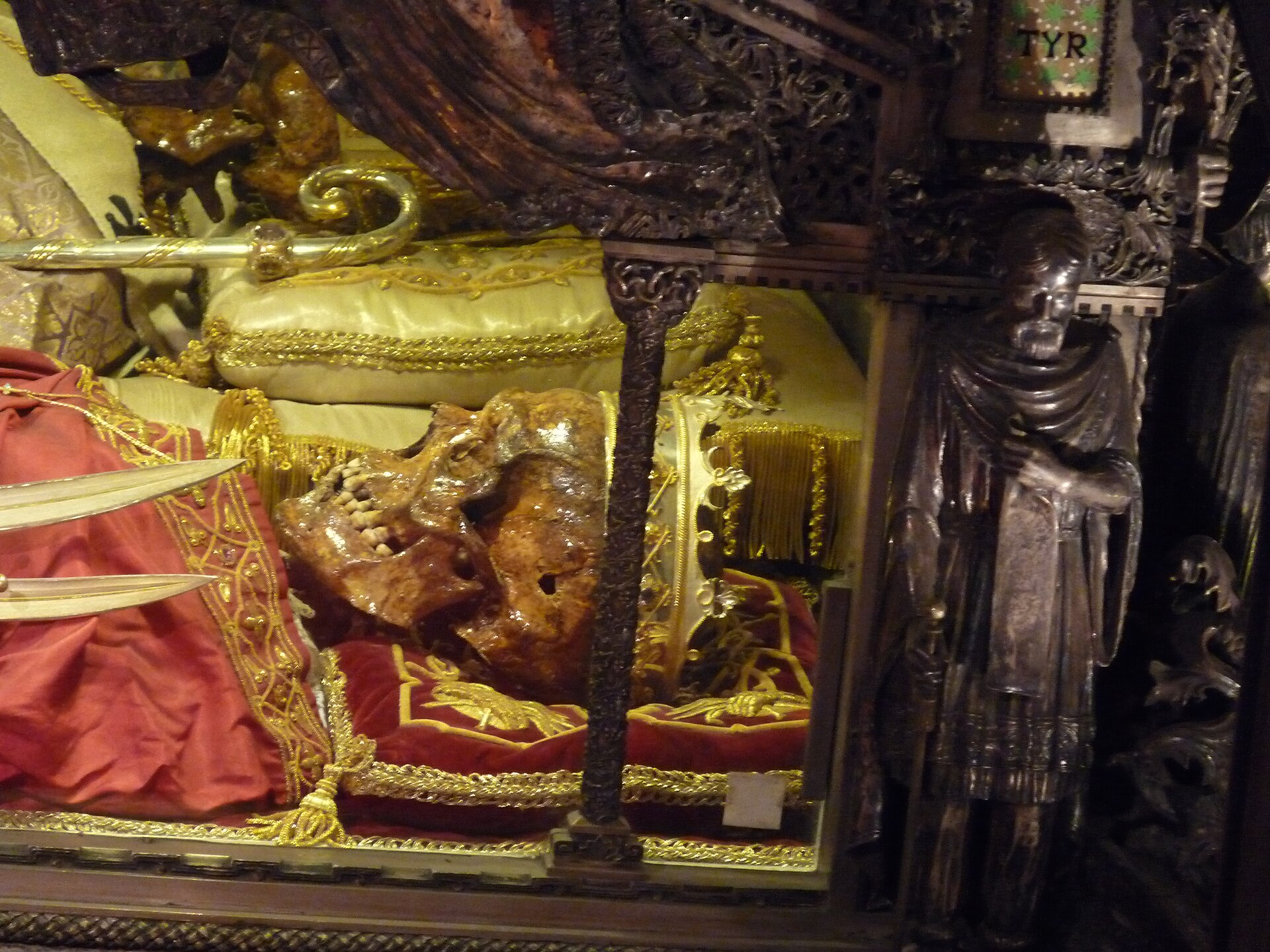
Beyond its religious significance, Sant’Ambrogio is a place where Milan’s history feels tangible. The basilica houses the sarcophagus of Saint Ambrose himself, along with relics of other saints, making it a destination for pilgrims. Yet even those who don’t come for spiritual reasons will find something compelling here. Milan is often seen as a city of fashion and finance, but this church is a reminder of its deeper roots—as a center of early Christianity. The crypt beneath the altar holds mosaics from late antiquity, their colors still vivid despite the centuries. Nearby, a small museum displays artifacts that whisper of medieval life: fragments of manuscripts, liturgical objects, and relics that once belonged to the city’s bishops.
The atmosphere inside Sant’Ambrogio is unlike that of other Italian churches. There’s no dazzling gold leaf or dramatic lighting, just a soft, diffused glow filtering through narrow windows. The stone walls absorb sound, leaving the space hushed except for the occasional echo of footsteps. On weekdays, the basilica is nearly empty, offering a rare chance to sit undisturbed on one of the wooden pews, tracing the lines of an arch or losing yourself in thought. On Sundays, the church comes alive with the voices of parishioners and the swell of organ music, a reminder that this is still a living place of worship, not just a monument.
Sant’Ambrogio has always been more than a church. In the Middle Ages, it served as a gathering place for the city’s citizens, where decisions shaping Milan’s future were debated. During wars, its thick walls offered refuge, bearing witness to both triumph and hardship. Even as the city modernized in the 19th century, the basilica remained a symbol of continuity, a link to Milan’s earliest days. Today, it stands slightly apart from the tourist circuit, which only adds to its charm. Here, you can sense the city as it truly is—not the postcard version, but the one that moves at its own unhurried pace.
If you enter through the side door, you’ll find a small cloister, a quiet courtyard framed by columns. Few visitors venture here, making it one of Milan’s hidden corners. The worn stone benches invite you to sit, listening to the distant hum of the city while surrounded by fragments of history. Some of the columns bear faint inscriptions, remnants of old tombs, a silent testament to the generations who have passed through this space. Occasionally, you might see locals who come not as sightseers, but simply to escape the noise, to linger in a place where time feels suspended.
For all its ancient roots, Sant’Ambrogio is still very much part of modern Milan. Every December, the city celebrates the feast day of Saint Ambrose with a festival that draws crowds to the basilica. The church is adorned with flowers, music fills the air, and the square outside buzzes with stalls selling local treats. Yet even on ordinary days, the basilica feels alive with the past. It’s why many Milanese consider it a second home—a place to step away from the rush and remember that their city has been standing for over fifteen hundred years.
There’s something deeply human about Sant’Ambrogio. It doesn’t demand attention like the grander monuments, nor does it rely on spectacle. Instead, it offers a quiet kind of beauty, the kind that reveals itself slowly. Whether you come for the history, the art, or simply the chance to sit in silence, the basilica has a way of making you feel connected to something larger than yourself. In a city that’s always moving forward, it’s a reminder of what endures.