The Basilica of Our Lady of the Angels stands in the heart of Cartago, a city that was once the capital of Costa Rica before the seat of government moved to San José. This grand church, with its Byzantine-inspired domes and neoclassical façade, is more than just an architectural landmark—it’s a place of deep spiritual significance for the country. Built in the early 20th century, the basilica replaced an earlier structure that had been damaged by earthquakes, a recurring challenge in this seismically active region. The current building, completed in 1924, was designed to withstand the tremors that have shaped so much of Costa Rica’s history, its sturdy walls and reinforced foundations a quiet testament to resilience.
The basilica’s most revered treasure is La Negrita, a small statue of the Virgin Mary carved from dark stone, which gives the church its affectionate nickname. According to tradition, the statue was discovered in 1635 by a local woman who found it on a boulder near Cartago. When she tried to take it home, the statue mysteriously returned to the same spot, an event that was interpreted as a divine sign. Over time, La Negrita became a symbol of faith and protection, drawing pilgrims from across the country. Today, the statue is housed in a gilded shrine within the basilica, its presence a focal point for devotion and prayer.
Every year on August 2nd, thousands of Costa Ricans make the pilgrimage to Cartago to honor Our Lady of the Angels, a tradition known as the Romería. Some walk for days, covering hundreds of kilometers from distant towns, while others arrive by bus or car, their vehicles adorned with flowers and religious symbols. The journey is as much a part of the experience as the destination, a chance for reflection, gratitude, and sometimes even penance. By the time pilgrims reach the basilica, the streets are alive with music, prayer, and the scent of candles and incense, creating an atmosphere of shared faith and community.
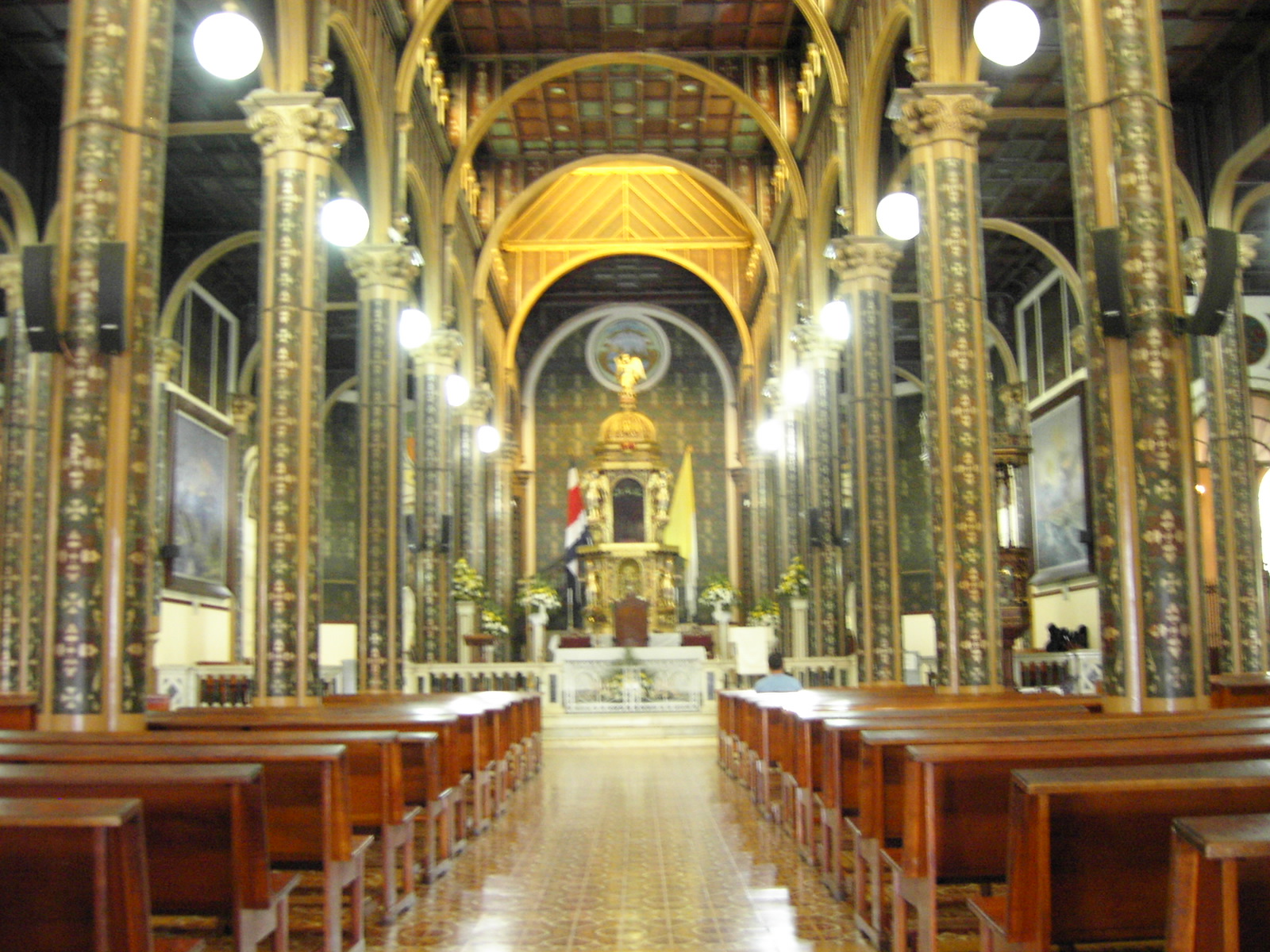
Inside the basilica, the air is cool and dim, the high ceilings and stained-glass windows casting soft, colored light across the pews. The walls are lined with ex-votos—small plaques and offerings left by the faithful in thanks for answered prayers. Some are simple notes, others elaborate paintings or even replicas of body parts healed by divine intervention. These personal tokens tell stories of hope, struggle, and gratitude, a silent chorus of voices that have passed through these doors over the decades. The basilica’s interior is a blend of grandeur and intimacy, its ornate altars and marble columns framing the quiet moments of individual devotion.
Beyond its religious importance, the basilica is a cultural touchstone for Costa Rica. It reflects the country’s colonial past, its Catholic heritage, and the enduring role of faith in daily life. Cartago itself, with its cobbled streets and historic buildings, feels like a step back in time, a contrast to the modern energy of San José just a short drive away. The city was founded in the 16th century by Spanish settlers, and though earthquakes have repeatedly reshaped its landscape, its colonial character remains. The basilica, with its imposing presence, anchors the city’s identity, a reminder of the traditions that have persisted through centuries of change.
For visitors who aren’t part of the pilgrimage, the basilica offers a glimpse into the soul of Costa Rica. It’s a place where history, faith, and culture intersect, where the past is still very much alive in the present. The surrounding plaza is often bustling with activity—vendors selling rosaries and candles, families gathering for a moment of quiet, and tourists taking in the sights. Nearby, the ruins of the old parish church, destroyed by an earthquake in 1910, stand as a poignant reminder of the forces that have shaped this land. The ruins, now a peaceful garden, offer a place to sit and reflect, a counterpoint to the basilica’s grandeur.
The basilica’s architecture is a study in contrasts. The exterior, with its twin towers and arched windows, is imposing yet graceful, a blend of European influences and local craftsmanship. The domes, covered in red tiles, rise above the city like a crown, visible from miles away. Inside, the space is vast but welcoming, the high ceilings drawing the eye upward while the warm tones of the wood and stone keep the atmosphere grounded. The basilica’s design was ahead of its time, incorporating earthquake-resistant techniques that were innovative for the early 20th century. This foresight has allowed it to endure, a rare survivor in a region where so many structures have fallen to natural disasters.
For those who visit, the basilica is more than just a stop on a tourist itinerary. It’s a place where the rhythms of Costa Rican life are on full display—where faith is lived, not just observed. Whether you come as a pilgrim, a history enthusiast, or simply a curious traveler, the basilica invites you to pause and consider the layers of meaning embedded in its walls. It’s a reminder that some places are more than just buildings; they’re living connections to the past, to the people who have walked these floors before, and to the stories that continue to unfold within them.