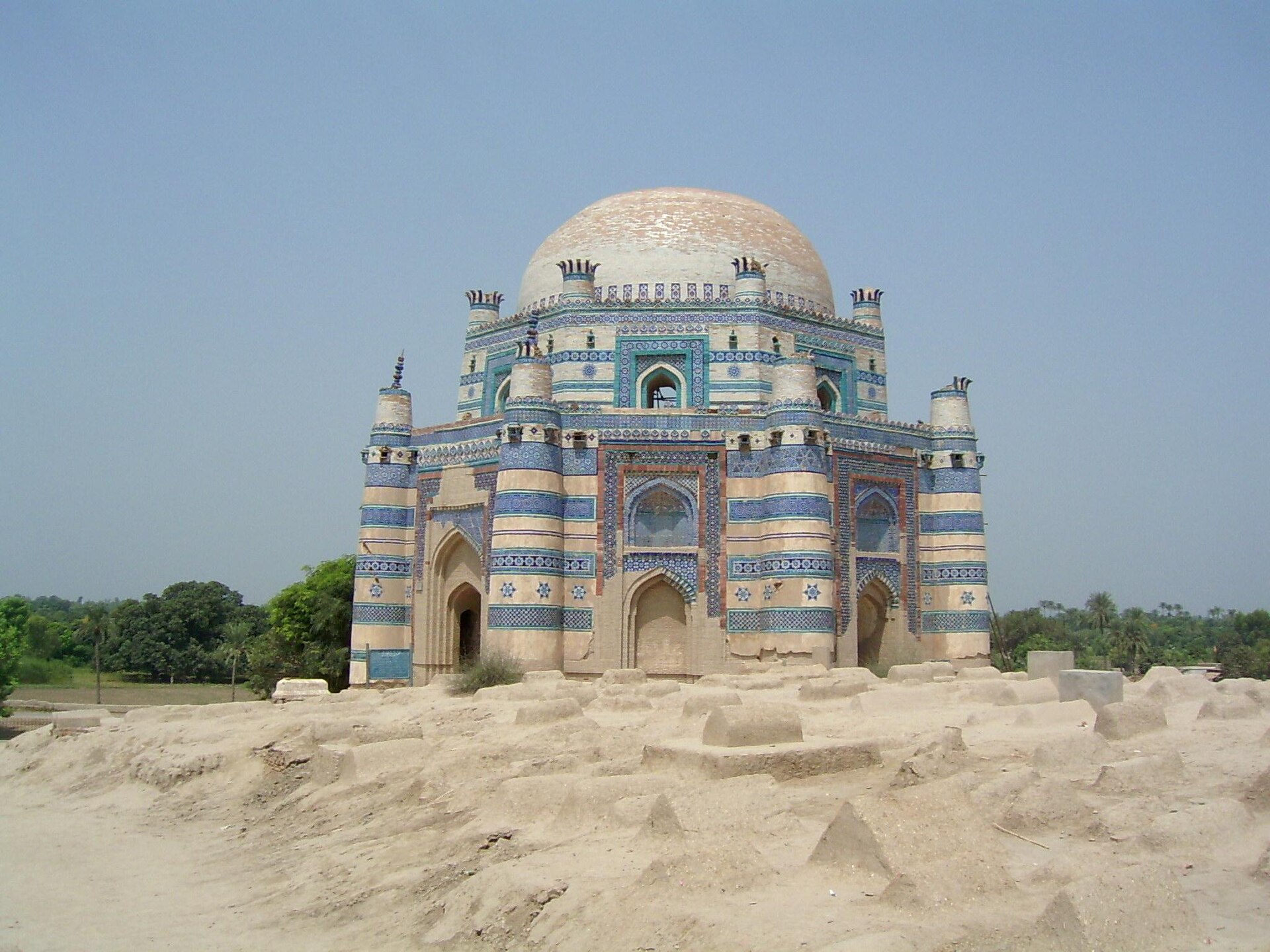
Uch Sharif’s bazaar is one of those rare places where time seems to slow, where the weight of history lingers in the worn stones and arched doorways. It isn’t just a market—it’s a living organism, shaped by centuries of trade, craftsmanship, and the quiet rhythms of daily life in this small Punjabi town. Uch Sharif itself is best known for its Sufi shrines, but the bazaar is where the city’s pulse is strongest, where the past and present intersect in the most unassuming ways.
The architecture here is typical of old South Asian trading quarters: narrow lanes shaded by cloth or wooden awnings to shield against the relentless sun, low stalls displaying goods on counters or even spread across the ground. There are no grand boulevards or modern shopping complexes—just a labyrinth of passageways designed for slow exploration, where bargaining is as much about conversation as it is about commerce. The surrounding buildings, made of mud brick and clay, have flat roofs and small windows, many still bearing the marks of traditional Punjabi construction. Some structures have stood for generations, their walls holding stories of merchants, travelers, and local families.
The bazaar offers everything a community needs: spices stacked in colorful piles, bolts of fabric in deep indigos and fiery reds, handmade pottery with simple yet striking patterns, and fresh produce from nearby fields. What makes it different from tourist-driven markets is its focus on local life. The goods here aren’t curated for outsiders—they’re practical, well-worn, and deeply familiar to those who use them. A hand-embroidered shawl might be bought for a daughter’s wedding, a clay pot for storing lentils, a bundle of spices to flavor a family meal. Each item has a purpose, and that purpose is rooted in the everyday.
Uch Sharif’s history is inseparable from its bazaar. The town, whose name means "Three Shrines," has been a crossroads for centuries, a place where caravans traveling between Central Asia and the Indian subcontinent would stop to rest, trade, and exchange news. Rulers once patronized artisans and merchants, turning the bazaar into a hub of economic and cultural exchange. Though the town’s importance has faded with shifting trade routes, the market remains a living archive of its past, a place where the old ways endure.
Sufi traditions permeate life here, and the bazaar is no exception. Uch Sharif is home to the tombs of three revered Sufi saints, and the market often feels like an extension of the spiritual life that revolves around them. It’s not uncommon to see vendors pausing for prayer or hear the distant strains of qawwali, the devotional music that fills the air during religious gatherings. Conversations about trade can easily turn to discussions of faith, and the market’s atmosphere carries a quiet, almost meditative quality, as if commerce and spirituality exist side by side without contradiction.
The day begins early, with the first light revealing traders arranging their wares and locals arriving for fresh bread, vegetables, and gossip. By midday, the bazaar hums with activity—women in bright shalwars and dupattas haggling over fabric, men debating the price of tools or spices, children darting between stalls, their laughter mixing with the calls of vendors. The air is thick with the scent of cardamom, cumin, and freshly baked naan. By evening, the crowds thin, but a few stalls stay open, selling sweet tea or fried snacks to those making their way home.
For an outsider, the bazaar can feel overwhelming at first. There’s no grid-like order, no signs pointing the way—just a maze of alleys where intuition and memory guide the way. The narrow passages twist unexpectedly, the sounds of bargaining and chatter echoing off the walls. The sensory overload—spices, sweat, the occasional bleat of a goat being led through the crowd—can be disorienting, but that’s part of the experience. It’s a place that demands patience, where getting lost is often the best way to find something unexpected.
Beyond commerce, the bazaar is a social hub, a place where deals are struck, disputes settled, and friendships forged over shared cups of chai. Elders gather on low stools to discuss town matters, groups of women cluster around a tea stall, and young men linger near the fabric shops, stealing glances at potential brides. For many in Uch Sharif, the bazaar is an extension of home, a place where everyone knows your name—and your business. It’s where news travels faster than any newspaper, where a chance encounter can lead to a job, a marriage, or a lifelong alliance.
Today, Uch Sharif exists in the shadow of Pakistan’s more famous destinations. There are no luxury hotels here, no flashy attractions—just the quiet persistence of a town that has seen empires rise and fall. The bazaar doesn’t try to impress; it simply endures, a testament to the resilience of tradition. For those willing to look beyond the obvious, it offers something rare: a glimpse of Pakistan as it truly is—unpolished, deeply human, and full of stories waiting to be discovered.