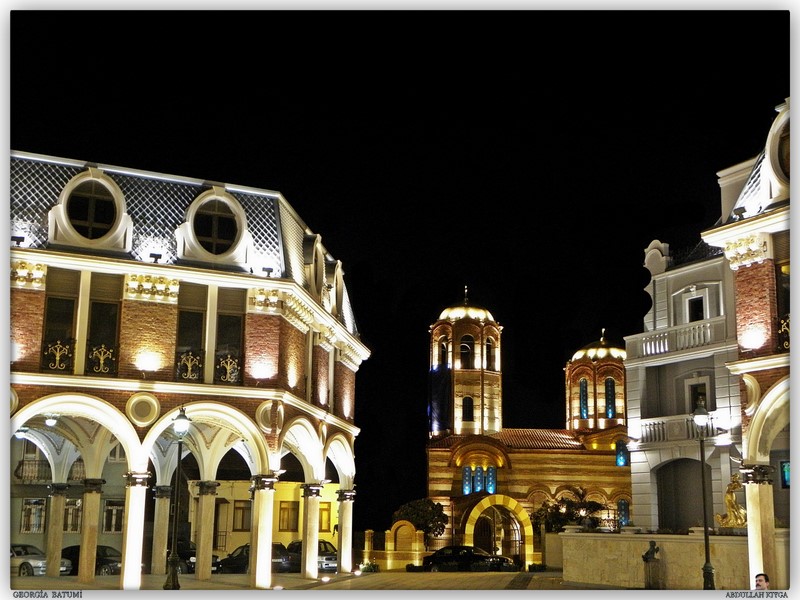
Batumi’s Ilya Chavchavadze Drama Theatre is one of those places where the city’s past isn’t just preserved in stone—it comes alive on stage. Tucked into the heart of Batumi, the theatre stands on a square that tells its own layered story, where Ottoman influences, Soviet-era modernism, and contemporary Georgian life intersect. The building itself doesn’t immediately demand attention; it’s not grand or ostentatious like some of the city’s other landmarks. Instead, it has a quiet presence, inviting you to step inside and discover what lies within.
The theatre’s origins trace back to the late 19th century, when Batumi was booming thanks to its oil trade and bustling port. The city was becoming a cultural crossroads, drawing merchants, engineers, and artists from across the region. The first theatre, built in 1879, was a modest wooden structure, but it didn’t last. The current building, constructed in the early 20th century, reflects Batumi’s growing importance as a cultural hub along the Black Sea coast. Its architecture blends neoclassical elements—clean lines, tall windows, columns—with a warmth that feels almost domestic, as if the theatre has always been a natural part of the city’s rhythm rather than a formal institution.
The theatre is named after Ilya Chavchavadze, a towering figure in Georgian history. A writer, journalist, and public intellectual, Chavchavadze became a symbol of national revival in the 19th century. His works, infused with love for Georgia and a passion for freedom, remain central to the country’s cultural identity. Naming the theatre after him during the Soviet era wasn’t just a tribute; it was an act of preservation, a way to maintain a connection to Georgian heritage at a time when many traditions were being erased or suppressed. Today, the name serves as a reminder that the theatre has always been more than just a place of entertainment—it’s a space where ideas, identity, and society have been shaped and debated.
Over the decades, the theatre has weathered many changes. During the Soviet period, it became one of the republic’s key cultural institutions, staging everything from classical plays to operas and ballets. After the Soviet Union collapsed, the theatre, like many others, faced challenges—funding dried up, audiences dwindled, and the repertoire needed renewal. But gradually, things began to shift. Today, the Batumi Drama Theatre is regaining its momentum, drawing both locals and visitors. The program now includes not just Georgian classics but also contemporary works, experimental projects, and occasional performances by touring companies from abroad.
Inside, the theatre retains the charm of an old cultural institution. The auditorium, with its balconies, boxes, and ornate plasterwork, feels like a step back in time. The creak of wooden stairs, the rustle of the curtain, the murmur of the audience before a show—it all carries a sense of history. Yet the theatre doesn’t feel like a museum. It’s alive, evolving alongside the city. Modern productions sit comfortably alongside classics, and young directors bring fresh perspectives while respecting tradition.
Batumi has always been a city of cultural intersections, and the theatre reflects that diversity. While most performances are in Georgian, you might also catch a play in Russian, English, or even Turkish. This isn’t just about catering to tourists; it’s a natural extension of Batumi’s long history as an open, cosmopolitan city. The theatre doesn’t exist in isolation—it’s part of a broader cultural conversation that spills out onto the streets, into cafés, and along the seaside promenade.
Attending a performance here isn’t just about seeing a show; it’s a chance to experience the city’s pulse. There’s no touristy hustle, just a quiet, immersive atmosphere where the audience, the performers, and the building itself become part of something larger. Shows often end with enthusiastic applause, and sometimes the discussions continue in nearby cafés, where you can linger over coffee or wine, talking about what you’ve just seen.
The Ilya Chavchavadze Drama Theatre isn’t just a historic building—it’s a living space that keeps growing. It doesn’t aim to be the most famous or the most lavish, and that’s its strength. There’s no pretension here, just authenticity: real emotions, real stories, a real connection to the city and its people. For anyone who wants to understand Batumi beyond its beaches and resorts, a visit to this theatre might be one of the most memorable experiences the city has to offer.