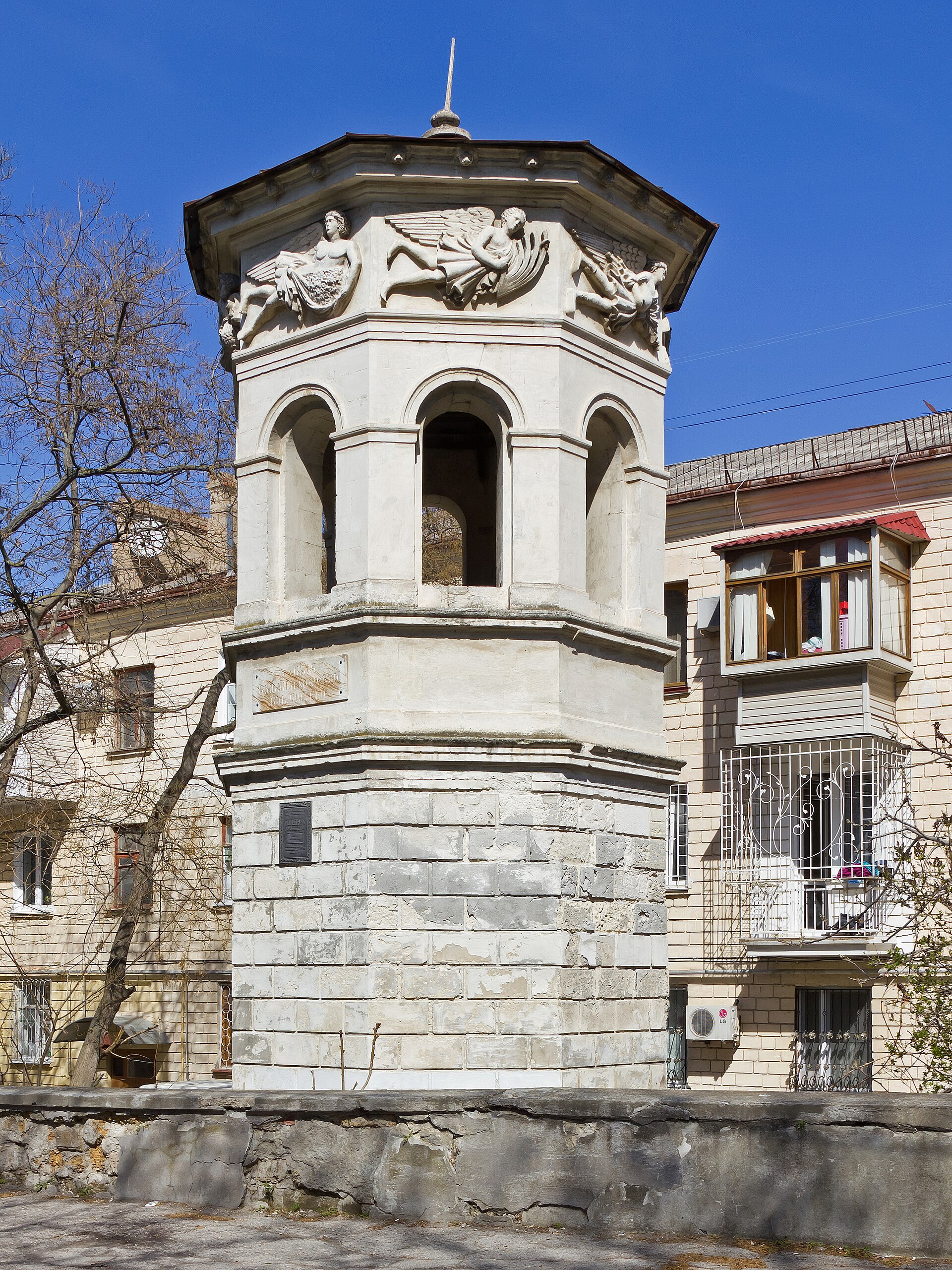
Perched on a quiet hill in Sevastopol, the Tower of the Winds is one of those rare places that feels suspended in time. Built in the mid-19th century, it was originally part of the Black Sea Fleet’s meteorological observatory, a small but vital cog in the machinery of the Russian Empire’s naval ambitions. Sevastopol was never just a city—it was a fortress, a gateway to the sea, and every structure here had a purpose. The tower’s role was to help sailors predict weather patterns, a task that could mean the difference between safe passage and disaster. Though it no longer serves its original function, the building remains a quiet witness to an era when science and military strategy were intertwined.
The architecture is unassuming yet striking. A modest octagonal structure made of white stone, it’s topped with a dome that echoes the proportions of ancient Greek and Roman designs. Eight metal weather vanes, each shaped like a different figure, adorn its sides—hence the name. They lend the tower a whimsical air, almost like a child’s toy, though in reality, it was a serious scientific outpost. Around it, there was once a botanical garden planted to support the observatory’s work, but little remains of it today. A few trees still stand, as if by accident, their roots tangled in the same soil that once held instruments for measuring the sky.
Sevastopol has always been a city of sailors, and the Tower of the Winds is deeply tied to that legacy. In the 19th century, scientists here tracked wind direction, atmospheric pressure, and weather shifts—data that was crucial for naval operations. The tower was one of Russia’s first dedicated meteorological stations, a sign of how science was gaining importance in the empire’s military and civilian life. It’s hard to imagine now, standing in its shadow, how many decisions were made based on the observations recorded within these walls. The tower wasn’t just a building; it was a lifeline for ships navigating the unpredictable Black Sea.
Over time, the tower lost its scientific purpose, but it never lost its allure. During the Soviet era, it was repurposed—turned into workshops, storage spaces, even living quarters—but none of these uses stuck. The tower seemed to resist change, clinging to its original identity as a monument to a time when humanity was just beginning to understand the power of nature. Today, it stands slightly off the beaten path, which only adds to its charm. There are no crowds here, no guided tours, just the quiet hum of history and the occasional creak of the weather vanes in the wind.
The area around the tower has a distinct atmosphere. Even when the rest of the city buzzes with activity, this spot remains peaceful. The stone walls stay cool in the summer heat, and the metal figures on the vanes sway gently, as if still performing their duty. From the hill where the tower stands, you can see Sevastopol Bay stretching out below—a body of water that has witnessed centuries of conflict, trade, and exploration. The view is a reminder of how the city has evolved while never losing its connection to the sea.
The Tower of the Winds isn’t just an architectural relic; it’s a piece of Sevastopol’s living history. It stands as proof that even in a city defined by war and strategy, there was room for curiosity and beauty. Today, it feels like a place where time moves slower. There are no tourist traps here, no grand narratives—just the wind, the stones, and the echoes of the people who once worked under its dome. That understated quality is perhaps why it still draws visitors. It doesn’t demand attention; it simply exists, inviting each person to find their own meaning in its walls.
For those who come to Sevastopol looking for more than beaches and monuments, the tower can be a quiet revelation. It doesn’t fit neatly into the city’s usual categories—it’s not a grand cathedral, not a war memorial, not a bustling market. Instead, it’s a place for slow walks, for reflection, for imagining the past. You can almost picture the scientists of the 19th century peering at the sky, trying to decipher its secrets, or the sailors waiting for their forecasts. The tower seems to say: stop, look around, and consider how many stories this city holds.
Sevastopol is a city of contrasts, where military history brushes up against everyday life, and the past coexists with the present. The Tower of the Winds embodies that duality. It doesn’t shout for attention or insist on its importance, which is why those who appreciate quiet beauty often seek it out. Someday, it may be restored to its original state, but even now, in its current form, it remains a vital part of the city’s landscape.
If you find yourself in Sevastopol, take a moment to visit. Climb the hill, sit on one of the benches, and listen to the weather vanes creak in the breeze. Maybe you’ll see the city as it was a century and a half ago—unhurried, mysterious, a little enigmatic. After all, it’s these unassuming places that often leave the deepest impression.