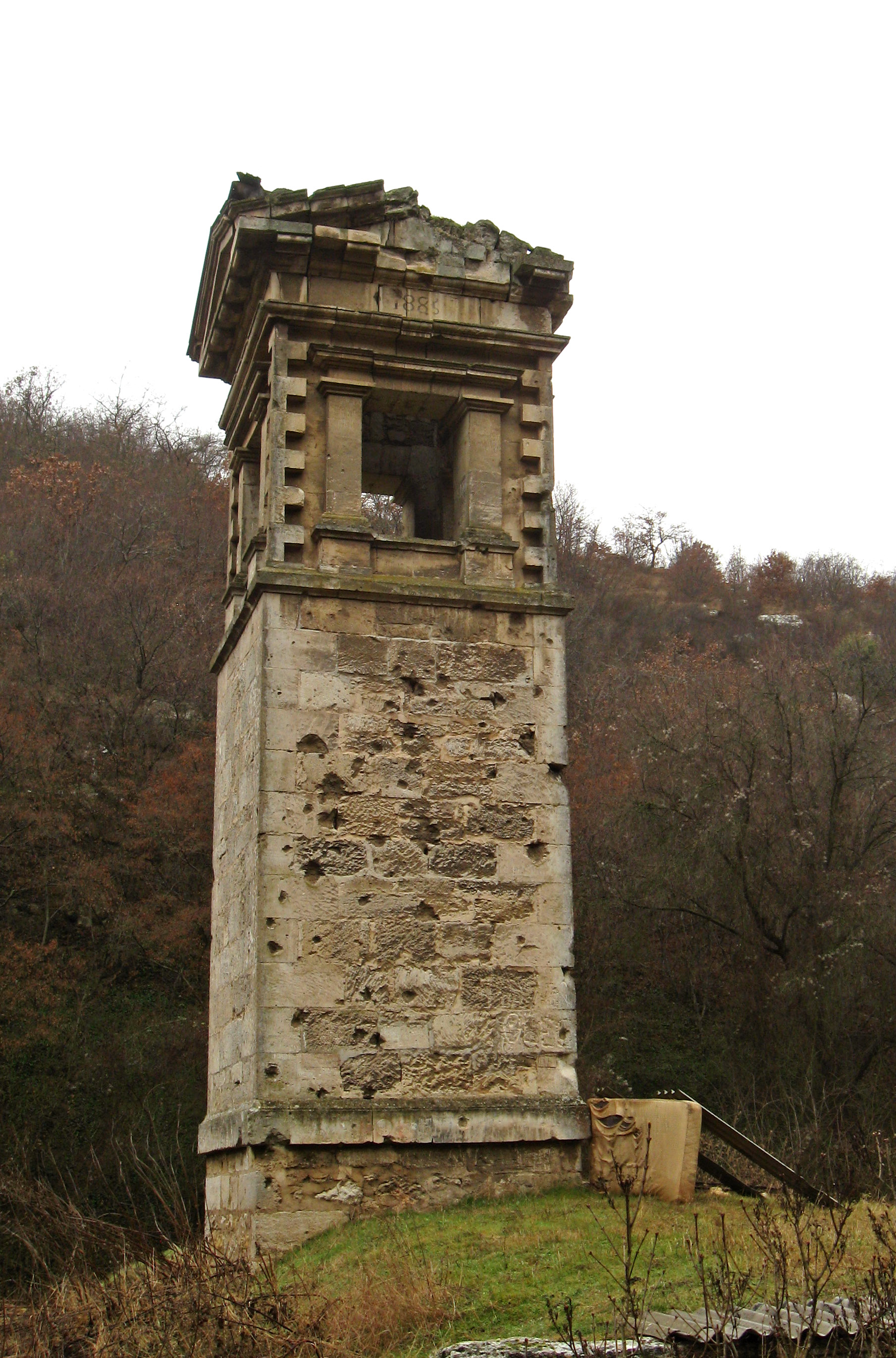
Sevastopol is a city where history lingers in unexpected places—not just in grand monuments or battle-scarred fortresses, but in quiet, unassuming structures that once played a vital role in everyday life. The Mikryukov Water Tower is one of those places. Built in the mid-19th century, it was part of an engineering solution to a pressing problem: how to supply fresh water to a rapidly growing port city where wells and cisterns could no longer keep up with demand. This was especially critical during sieges, when access to water could mean the difference between survival and surrender. The tower wasn’t just a functional necessity; it was a lifeline.
The architecture of the tower is straightforward and purposeful. Constructed from local stone, its cylindrical shape with a slight widening at the base was designed to withstand the pressure of the water it held. Inside, reservoirs stored the water before it was distributed through pipes to the city. There’s no ornamentation, no attempt at grandeur—just solid, practical design. Today, the tower stands abandoned, its weathered walls and rusted metal fixtures bearing the marks of time. It doesn’t try to be beautiful; it simply endures, a silent witness to an era when engineering was about solving problems, not making statements.
The tower takes its name from the engineer Mikryukov, who oversaw the construction of Sevastopol’s water supply system. This was a time of rebuilding—the Crimean War had left the city in ruins, and alongside new barracks, docks, and homes, reliable infrastructure was essential. The water system was one of the first steps in transforming Sevastopol from a military stronghold into a functioning city. The tower itself was just one component of a larger network, but it’s one of the few parts that remain, a tangible reminder of how water shaped life here.
Now, the tower sits on the outskirts of the city, far from the tourist routes that wind through Sevastopol’s more famous landmarks. Most people pass by without a second glance, mistaking it for just another abandoned building. But if you look closely, the signs of its past importance are still there: the thick stone walls, the remnants of metal frameworks, the faint traces of pipes. There are no plaques or signs to explain its significance, just the quiet hum of the city around it.
What makes the tower feel alive isn’t any grand narrative, but the sense that it was once part of something essential. It wasn’t built for glory or commemoration; it was built to serve. In a city where every stone seems to whisper of wars and sieges, the Mikryukov Water Tower tells a different kind of story—one of ordinary people solving ordinary problems. It’s not a heroic monument, but in its own way, it’s just as honest a witness to history as any battlefield.
The neighborhood around the tower doesn’t feel like a tourist destination. There are no waterfront cafes or souvenir stalls, just the unpolished charm of an older part of the city. Locals know the tower is there, but it’s not something they talk about—it’s just part of the landscape, like the old apartment blocks and narrow streets that have seen generations come and go.
What makes the tower interesting is its very unremarkableness. It doesn’t demand attention or claim any kind of fame. It simply exists, much like the people who once relied on it. If it were ever restored, it might become more noticeable, but for now, it remains a modest relic of engineering ingenuity, content to stand without fanfare. There’s a quiet beauty in that—no grand speeches, no polished facade, just the faint echoes of water rushing through pipes, the voices of those who depended on it, and the slow, steady passage of time etched into its walls.