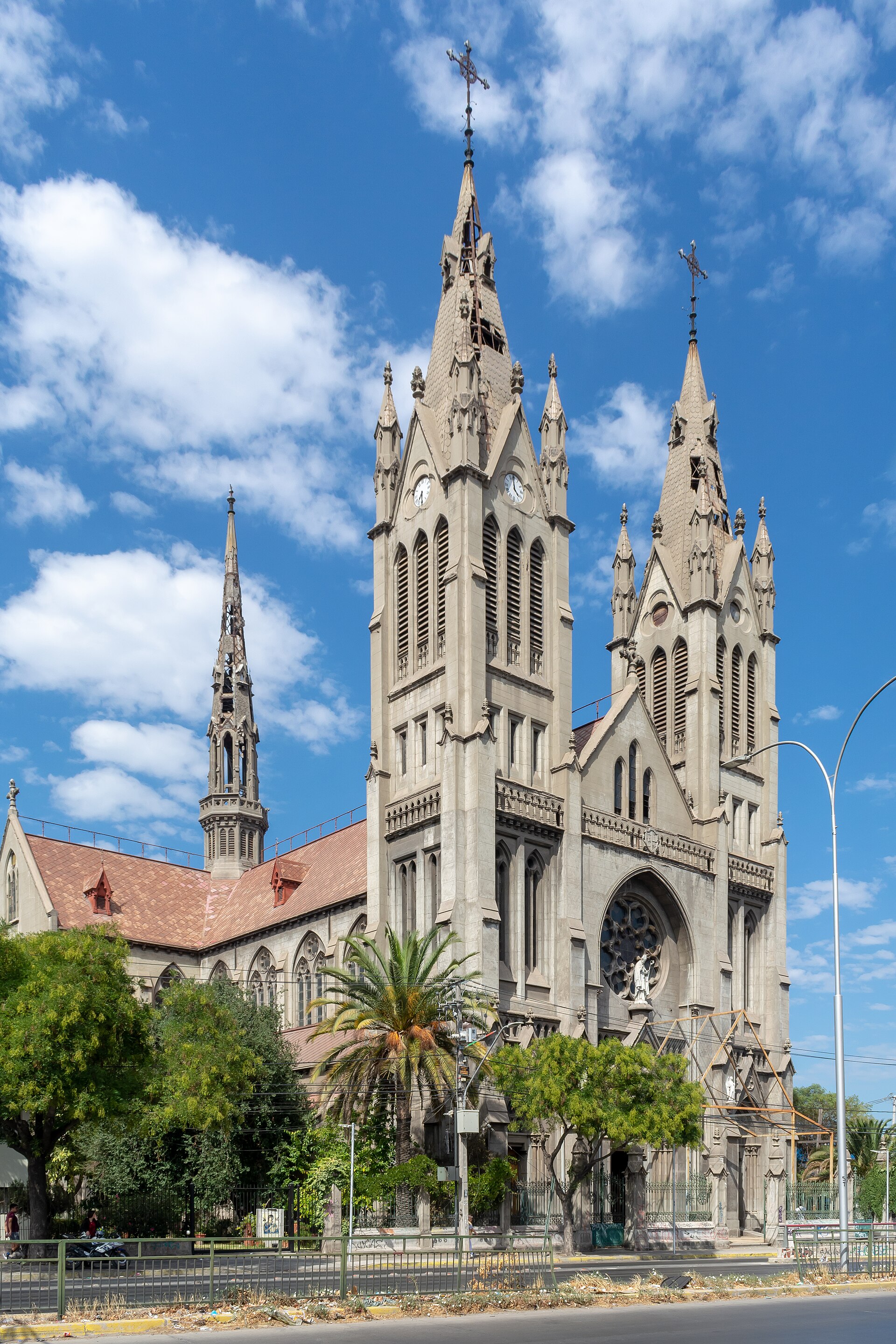
Some places in Santiago don’t catch your eye immediately, but they stay with you. The Basílica de Nuestra Señora del Perpetuo Socorro is one of them—a quiet building at the corner of busy streets, where the city’s modern energy meets the slower pace of old neighborhoods. It doesn’t compete with the cathedral on Plaza de Armas or the more visited churches in Valparaíso. Instead, it offers a space where details reveal themselves without the noise of crowds.
Built in 1898, the basilica reflects Chile’s cultural ties to Europe during a time when Catholic churches were constructed in the European tradition. The architect, Eugenio Gioacchino, an Italian, designed it with Renaissance and neoclassical elements. The façade has tall columns and a triangular pediment, echoing Roman basilicas, though its proportions are smaller. It doesn’t overwhelm; it invites you inside.
The interior is spacious, with pale stone columns and high vaulted ceilings. Light comes through stained glass, casting a glow over the nave. Above the altar hangs the icon of Our Lady of Perpetual Help, a 15th-century image with roots in Byzantium and Rome. Many come here to pray before it, drawn by its history and the stories it carries.
A side chapel holds relics: fragments of saints’ remains, antique liturgical objects, silver monstrances, and embroidered vestments. Old ledgers record the parish’s earliest members. These items aren’t displayed for spectacle; they’re part of a living tradition.
The area around the basilica was once one of Santiago’s most prestigious. Wealthy families lived nearby, and the church was a social and spiritual center. The neighborhood changed, but the basilica remained.
On weekdays, the church is nearly empty. The wooden pews, the echo of footsteps, the scent of candle wax—these details create an atmosphere that feels timeless. The architecture reflects the tastes of its era: outside, it’s symmetrical and austere; inside, it has ornate plasterwork, gilded altar details, and ceiling patterns.
The basilica still serves its community. Sundays bring parishioners of all ages, and on feast days, flowers decorate the space while a choir sings. Occasionally, sacred music concerts fill the air with the organ’s sound. These moments show the basilica isn’t just a relic—it’s a place where life continues.
If you’re curious about history, the basilica offers a glimpse of Santiago often overlooked. It isn’t on tourist itineraries, and that’s part of its appeal. The surrounding streets mix old mansions with modern cafés, and local Spanish fills the air. A short walk leads to Parque Forestal, where the city’s character shifts to tree-lined avenues.
The Basílica de Nuestra Señora del Perpetuo Socorro has seen earthquakes, societal changes, and generations pass. It endures as a place where people find connection. Its value isn’t in fame but in the quiet atmosphere it preserves—a piece of Santiago’s soul.