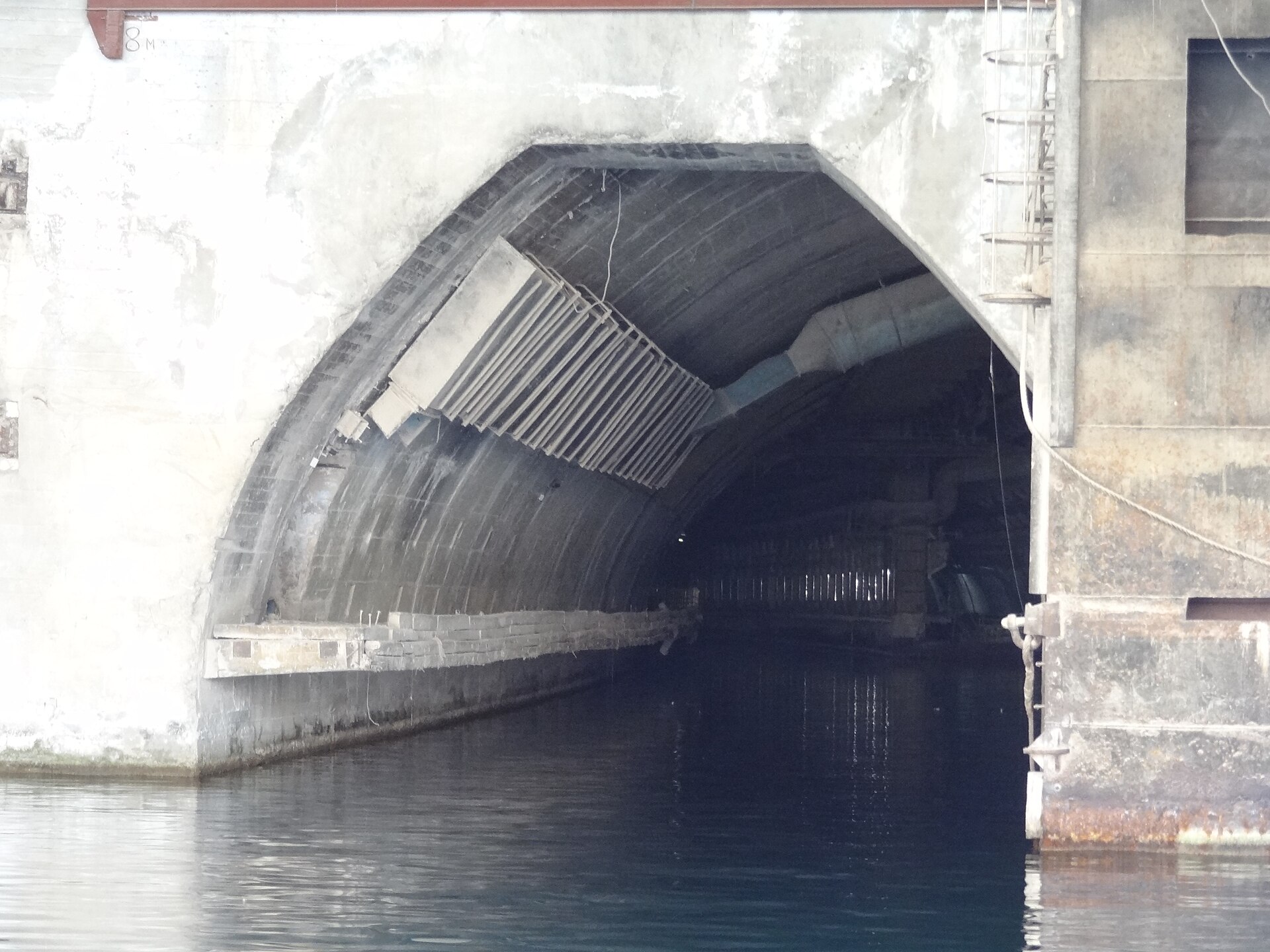
Beneath the rocky slopes of Mount Tavros, where the Black Sea meets the quiet waters of Balaklava Bay, lies a place that spent decades hidden from the world. This is no ordinary museum—it’s a vast underground complex carved into the heart of the mountain, built to shelter and repair submarines during the Cold War. For years, its existence was a closely guarded secret, known only to those who worked here and the few officials who oversaw its operations. Even locals from nearby villages were barred from entering Balaklava without special permits, and the true purpose of the tunnels remained classified until the early 1990s.
Construction began in the late 1950s, a massive engineering feat that took eight years to complete. Workers labored in shifts, hauling away tons of excavated rock under the cover of night and dumping it into the sea to avoid detection. The result was a self-contained underground world, designed to withstand direct hits from conventional and even nuclear weapons. At its core runs a long, narrow canal, where submarines could glide in from the bay and dock in a dry chamber for repairs. The entire system was built to function independently, with workshops, storage for torpedoes, and heavy steel blast doors weighing dozens of tons.
Today, the complex is open to visitors, though its atmosphere remains unchanged—cold, damp, and echoing with the faint sounds of dripping water. The main route follows the canal for about six hundred meters, a walk that takes you past arched tunnels, rusted rails, and the occasional reflection of light on the dark water. In summer, part of the journey can be made by boat, gliding through the same channel where submarines once passed. The air is thick with the scent of salt and stone, and the scale of the space is hard to grasp until you stand beneath the towering ceilings, imagining the weight of the mountain above.
The museum itself is sparse in places, with exhibits focusing on the history of the Soviet submarine fleet—old navigation instruments, torpedo casings, and declassified documents. But the real draw is the space itself, a relic of an era when secrecy shaped entire landscapes. The temperature hovers around fifteen degrees Celsius year-round, and the humidity is high, so a light jacket and sturdy shoes are a must. Some sections of the floor are wet, and the lighting is dim, casting long shadows on the rough-hewn walls.
Visits are only possible as part of a guided tour, with timed entry slots that often sell out days in advance, especially in peak season. The full walk takes about ninety minutes, and while photography is allowed, flashes and tripods are not. The tunnels are not recommended for young children under seven, and those with claustrophobia may find the narrow, windowless passages challenging. Still, for those who make the journey, the experience is unlike any other—a rare glimpse into a world that was never meant to be seen.
Balaklava itself is worth lingering in after the tour. The town clings to the edges of its narrow bay, a quiet place with a long history of its own. The waterfront is lined with low-slung buildings, fishing boats, and the occasional café where you can sit with a cup of strong coffee and watch the sea. The bay has been a haven for ships for centuries, from ancient Greek traders to Soviet submarines, and the contrast between the peaceful surface and the hidden depths beneath the mountain is striking. It’s a place where history feels close enough to touch, even if some of it remains just out of sight.