Avacha Bay
Avacha Bay is a vast, sheltered inlet stretching nearly thirty kilometers into the southeastern coast of Kamchatka. It serves as the natural harbor for Petropavlovsk-Kamchatsky, the region’s largest city, framed by mountains that rise sharply from the water. Avachinsky and Koryaksky volcanoes dominate the skyline, their snow-capped peaks visible from almost anywhere in the city.
On clear days, the bay’s waters turn an intense blue. Overcast weather darkens them, mirroring the wildness of the land.
The bay’s history ties to Kamchatka’s exploration. Russian sailors arrived in the early 18th century, and by 1740, Vitus Bering’s expedition built a fortified settlement here—now Petropavlovsk-Kamchatsky. The name comes from the Itelmen word *Avacha*, meaning "big river," referencing the indigenous people who once lived along its banks. By the 19th century, whalers and traders frequented the bay. During World War II, it served as a base for the Pacific Fleet, a role it retains today.
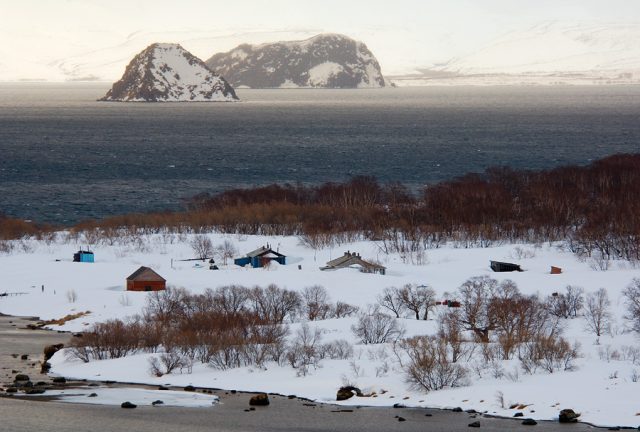
Avacha Bay remains one of Kamchatka’s busiest spots. The peninsula’s main port operates here, dispatching ships to the Kuril Islands and other parts of the Russian Far East. Fishing boats, cargo vessels, and military ships dot the water. In summer, the shallower parts warm enough for swimming, though locals stay near shore where currents are gentler. Winter brings jagged ice formations drifting along the surface, a contrast to the dark water beneath.
The northern shore holds Petropavlovsk-Kamchatsky, where Soviet-era apartment blocks and older wooden houses cling to hillsides. The southern shore is wilder—rocky beaches, small coves, and slopes covered in dwarf pine and stone birch. Thickets of seaweed sway with the tide, and in spring and autumn, migrating birds stop here. Seals often lounge on sun-warmed rocks in summer.
The bay’s raw essence is undeniable. Old military fortifications line the coast, remnants of its strategic past. The volcanoes sometimes puff faint trails of smoke. Locals live with this unpredictability, treating it with respect and humor. The bay can shift from calm to stormy in an instant.
For visitors, the bay offers varied experiences. Boat tours show the volcanoes’ reflections in the water. Kayakers explore hidden inlets, while fishermen seek salmon and halibut. Divers brave the cold to see the North Pacific’s underwater world. In winter, the frozen edges become a playground for ice skating and snowmobiling, though weather can change fast—sunshine one moment, a blizzard the next.
Avacha Bay changes with the seasons, light, and wind. One hour it’s glassy and serene; the next, churning with whitecaps. Despite the port’s activity, stillness lingers—the cry of gulls, the lap of water, the distant rumble of a volcano. It’s a place where you feel small, connected to something vast, yet grounded in the world before you.