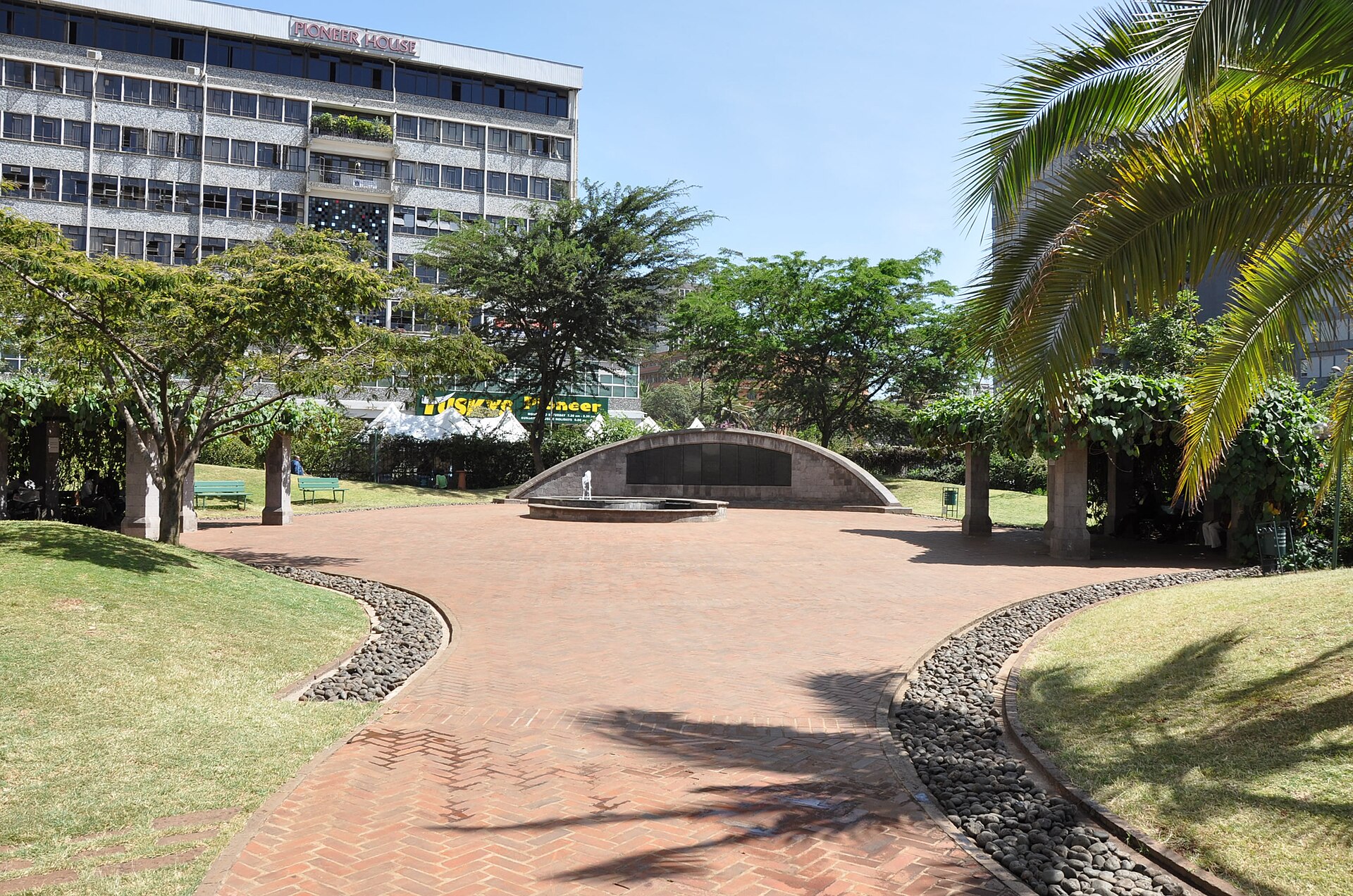
Nairobi’s August 7th Memorial Park is a place where silence carries more weight than words ever could. It stands where the U.S. Embassy once did, on the spot where a devastating bombing on August 7, 1998, claimed over two hundred lives and left hundreds more injured. The attack was one of the darkest moments in the city’s history, a day that reshaped Nairobi’s collective memory. Today, the park serves as both a tribute to those lost and a quiet reminder of how fragile peace can be.
The design of the memorial is deliberately understated, avoiding grand gestures in favor of something more reflective. At its heart is a long granite wall etched with the names of the victims, a simple yet powerful marker of lives cut short. The stone feels solid, enduring—a material chosen to outlast time itself. Nearby, bronze plaques tell brief stories of those who died, each one a fragment of a life that ended too soon. There’s no need for elaborate explanations; the names and the space around them say enough.
The park is laid out to encourage slow, thoughtful movement. Paths wind between trees and shrubs, offering shade and a sense of seclusion even in the middle of a bustling city. Acacias and eucalyptus rustle in the breeze, their leaves muffling the hum of traffic beyond the park’s borders. There are no crowds here, no guided tours rushing from one point to the next. Most visitors come to remember, to sit, or simply to escape the noise of everyday life.
A small pond with a fountain anchors one corner of the park. The water’s gentle flow is meant to symbolize renewal and continuity, its sound adding to the sense of calm. Benches around the pond are often occupied by people lost in thought or engaged in quiet conversation. Occasionally, memorial events are held here, but even on ordinary days, the park doesn’t feel empty. Children play on the grass, students read under the trees, and locals come to unwind, making it a living part of the city rather than just a monument.
Beyond its role as a memorial, the park has become a place where history and modern life intersect. School groups often visit, turning the site into an open-air classroom where lessons about the past feel more immediate than anything in a textbook. For adults, it’s a place to reflect on the value of peace and the ease with which it can be shattered. The park doesn’t demand emotion from its visitors, but it doesn’t let them forget what happened here either.
Time moves differently within the park’s boundaries. There’s no rush, no urgency—just the steady rhythm of leaves swaying and water trickling. Even during Nairobi’s busiest hours, the memorial remains a pocket of tranquility, a place to step away from the chaos of daily life. That’s why it resonates so deeply with locals. For many, it’s not just a tourist spot but a refuge, a space to breathe, think, or simply sit in silence.
The park isn’t trying to be a museum, though it serves that purpose in its own way. It feels more like a living document, one that invites visitors to engage with its stories at their own pace. There are no strict rules, but there’s an unspoken understanding of respect—people speak softly, move deliberately, and avoid intrusive photography. That mutual consideration helps preserve the park’s quiet dignity, allowing it to remain a natural part of the city despite its painful origins.
In the end, August 7th Memorial Park is about more than just remembering the past. It’s a place that acknowledges how memory evolves alongside the city itself. There’s no grandiosity here, just a quiet acknowledgment of loss and resilience. For Nairobi, the park has become a symbol of endurance, a testament to the fact that life persists even after tragedy. And perhaps that’s why it matters—not just to those who lost someone here, but to anyone who has ever paused to consider what peace truly costs.