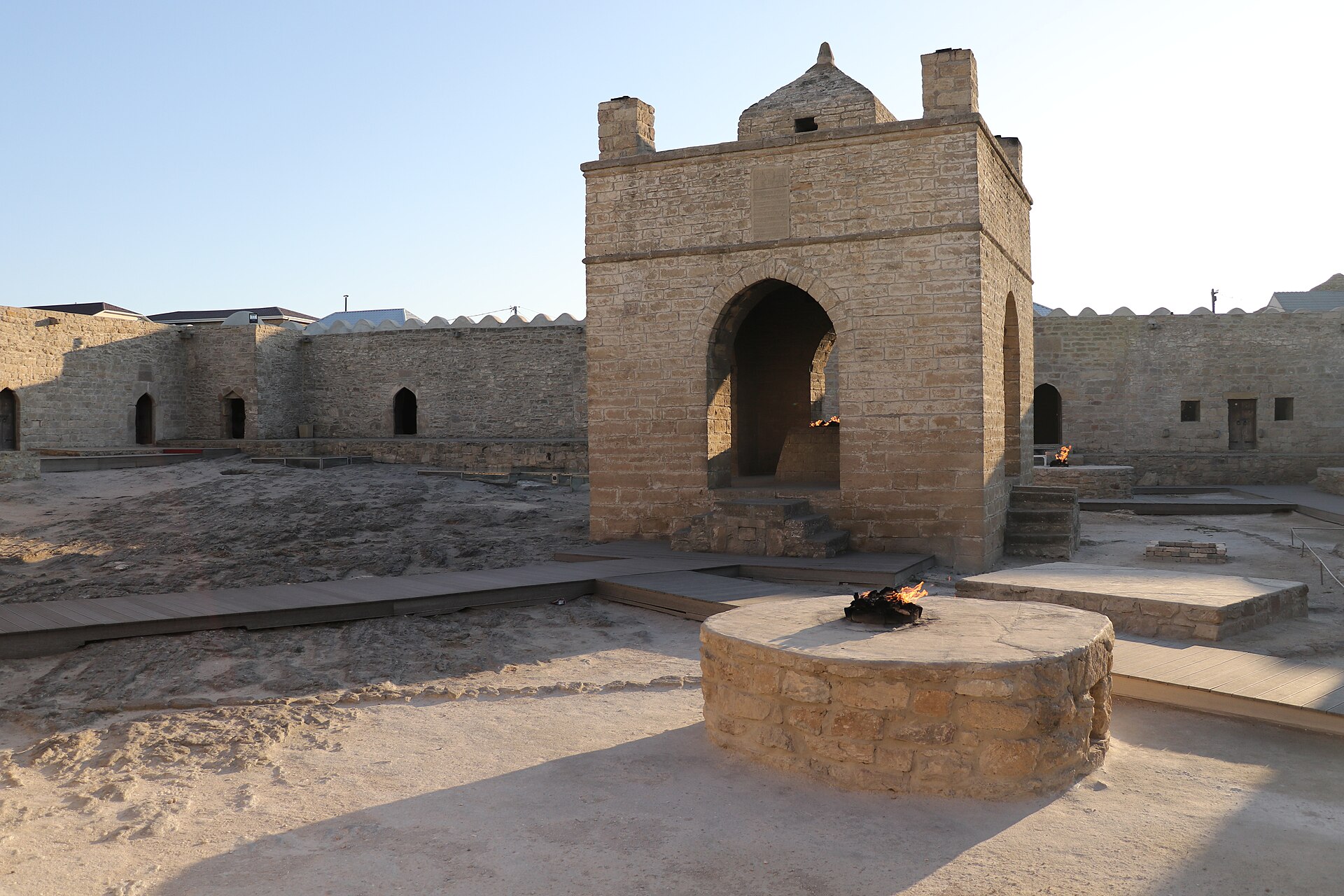
Atashgah is one of those rare places in Baku where time feels suspended, and history lingers in every stone. Tucked away in the suburb of Surakhani, this fire temple isn’t just an open-air museum—it’s a living testament to the beliefs that once bound people to fire as a divine force. Today, the site is quiet, but if you listen closely, the past whispers through the arches: the rustle of wind, the faint echoes of pilgrims’ voices, the memory of flames that once burned here for centuries.
The structure we see today dates back to the 17th and 18th centuries, though the site itself was revered long before. Natural gas seeping from the earth once fed an eternal flame, a phenomenon that ancient cultures saw as nothing short of miraculous. Zoroastrians, Hindus, and Sikhs all considered this place sacred, making Atashgah a crossroads of faiths. The temple was built by Indian merchants and pilgrims who settled in Baku, trading silk and spices. Their influence is visible in the architecture—small cells surrounding a central altar, reminiscent of Indian temples, with inscriptions in Sanskrit and Gurmukhi still faintly visible on the walls.
At the heart of Atashgah lies a square courtyard, dominated by an altar framed by four arches. Once, an unquenchable fire burned here, fed by underground gas, though today the flames are artificially maintained. Around the courtyard, small cells served as living quarters for pilgrims and temple attendants. Each cell has a low doorway, forcing visitors to bow—a subtle reminder of humility before the divine. Inside, niches for lamps and traces of faded murals remain, though time and weather have worn away much of the detail.
Interestingly, Atashgah wasn’t always a purely religious site. By the 19th century, as interest in Zoroastrianism and Hinduism waned in the region, the temple became a caravanserai—a resting place for merchants traveling the Silk Road. The sacred fire that once symbolized divine power now simply lit the way for weary travelers. Later, during the Soviet era, Atashgah was preserved as a museum, a role it continues to fulfill today.
Visiting Atashgah is a quiet experience, a chance to reflect on how beliefs and cultures have shifted over centuries. There are no crowds here, just an atmosphere of stillness that makes the place feel even more special. On a clear day, sunlight filters through the arches, casting intricate shadows on the stone walls. In the evening, when lamps are lit, the courtyard takes on an almost mystical glow. If you’re lucky, you might hear stories from locals who remember coming here as children, drawn by the fire and the tales of spirits said to linger in the courtyard.
Atashgah is more than just an architectural relic—it’s a place where history, faith, and nature intertwine. The fire that once centered the universe for pilgrims now stands as a symbol of humanity’s age-old attempt to make sense of the world. In that way, the temple remains relevant, a reminder that the search for meaning and reverence for something greater than ourselves is part of what it means to be human. Standing in the courtyard, it’s impossible not to wonder about the countless people who have passed through here, leaving behind only silence and stones that still hold their voices.