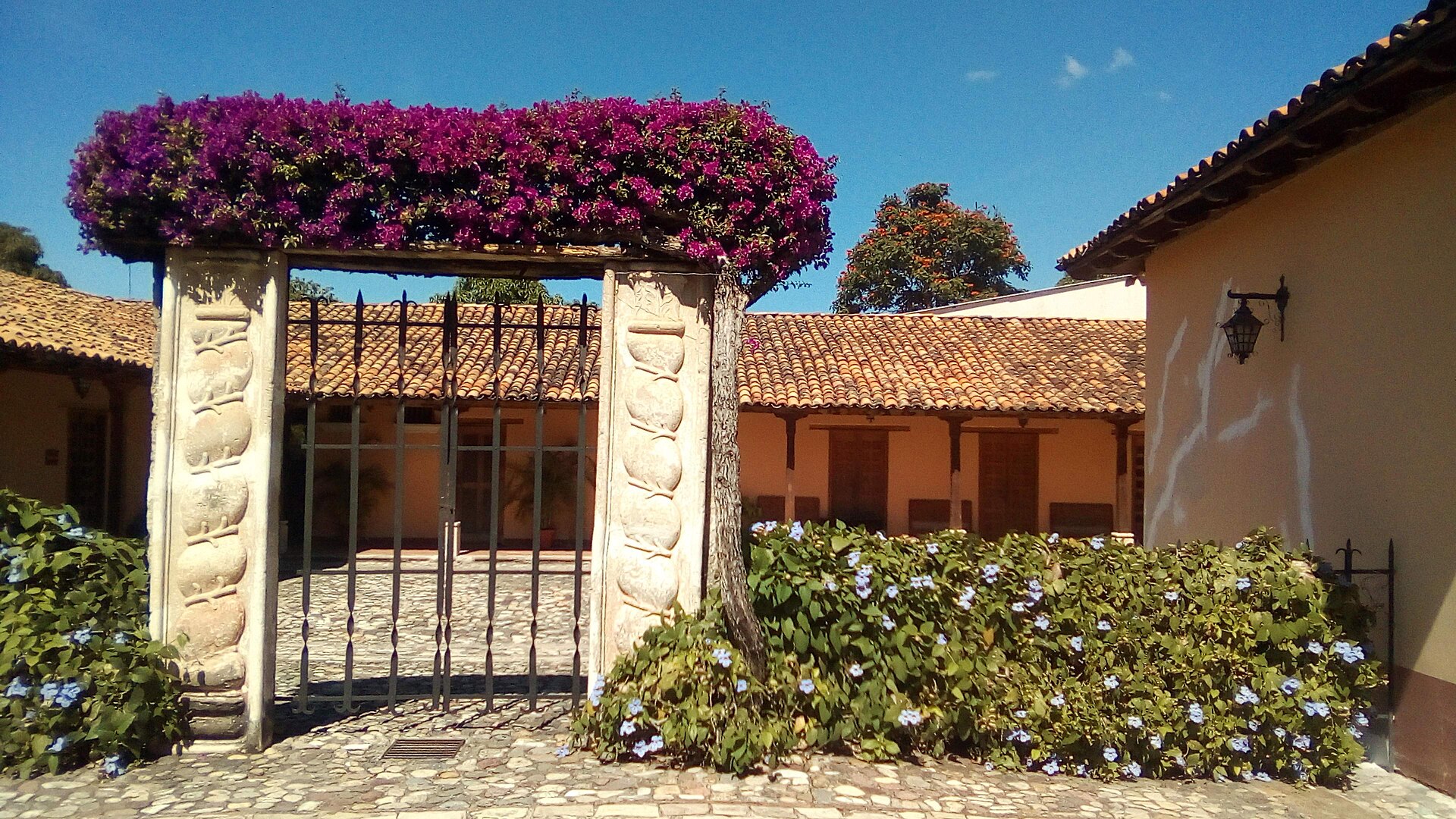
Comayagua’s Archaeological Museum is the kind of place where history feels less like a series of dates and more like a conversation with the past. The objects on display weren’t just used by people centuries ago—they were held, shaped, and lived with, and that intimacy lingers in the air. The museum itself is part of the city’s fabric, a quiet counterpoint to Comayagua’s colonial streets and plazas. There’s no grand spectacle here, no attempt to impress with scale. Instead, the exhibits feel like fragments of everyday life, preserved not as relics but as evidence of how people once worked, believed, and created.
The building housing the museum is as much a part of the story as the artifacts inside. Once the bishop’s palace, it dates back to the 17th century, when Comayagua was a religious and political hub of the region. The architecture is classic colonial—thick adobe walls, wooden beams, and a central courtyard where sunlight filters through the leaves of a lone tree. Inside, the space is divided into small rooms, each organized by theme rather than chronology. One room holds pottery, another stone tools, another jewelry. The arrangement isn’t about grand narratives or famous rulers; it’s about the people who made these things—farmers, weavers, potters—and how their lives unfolded in ways both ordinary and profound.
Among the most striking exhibits are those from the Lenca, one of Honduras’ Indigenous groups, whose territory once stretched across much of the country. The Lenca were skilled artisans, and their ceramics, adorned with geometric patterns and animal motifs, still carry a sense of precision and care. The museum doesn’t just display finished pieces; it also shows the tools used to make them—stone knives, grinding stones for pigments, molds for casting ornaments. These objects speak to a culture where craftsmanship and spirituality were intertwined, where a simple bowl might hold both food and ritual significance.
The Maya also leave their mark here, though Comayagua lies outside the heart of their civilization. Trade and cultural exchange were common across the region, and Maya influences found their way into local art. Fragments of pottery with characteristic glyphs and designs sit alongside stone stelae, their inscriptions still undeciphered. These pieces are a reminder that Honduras was never isolated—it was part of a vast network where ideas, goods, and techniques traveled across mountains and jungles, shaping communities in ways that are still being uncovered.
What makes this museum unusual is its refusal to present history as a closed book. Many exhibits raise questions rather than provide answers: Who made this vessel? What was this strange tool used for? Why does this pattern appear again and again? The displays don’t just inform; they invite visitors to wonder, to fill in the gaps with their own curiosity. This approach feels especially fitting in a country where archaeology is still very much a work in progress. New discoveries are made regularly, and much remains unknown, making the museum less a definitive account and more an open-ended exploration.
The colonial era is also well represented, with artifacts that tell the story of two worlds colliding. Spanish coins, weapons, and religious objects sit alongside locally made pottery, some of which blends European designs with Indigenous techniques. These hybrid pieces are a quiet testament to how cultures adapted and merged over time. Nearby, yellowed documents—records of trade, taxes, and legal disputes—offer a glimpse into the bureaucratic side of colonial life. They’re a reminder that history isn’t just about battles and conquests; it’s also about the small, everyday details that shaped people’s lives.
The museum is small, and that’s part of its charm. There’s no risk of information overload; in an hour or two, you can take in everything without feeling rushed. The atmosphere encourages lingering—a bench in the courtyard offers a place to sit, flip through a guidebook, or simply listen to the rustle of leaves overhead. The quiet is broken only by the occasional murmur of other visitors, making it easy to imagine the past as something alive, not just preserved behind glass.
Comayagua itself is a city where history is always present, from the cobblestone streets to the colonial churches. The museum isn’t just a repository of artifacts; it’s a thread in that larger story. It doesn’t try to dazzle with grandeur, and that’s why it works. A visit here isn’t so much a tour as a dialogue—each object a voice, each room a chapter in Honduras’ long and layered history. If you find yourself in Comayagua, it’s worth stopping by, if only to remember that this country’s past wasn’t just written in books. It was shaped in clay, carved in stone, and forged in metal, and some of those hands are still warm to the touch.