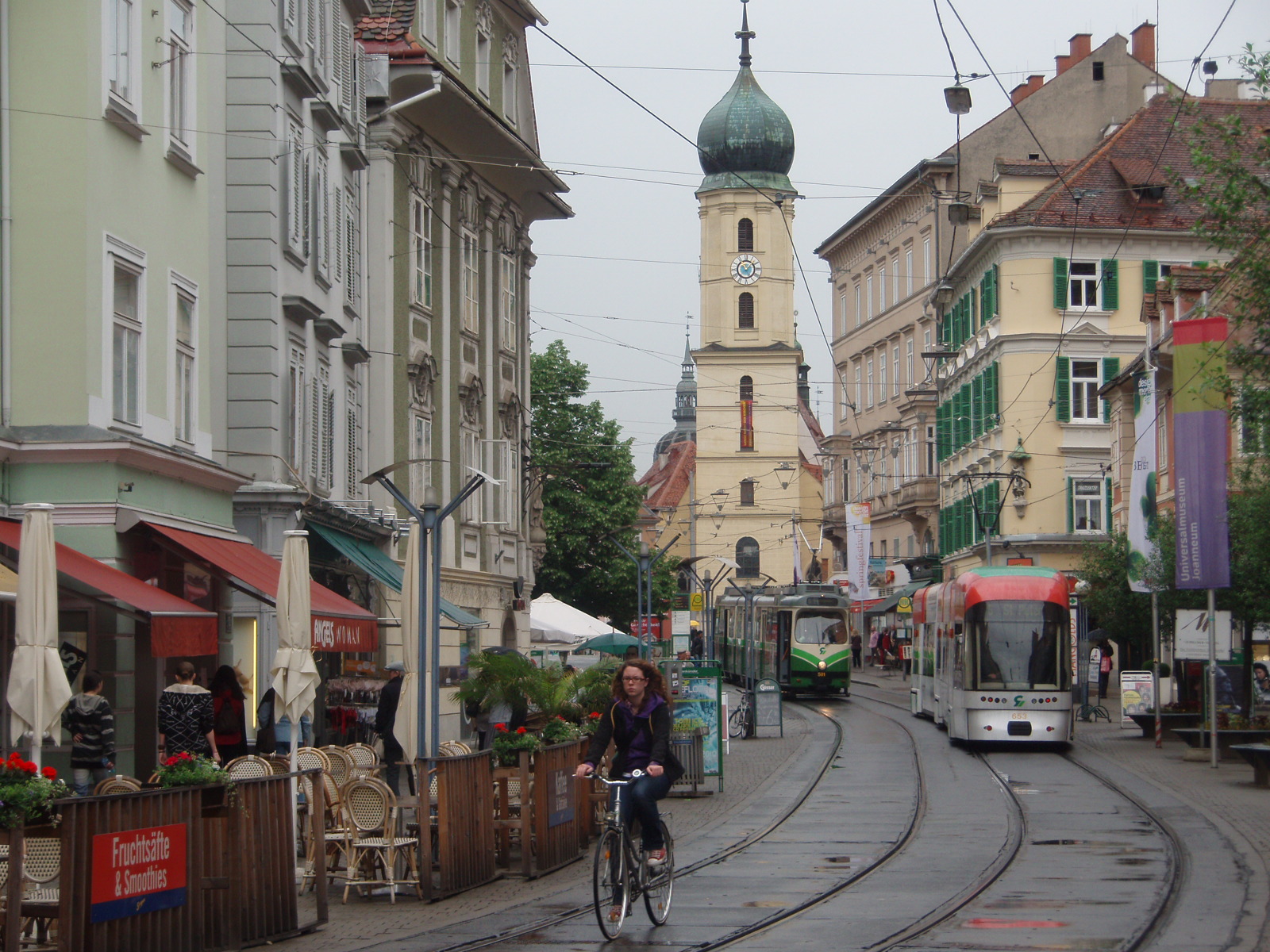
Graz Armoury, or *Landeszeughaus*, is one of those places where history feels almost tangible. Built in the mid-16th century, it was originally intended as a military storehouse for the Duchy of Styria, a region that found itself on the front lines of the Ottoman wars and other conflicts sweeping through Central Europe at the time. The building itself is unassuming from the outside—a long, narrow structure tucked into the heart of Graz’s old town—but step inside, and you’re met with an astonishing sight. Over 30,000 pieces of weaponry and armor are displayed here, making it the largest historical armory in the world still preserved in its original form.
The collection is overwhelming not just in scale but in its meticulous organization. Rows upon rows of pikes, halberds, and muskets line the walls, while suits of armor stand like silent sentinels in the dim light. Many of the pieces date back to the 16th and 17th centuries, a time when Graz was a key defensive stronghold for the Habsburg Empire. The armoury wasn’t just a storage facility; it was a symbol of preparedness, a statement that the region could mobilize thousands of soldiers at a moment’s notice. Walking through the halls, you can almost hear the echoes of drills and the clatter of metal as troops once readied themselves for battle.
What makes the Graz Armoury particularly fascinating is how little has changed since its inception. Unlike many museums where artifacts are carefully curated behind glass, here the weapons are arranged much as they would have been centuries ago. The wooden racks, the way the armor is stacked, even the slight mustiness in the air—it all contributes to the sense that you’ve stepped into a time capsule. The building itself, with its thick stone walls and arched ceilings, was designed to be both functional and secure, a fortress within the city. It’s easy to imagine how imposing it must have been to an enemy considering an attack.
The armoury’s collection isn’t just about quantity; it’s a testament to the craftsmanship of the era. The armor, in particular, is a marvel of metalwork, with intricate engravings and designs that reflect both practicality and artistry. Some pieces were clearly made for show, worn by nobles and officers who wanted to project power as much as protection. Others are more utilitarian, the kind of gear that would have been issued to common soldiers. The muskets and pistols, though less ornate, are no less impressive in their own way, showcasing the evolution of firearms technology during a period of rapid change.
Beyond its military significance, the armoury offers a glimpse into the social and political climate of the time. Graz was a city on edge, constantly bracing for conflict. The sheer volume of weapons stored here speaks to the paranoia and preparedness of the Habsburg rulers, who governed a vast and often unstable empire. The armoury was also a point of pride for the local population, a reminder of their role in defending not just their own region but the broader interests of the empire. In many ways, it was a unifying symbol, a shared resource that bound the people of Styria together.
Today, the Graz Armoury is one of the city’s most unusual attractions, drawing visitors who might not typically seek out military history. It’s not the kind of place where you’ll find flashy exhibits or interactive displays, but that’s part of its charm. There’s a quiet dignity to the collection, a sense of history preserved rather than packaged for tourists. The lack of modern interventions means you’re left to interpret the space on your own terms, to imagine the stories behind the weapons and the people who once wielded them.
For those interested in the broader history of Graz, the armoury is a natural starting point. The city has long been a crossroads of cultures and conflicts, and its architecture and museums reflect that layered past. Nearby, you’ll find the Schlossberg, a hilltop fortress that offers panoramic views of the city, and the Kunsthaus Graz, a contemporary art museum that couldn’t be more different in tone. The armoury stands as a reminder that Graz’s identity has always been shaped by its strategic importance, even as it evolved into a center of culture and learning.
Visiting the armoury is a bit like uncovering a hidden chapter of history. It’s not the kind of place that dominates guidebooks or tourist itineraries, but that only adds to its appeal. There’s something deeply satisfying about stumbling upon a site like this, one that feels authentic and untouched by time. Whether you’re a history buff or simply curious about the past, the Graz Armoury offers a rare opportunity to connect with a moment in time when the world felt both vast and perilously fragile. It’s a place that doesn’t just tell a story—it lets you step inside it.