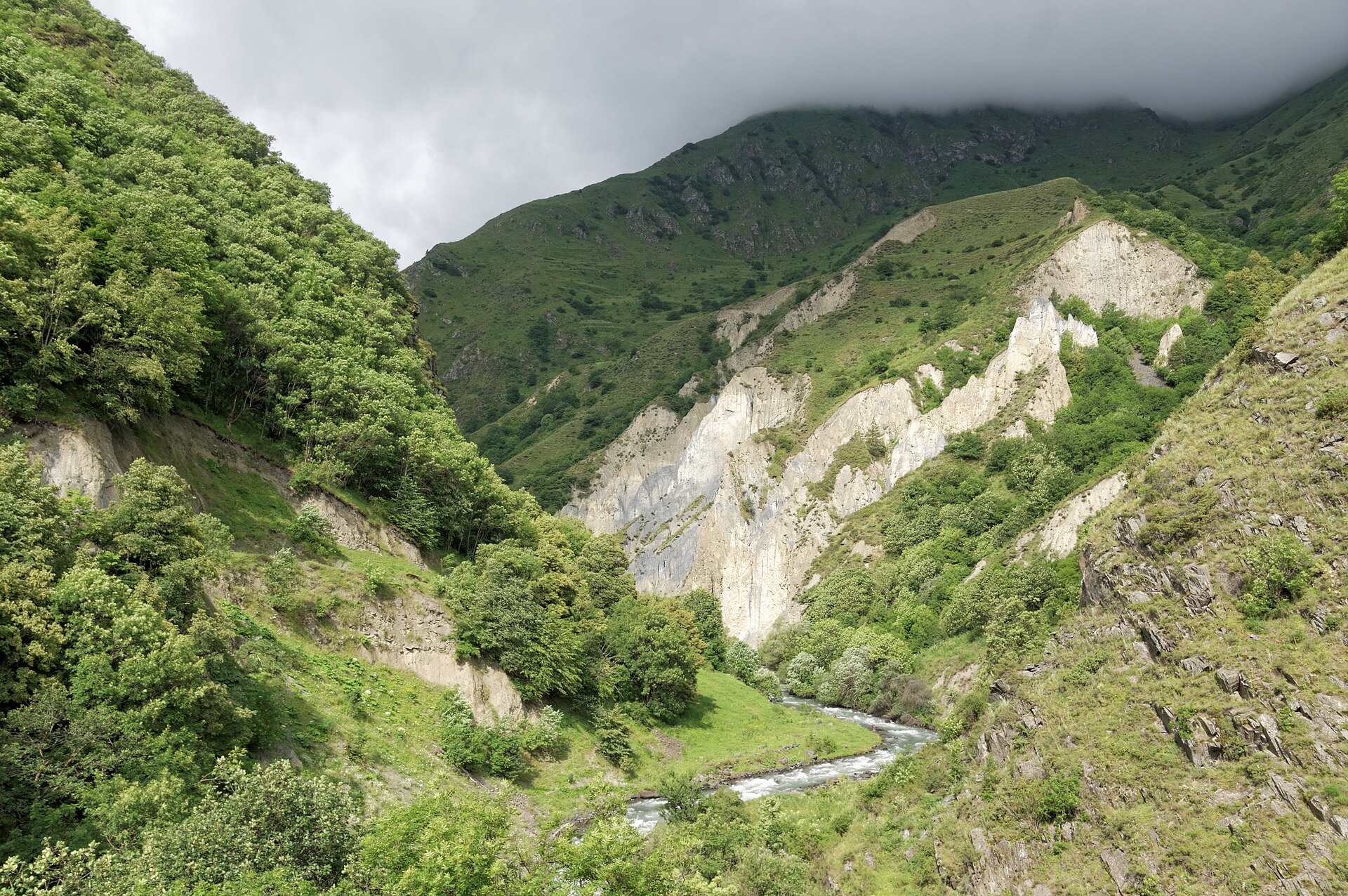
The Argun Gorge is one of those places in the North Caucasus where nature seems to have deliberately gathered everything that could leave a traveler in awe. Stretching for dozens of kilometers along the Argun River, it carves a deep, narrow cleft through the mountain ranges of Chechnya. The cliffs here rise almost vertically, forming walls hundreds of meters high, while the river, forcing its way through the stone, creates rapids and waterfalls that are especially striking in spring and early summer when the mountain snows melt. The gorge is more than just a natural wonder—it’s a place steeped in history, as it has long served as a vital passage linking the plains of the North Caucasus with the highland villages and Georgia beyond.
One of the most well-known spots in the gorge is the village of Itum-Kale, often called the gateway to the highlands of Chechnya. From here, many routes lead deeper into the mountains, and the village itself is surrounded by ancient towers and crypts, remnants of a time when every clan defended its land and honor. The towers here aren’t as tall as those in Ingushetia or North Ossetia, but they are no less expressive—built from roughly hewn stone, with narrow loopholes and flat roofs, they seem to grow straight out of the cliffs. Some have stood for centuries, outlasting the generations who built them.
The architecture of the gorge isn’t limited to defensive structures. It also includes residential complexes where towers stood alongside homes and outbuildings. In the past, entire clans lived here, and each family had its own tower, which served as a fortress, a storeroom, and a symbol of status. Many of these structures have been lost to time or war, but those that remain offer a glimpse into how the highlanders lived in the Middle Ages. The crypts, often perched on mountain slopes, are particularly intriguing—small stone houses with flat roofs where the noble families were laid to rest.
The Argun River, the gorge’s main artery, shapes not only the landscape but also the rhythm of life for those who live along its banks. In spring and summer, it runs full and loud, while in winter it recedes, exposing gravel shoals. The water is clear and cold, even on the hottest days, and locals still use it to irrigate their fields and orchards. Along the banks grow thickets of sea buckthorn and wild apple trees, while higher up, alpine meadows stretch out, where herds of sheep and cattle graze. The gorge also preserves patches of relict forests, home to oaks, hornbeams, and even the endangered yew tree.
For those interested in the history of the Caucasus, the Argun Gorge is an open-air museum. Beyond the medieval towers, there are even older relics, such as rock carvings dating back to the Bronze Age. These petroglyphs depict hunting scenes, animals, and mythical creatures, and though many have faded with time, some can still be made out on the smooth rock faces. The gorge also bears traces of more recent history, like the remains of 19th-century military fortifications from the conflicts between the Russian imperial forces and the highlanders.
Today, the gorge is not just a repository of the past but a living, evolving place. Tourism is developing here, though not on the scale seen in other parts of the Caucasus. Locals offer guided tours to the towers and waterfalls, as well as horseback rides along mountain trails. In Itum-Kale, visitors can try traditional Chechen dishes—khinkal (dumplings), lentil soup with meat, flatbreads with cheese, and, of course, the famous spiced tea with milk. The hospitality here is genuine, not performative; as in much of the Caucasus, guests are treated with deep respect, seen as a blessing rather than a burden.
A journey through the Argun Gorge is more than just a chance to see stunning landscapes—it’s an opportunity to connect with the culture and traditions of the Chechen people. Many customs that have faded elsewhere still thrive here. In some villages, the ancient code of hospitality remains strong, where a host is expected to feed and shelter any traveler, even an unexpected one. The respect for elders is evident in every gesture and word. And if you’re lucky, you might hear Chechen songs accompanied by the pandur, a three-stringed instrument resembling a lute.
The Argun Gorge is a place where time moves differently. You could spend days exploring its surroundings or simply sit by the river, listening to the rush of water and watching the play of light on the cliffs. It’s not as famous as the Darial Gorge or the Cross Pass, and that’s precisely why it retains the authentic spirit of the Caucasus—unspoiled by crowds and commercialization. If you want to experience the North Caucasus not just as a traveler but with an open heart, the Argun Gorge is one of those places worth visiting.