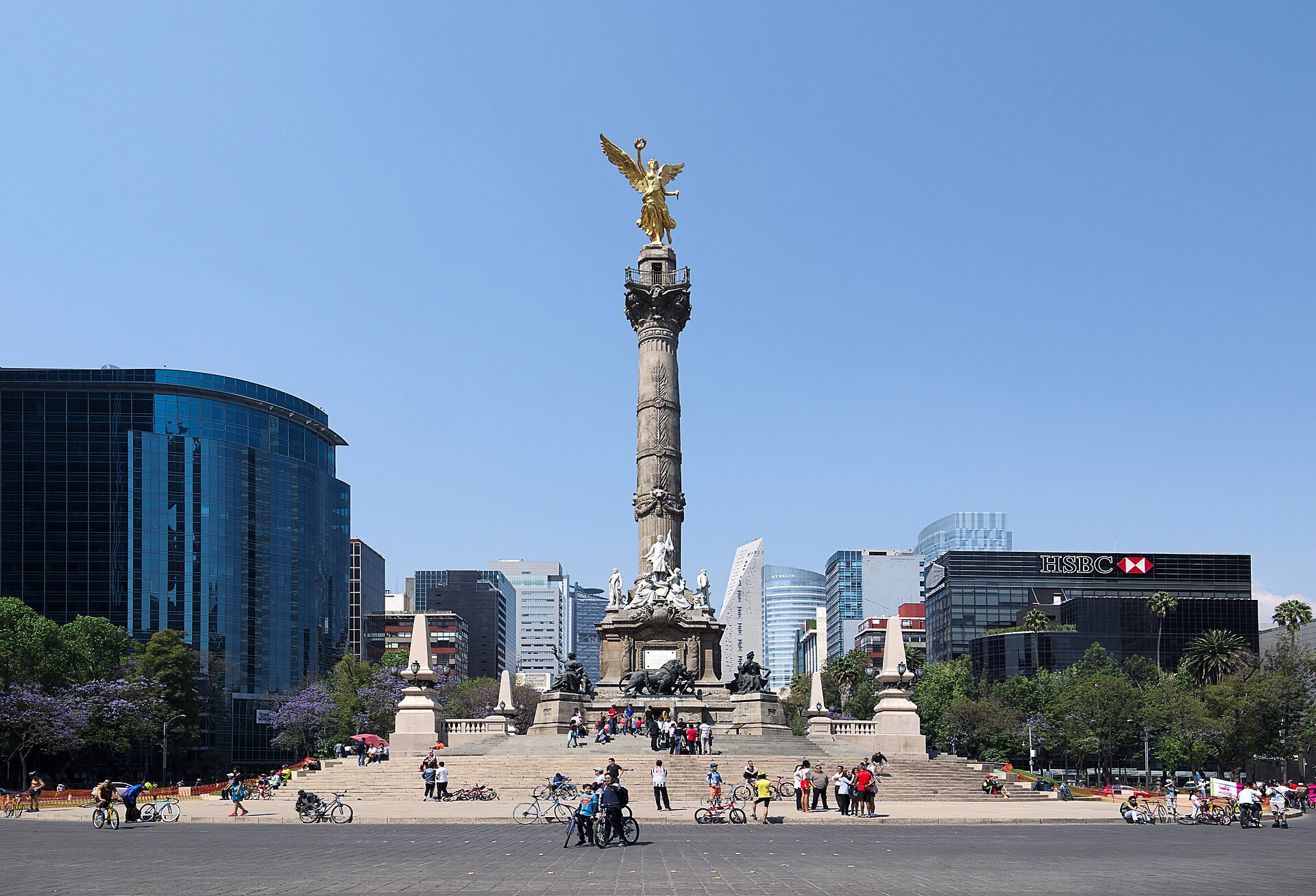
The Angel of Independence is one of Mexico City’s most recognizable landmarks, a monument so deeply woven into the fabric of the city that locals simply call it *El Ángel*. It stands proudly on Paseo de la Reforma, one of the capital’s grandest boulevards, where it has become a natural part of the urban landscape despite being just over a century old. Built to commemorate the centennial of Mexico’s independence from Spain, the monument has since evolved into more than just a historical marker—it’s a gathering place for celebrations, protests, and everyday life. Tourists pose for photos with the gilded figure gleaming in the sunlight, while residents stroll along the tree-lined paths or linger on the steps at dusk, when the monument is bathed in golden light, transforming it into a beacon in the city’s nighttime glow.
At the top of the towering column perches a statue of Nike, the ancient Greek goddess of victory, her wings slightly spread as if caught mid-flight. She balances on a globe, holding a laurel wreath in one hand and broken chains in the other, symbols of triumph and freedom. Though she appears weightless, the statue is a massive bronze structure covered in gold leaf, her delicate form belying the several tons she weighs. The column itself is adorned with bronze reliefs depicting pivotal moments from Mexico’s struggle for independence, while at its base stand statues of the movement’s heroes—Miguel Hidalgo, José María Morelos, Vicente Guerrero, and others. Their stern, resolute faces seem to watch over the city, a silent reminder of the sacrifices that shaped the nation.
The idea for the monument came from President Porfirio Díaz, who wanted to honor the 100th anniversary of Mexico’s independence with a grand statement. Construction began in 1902 under the direction of architect Antonio Rivas Mercado, who drew inspiration from Parisian columns like the Vendôme but infused the design with distinctly Mexican elements. The project took nearly a decade to complete, and the Angel was finally unveiled in 1910, just in time for the centennial celebrations. Yet its history hasn’t been without challenges. In 1957, a powerful earthquake damaged the column, forcing engineers to temporarily remove the statue for repairs. When it was reinstalled, the structure was reinforced to better withstand future tremors, ensuring the Angel would continue to stand tall over the city.
Over the years, the Angel has become far more than a monument—it’s a living part of Mexico City’s daily rhythm. Couples arrange to meet beneath its shadow, football fans gather here to celebrate victories, and political rallies often spill out onto the surrounding plaza. On September 16th, Independence Day, thousands flock to the site to join in the *Grito de Dolores*, the traditional cry of *¡Viva México!*, followed by fireworks that light up the night sky. But even on ordinary days, the Angel remains a focal point. Wedding parties pose for photos at its base, joggers weave through the crowds, and street vendors sell snacks to those pausing for a moment’s rest. The monument bridges the gap between past and present, standing resolute amid the city’s constant motion.
Architecturally, the Angel fits seamlessly into Mexico City’s landscape, as if it has always been there. The column rises from a circular plaza surrounded by low steps, with pathways leading to it through a small park dotted with trees and benches. Paseo de la Reforma, the wide boulevard where it stands, is one of the city’s most elegant thoroughfares, lined with statues of other national heroes, bike lanes, and sidewalk cafés. The area is always alive with activity, especially on weekends, when families come to walk, skate, or simply enjoy the open space. The Angel’s presence anchors the scene, a quiet counterpoint to the energy around it.
Beyond its historical significance, the Angel has taken on a kind of mythic quality in Mexican culture. Its image appears on everything from postcards to coins, and many believe it holds a special power—some say making a wish at its base will make it come true. Others visit in times of personal struggle, drawing strength from the monument’s symbolism of resilience. For those willing to climb the narrow staircase inside the column, the reward is a sweeping view of Mexico City, its sprawling streets and distant mountains stretching out in every direction. The perspective is a reminder of how far the city has come, and how much history is still being written.
Like many iconic landmarks, the Angel is surrounded by stories that blur the line between fact and legend. One tale claims that during construction, workers uncovered an ancient indigenous burial site beneath the foundation, and that the spirits of those buried there now watch over the monument. Another suggests that the gold used to gild the statue was stolen from Spanish conquerors, a poetic nod to Mexico’s fight for freedom. While these stories are likely just folklore, they add to the Angel’s mystique. In reality, the statue’s golden sheen comes from thin sheets of gold leaf, which require periodic restoration to maintain their luster. Yet even as the gold fades with time, the monument’s grandeur remains undiminished.
Today, the Angel of Independence is a place where history and modernity intersect. It serves as a reminder of the importance of remembering the past, even as it remains firmly rooted in the present. Tour groups pause here for photos, students sit on the steps with their books, and young people snap selfies against the backdrop of the gleaming statue. The monument has become part of the city’s collective identity, a symbol that means different things to different people. For some, it’s a tribute to freedom; for others, it’s simply a beautiful spot to spend an afternoon. But no matter how one sees it, the Angel remains a defining feature of Mexico City, a silent witness to the life unfolding around it.