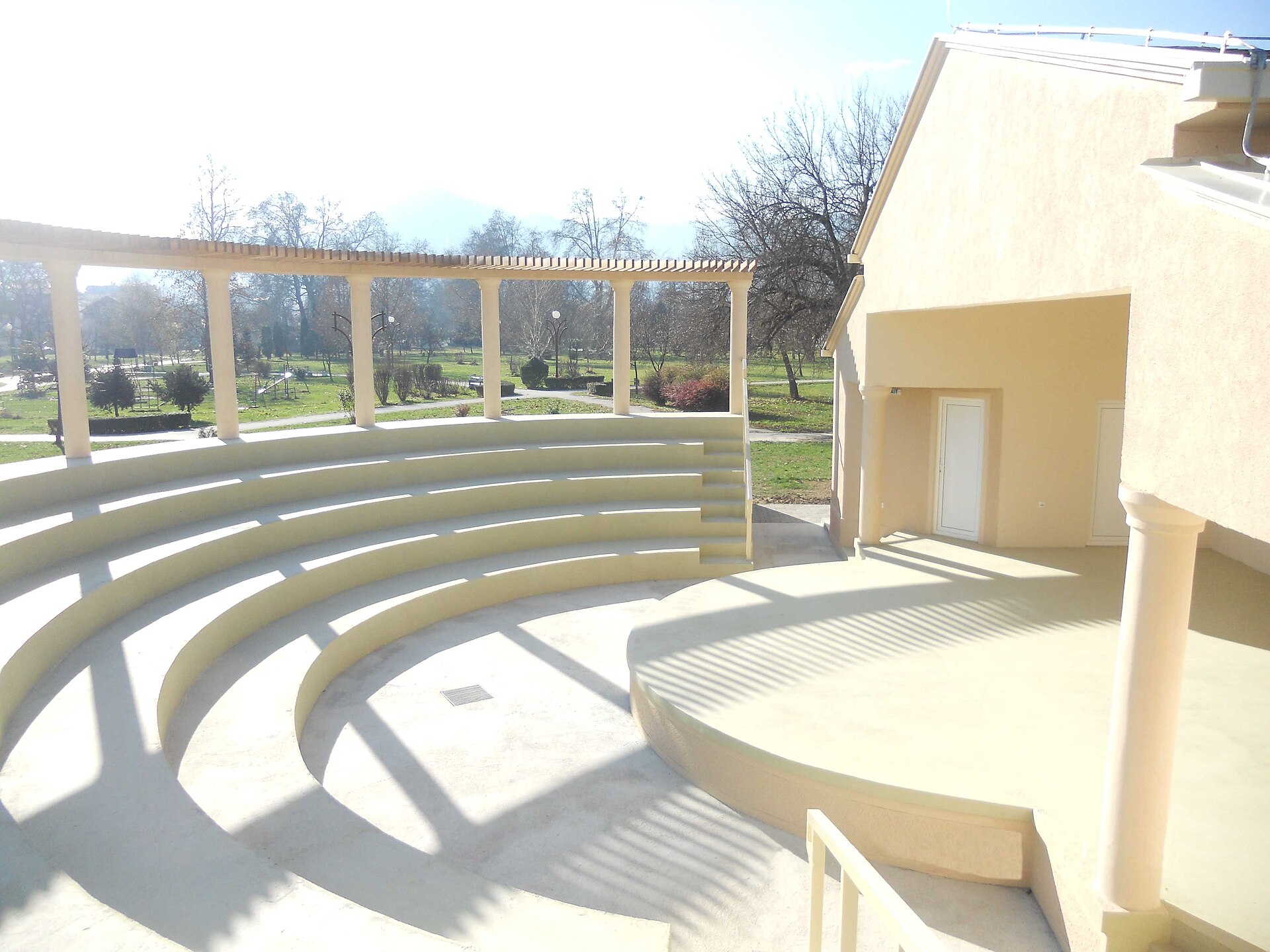
The amphitheatre clings to a hillside in Strumica, half-swallowed by the modern city. No vast arches or towering walls—just rows of weathered stone benches curving into the slope, their edges softened by grass and centuries. The small central arena lies open to the sky. Two thousand years ago, this space held crowds watching gladiators, actors, or public ceremonies that tied the city to Rome.
Strumica, once called Tiberiopolis, has always been a crossroads. A valley between the Aegean and the Balkans made it a natural stop for traders and soldiers. The Romans arrived in the 2nd century BCE, building a city that thrived under their rule. The amphitheatre likely dates to the early centuries CE, when such structures were more than entertainment—they were statements of Roman power. Here, local leaders demonstrated loyalty, justice was delivered, and public life unfolded under the open sky.
The design is simple: a semicircle of seating carved into the hill, with stone benches descending toward the arena. Unlike Rome’s grand complexes, Strumica’s version is modest. The arena is small, and the spaces beneath it were probably basic rooms for performers or storage. Today, the surviving steps are worn smooth, their edges blurred by time, yet the shape remains clear. The city presses close—houses and streets encircle the ruins, creating a quiet contrast between past and present.
After Rome’s fall, the amphitheatre was abandoned. Stones were reused for new buildings, its earth turned over for farming. It wasn’t until the 20th century that archaeologists uncovered the site. Now, it’s not just a relic. In summer, small concerts and performances bring it back to life. Visitors sit on the same benches as ancient spectators, and the sound of music carries across the hillside.
From the upper tiers, the view over Strumica is worth the climb. The city sprawls across the valley, whitewashed houses with red-tiled roofs framed by low mountains. On clear days, the fertile plains stretch in all directions. Strumica is known for its orchards—peaches, grapes, and figs thrive in the warm climate. Markets overflow with fresh produce, a reminder of why people have settled here for millennia.
Other traces of history linger nearby. Ruins of early Christian basilicas, Roman baths, and a small aqueduct hint at the city’s past importance. Tiberiopolis was more than a provincial outpost—it was a religious and cultural center, home to a bishopric in the Byzantine era. Some of its saints were venerated beyond the region, their names still remembered in local traditions. These layers of history appear in the old streets and the small museum, where artifacts from excavations offer glimpses into daily life.
Visiting the amphitheatre is quiet. Two thousand years ago, it was alive with crowds, performances, and public decisions. Today, it’s still, save for the wind or the distant hum of the city. Time smooths history’s edges, but places like this remind us the past isn’t distant.
If you’re in this part of North Macedonia, climb the hill and sit on one of the old benches. Close your eyes and listen—not for the roar of a crowd, but for the echoes of a city that has been many things to many people. The amphitheatre isn’t just a monument. It’s a doorway, letting you almost hear the voices of those who stood here before.