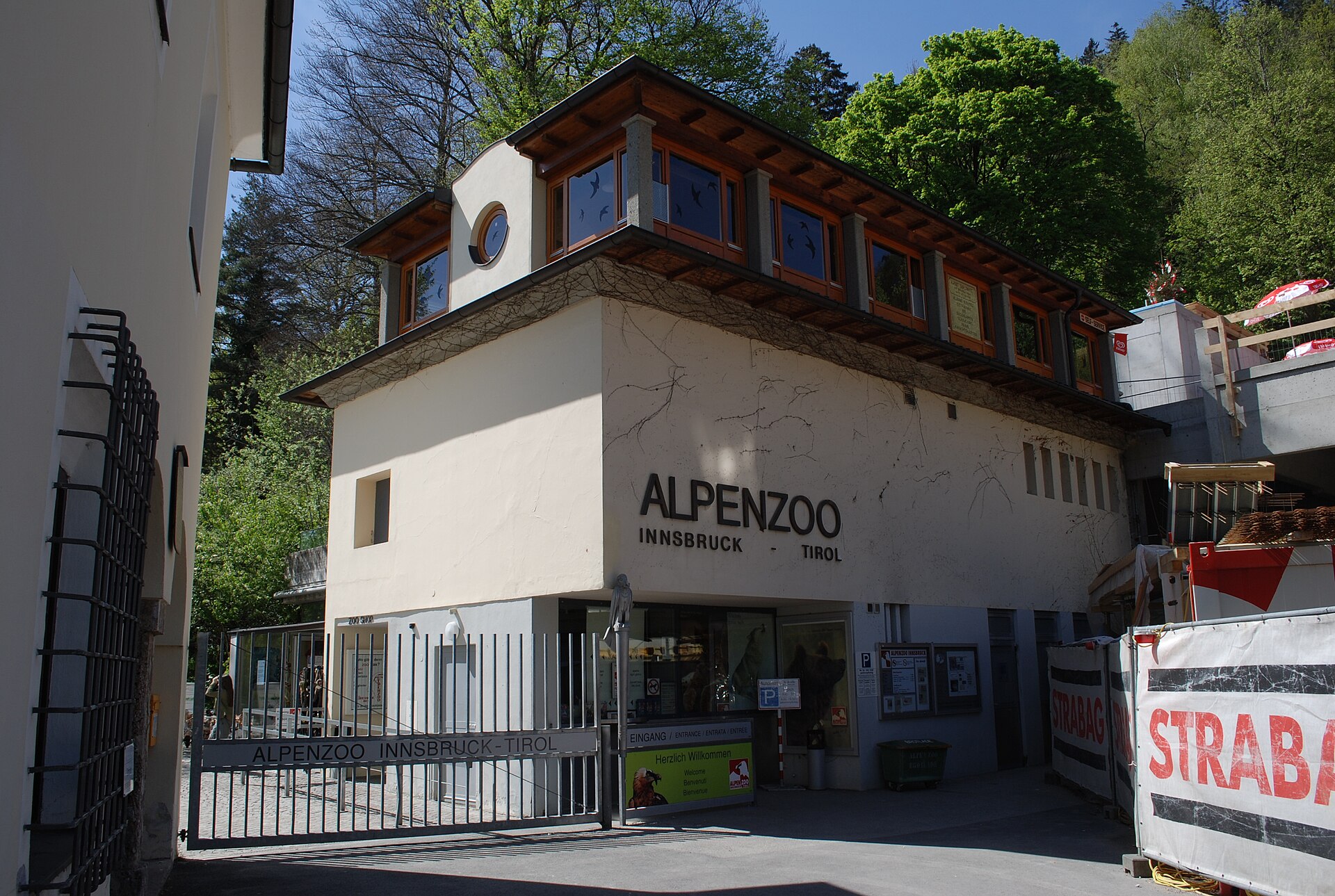
Innsbruck’s Alpine Zoo is one of those places that doesn’t announce itself with fanfare but leaves a quiet, lasting impression. Tucked into the mountainside just a short walk from the city center, it feels less like a zoo and more like a hidden corner of the Alps. There are no sprawling enclosures or crowds of tourists here—just narrow paths winding through rocks and trees, the occasional cry of a bird, and the sense that you’ve stumbled upon something wild and untouched.
Founded in 1962, the zoo was never meant to be a typical collection of animals. Its purpose has always been conservation, focusing on the wildlife native to the Alps—species like chamois, marmots, ibex, lynx, golden eagles, and even brown bears. One of its most important residents is the bearded vulture, a massive bird of prey that once soared across the Alps but now survives only in isolated pockets. The zoo plays a key role in breeding programs for these birds, sometimes releasing chicks back into the wild. It’s a place where the line between captivity and conservation blurs, where every animal has a story tied to the mountains.
The zoo’s design follows the natural landscape rather than imposing on it. Enclosures aren’t built to look like cages; they’re carved into the terrain, using stone and wood to blend with the surroundings. Some are stacked on different levels, connected by stairs and bridges that offer glimpses of the Inn Valley below. On clear days, you can see Innsbruck stretching out between the peaks, the river threading through it like a silver ribbon. The effect is subtle but powerful—you don’t just visit the zoo, you move through it as part of the mountain itself.
What makes this place different is how it presents its animals. There are no simple labels with names and facts. Instead, signs tell stories: how chamois migrate with the seasons, why lynx nearly vanished from the Alps by the mid-20th century, or how bearded vultures rely on bone marrow for survival. The focus isn’t on spectacle but on understanding—the kind of quiet education that lingers long after you’ve left. Nearby, an aquarium holds trout and grayling from alpine streams, the water so clear it feels like looking into a real mountain brook. A small exhibit explains how these rivers shape the ecosystem, why clean water matters, and how even the smallest creatures play a role in the balance of the Alps.
The zoo is small enough to explore in a couple of hours, but rushing would be a mistake. Mornings are best, when the animals are most active and the paths are quiet. Start at the top, where birds of prey circle overhead, then work your way down, pausing at each enclosure. There are benches along the way, perfect for resting and taking in the view. At the bottom, a café offers coffee and simple food, a chance to sit and reflect before heading back into the city.
This isn’t a place for thrill-seekers or those looking for exotic photo ops. There are no lions or elephants here, no flashy shows or rides. What you’ll find instead are the animals that share these mountains with humans—marmots darting into their burrows, chamois vanishing behind rocks, eagles riding the wind. It’s a zoo for people who want to see beyond the surface, to learn why these creatures matter and how they fit into the larger story of the Alps.
Winter transforms the zoo into something even more magical. Snow dusts the rocks and trees, and the animals, adapted to the cold, go about their lives—chamois descending to lower slopes for food, marmots hibernating underground, eagles riding thermal currents. The silence is profound, the kind that makes you feel like you’ve stepped into a different world. In summer, the zoo comes alive with newborns, nesting birds, and deer grazing on sunlit meadows. Each season brings its own rhythm, its own way of revealing the mountains’ secrets.
More than just a collection of animals, the Alpine Zoo is a piece of Innsbruck’s identity. It’s a reminder that the city isn’t just a place of cobblestone streets and ski resorts but a gateway to the wild. Beyond the tourist paths, the Alps have their own pulse, their own rules. A visit here isn’t just about seeing animals—it’s about stepping away from the noise, breathing in the mountain air, and remembering that nature isn’t just scenery. It’s alive, and we’re part of it.