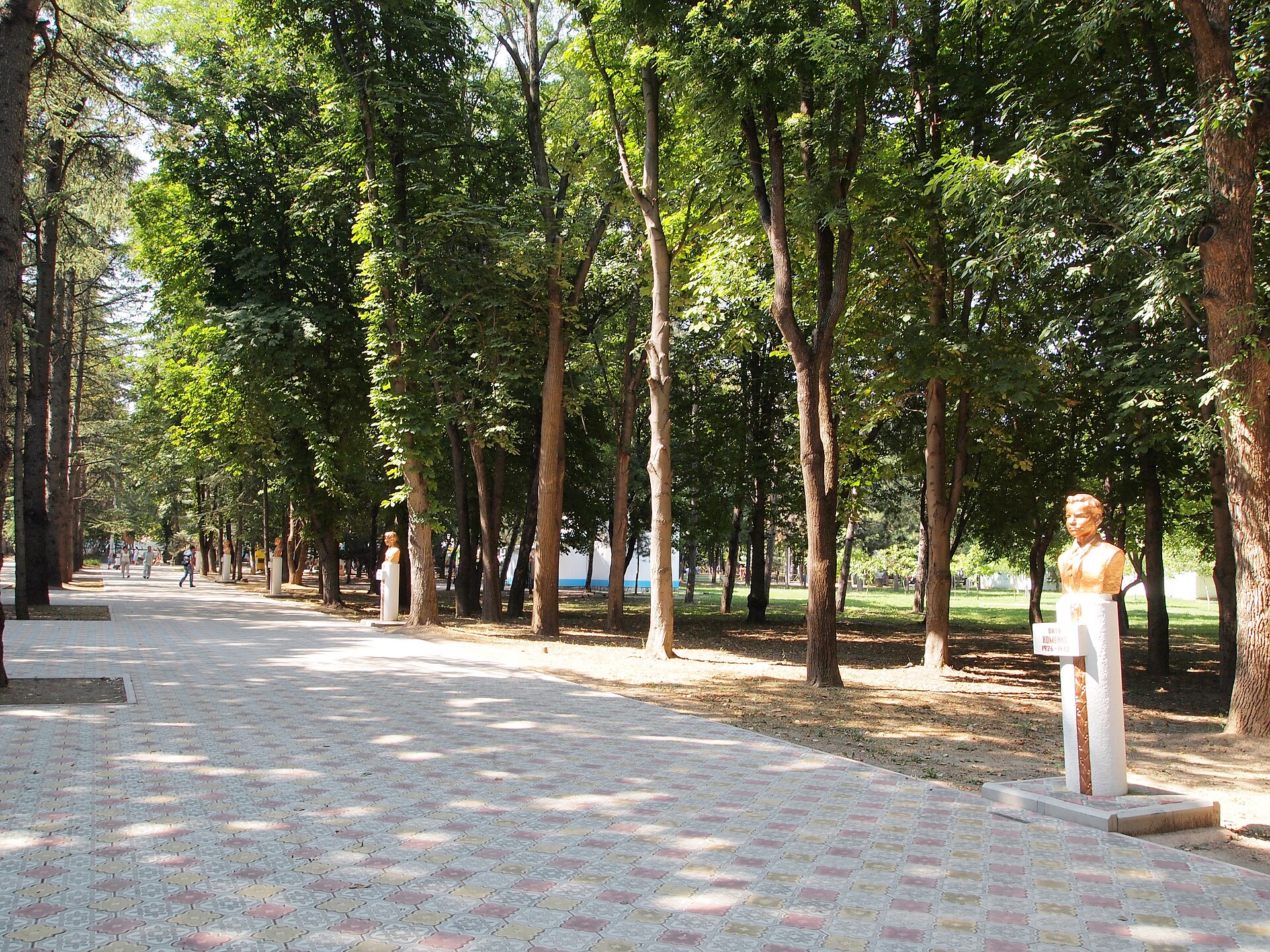
Pioneer Heroes Alley in Simferopol is a quiet place carrying the weight of history. Tucked away in the city center, it doesn’t announce itself with grand monuments. Instead, it exists as a living memorial—rows of trees, each planted in memory of a child who became a symbol of courage during the Second World War. The alley is simple: a tribute to young lives cut short by war.
The idea for the alley took shape in the postwar years. Cities across the Soviet Union began honoring the youngest participants of the resistance. In Simferopol, the decision came in the 1960s to create a memorial that would grow with time. Trees were chosen as the symbol—living things that would endure, just as the memory of these children should. Over the decades, the alley became part of the city, its stories passed down through generations. Some names here are familiar to those who grew up in the Soviet era, but in this place, they feel personal.
Among the trees, you’ll find plaques with names like Volodya Dubinin, a 14-year-old partisan scout who died carrying out a mission in the Crimean mountains. There’s Zina Portnova, a 17-year-old underground fighter executed by the Nazis. And Valya Kotik, the youngest Hero of the Soviet Union, killed at 14. These were children who refused to be bystanders in a war that had already taken so much. Their stories are about defiance—choosing to fight when the odds were impossible.
The alley is unassuming. Two rows of trees form a narrow path leading to a small clearing with a memorial stone. The plaques are modest, offering only brief details of each child’s life and death. In summer, leaves create a green canopy; in winter, branches glisten with frost. There are benches where visitors sit. Parents often bring their children here, pointing to the names and explaining why they matter.
Simferopol and Crimea played a role in the war. Many of the children honored here were connected to the region. Some were born in Crimea, others arrived with evacuated families, and a few joined partisan groups hiding in the forests. The alley reminds us that war wasn’t just fought on battlefields—it was fought in occupied cities, in homes, and sometimes by those barely more than children.
Today, the alley is part of everyday life in Simferopol. It’s not a museum or a tourist attraction. People come for different reasons. Some visit on Victory Day to lay flowers. Others stroll through on their way to nearby parks. School groups stop here for lessons on courage. The alley doesn’t need a formal program to leave an impression. Its power lies in its simplicity—no dramatic displays are needed when the stories themselves are compelling.
There have been discussions about renovating the alley or adding new elements. Some argue it needs modernization. Others believe its understated nature is what makes it meaningful. The alley doesn’t need to change. Its value isn’t in grand gestures, but in the way it quietly insists on remembering. The trees, planted over half a century ago, continue to grow, just as the memory of these children endures.
Pioneer Heroes Alley fits into the rhythm of the city. It’s not set apart from daily life but right in the middle of it—near busy streets, playgrounds, and cafes. You might see students sketching the trees during an art class. An elderly couple could be sitting on a bench, lost in thought. It’s a place that doesn’t ask for reverence but naturally inspires it.
The alley hasn’t lost its relevance. There are no myths here, no attempts to rewrite history—just names, trees, and stories of young people who chose bravery over safety. It doesn’t preach. It simply exists. For those who walk through it, the alley offers a moment to consider what it means to be a hero—and how some acts of courage never fade.