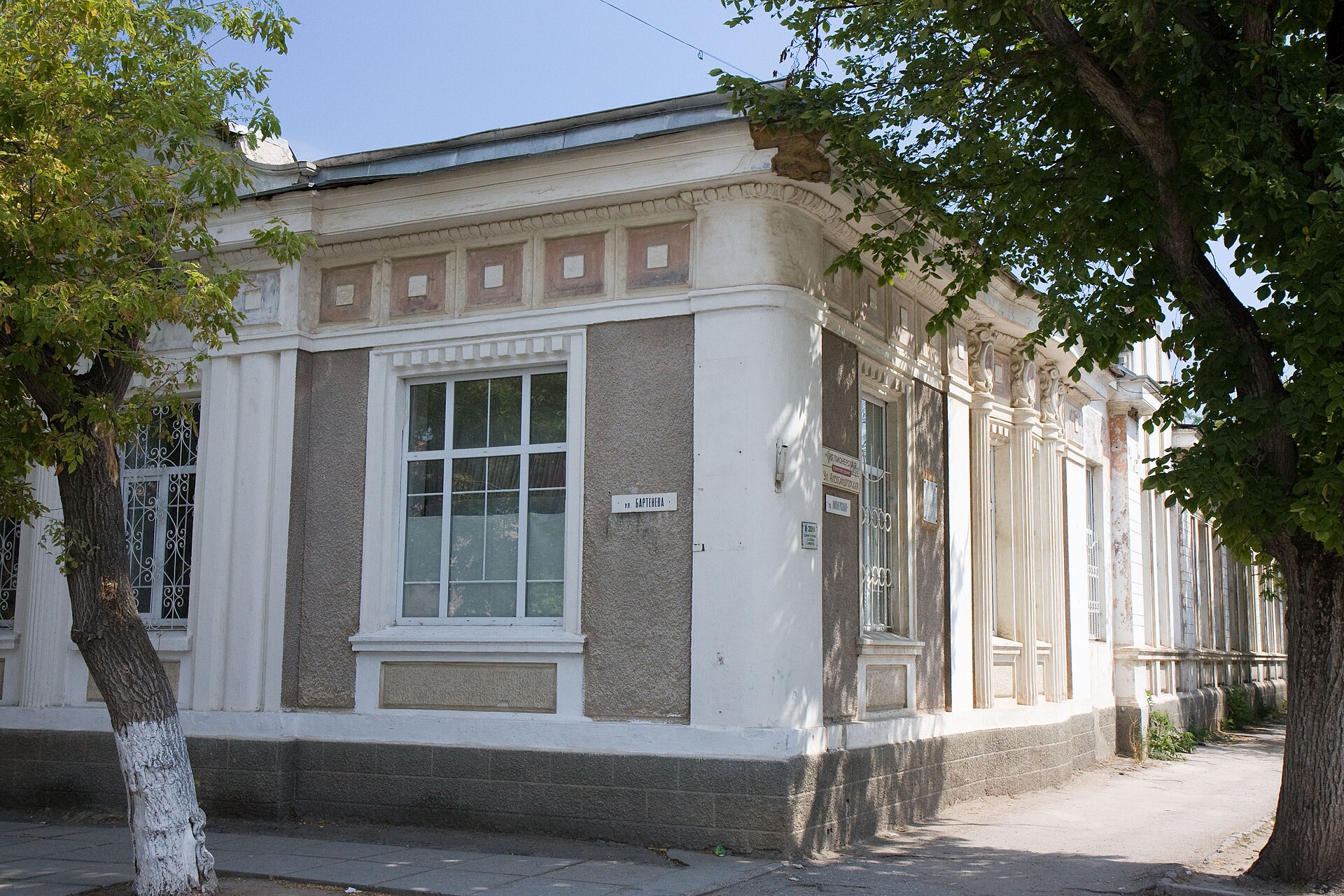
The Alexandrovsky Karaite Spiritual School in Yevpatoria is one of those quiet places that hold the echoes of Crimea’s layered past. Built in the late 19th century, it was more than just an educational institution—it was a cornerstone for the Karaite community, a group that had long been woven into the fabric of the peninsula’s life. At a time when identities were often reshaped by political and social shifts, this school became a place where tradition and modernity found a fragile balance.
The building itself is a study in understated elegance, blending classical architectural elements with the practical needs of its time. The facade is symmetrical, its columns and tall windows giving it a sense of order and lightness. Inside, the spaces were designed with purpose: classrooms large enough to foster learning, a library to preserve knowledge, and even a small prayer room where students could reflect. Though much of the interior has changed over the years, the structure still carries the weight of its original intent—a place where minds were shaped and futures decided.
The Karaites, a distinct ethnoreligious group with roots in medieval Crimea, had established themselves in Yevpatoria by the 19th century, forming one of the most influential communities in the region. Their faith, a branch of Judaism that rejects rabbinical tradition, set them apart, but their contributions to local culture and commerce were undeniable. The Alexandrovsky School was a response to the need for education that honored their heritage while preparing young Karaites for a changing world. Here, students studied not only religious texts but also secular subjects like law, medicine, and languages, a rarity for spiritual schools of the era. Many graduates went on to become teachers, translators, and professionals, bridging gaps between their community and the broader society.
The school’s founding was closely tied to the efforts of Alexander Markovich Sultansky, a respected Karaite leader who saw education as the key to his people’s survival. With the support of patrons, he rallied the resources to build and sustain the institution, ensuring it would serve as both a spiritual and intellectual hub. Sultansky’s vision was forward-thinking—he believed that knowledge, whether sacred or secular, was essential for the Karaites to navigate the challenges of their time. The school became a testament to that belief, a place where tradition and progress coexisted.
Like many institutions of its kind, the Alexandrovsky School thrived in the early 20th century before the upheavals of revolution and war reshaped its fate. For decades, the building served other purposes, its original role fading from memory. It wasn’t until recent years that its historical significance was rediscovered, and today it houses cultural and educational organizations. Yet the structure itself remains a silent witness to a chapter of history that might otherwise have been forgotten.
Walking through Yevpatoria’s streets, it’s easy to overlook this unassuming building. There are no grand monuments or flashy signs to draw the eye, just a quiet facade that blends into the cityscape. But those who pause to look closer will find something far more meaningful. The school stands as a reminder of a community that, though small, left an indelible mark on Crimea’s cultural landscape. The Karaites may no longer be as numerous as they once were, but their legacy endures in places like this.
What lingers here is not just the architecture, but the sense of purpose that once filled these halls. The courtyard, now still, was once alive with the voices of students debating, learning, and dreaming. The walls, though worn by time, still hold the stories of those who passed through them. There’s a humility to the place that makes it all the more compelling—no grand declarations, just the quiet persistence of memory.
In a world where the past is often overshadowed by the rush of the present, the Alexandrovsky Karaite Spiritual School offers a moment of reflection. It’s a place that asks us to consider the small but significant ways communities shape history, and how even the most unassuming buildings can carry the weight of human endeavor. For those who take the time to notice, it’s a window into a world that once was—and a reminder of why such places matter.