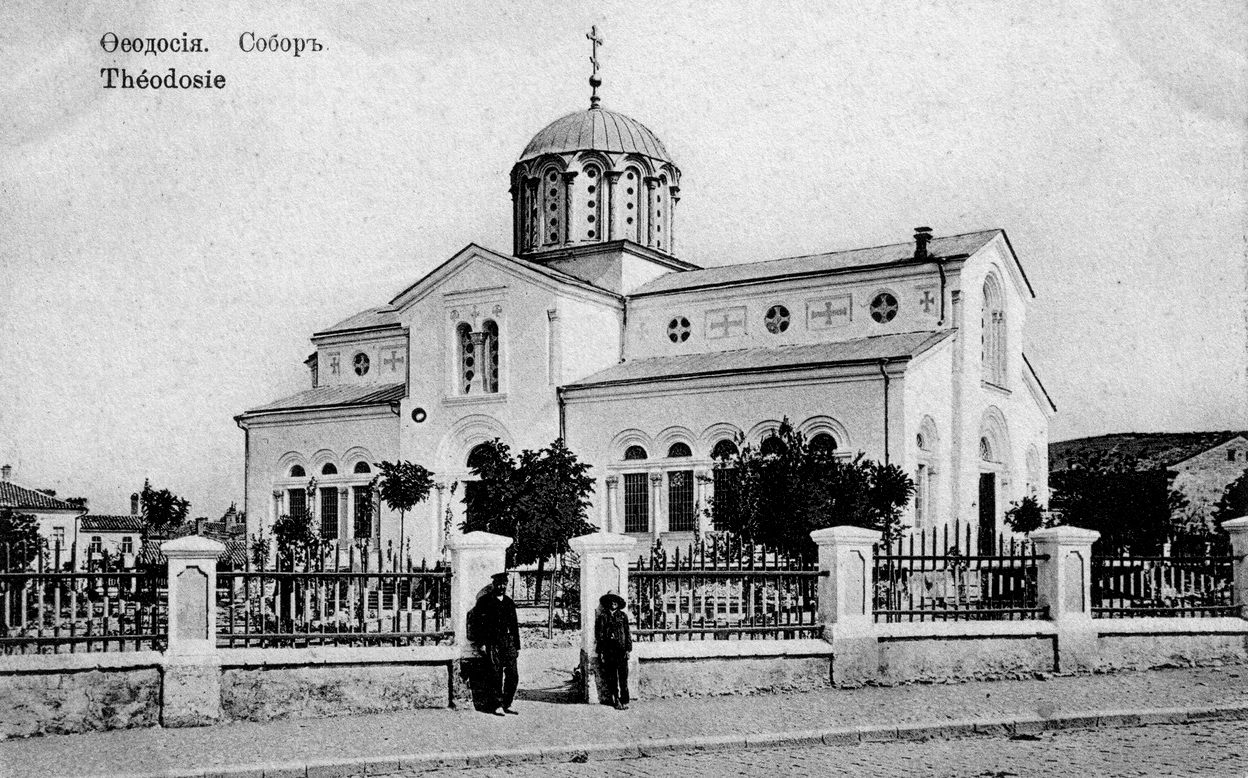
Perched on one of Feodosia’s gentle hills, the Alexander Nevsky Cathedral stands as a quiet witness to the city’s layered past. Built in the late 19th century, it was more than just a place of worship—it became a symbol of resilience for a town that had weathered centuries of change. The cathedral rose from the collective effort of Feodosia’s residents, merchants, and ordinary people who pooled their resources to create something enduring. In an era when the Russian Empire sought to reaffirm its identity, the choice of Alexander Nevsky as the cathedral’s patron saint was deliberate. A figure of both spiritual strength and national defense, he embodied the ideals of a region that had long been a crossroads of cultures and conflicts.
The architecture of the cathedral reflects this blend of influences. Its white stone walls and golden domes are unmistakably Russian, yet the details reveal a subtle adaptation to the Crimean landscape. The facades are adorned with intricate carvings, while inside, the soaring vaults are covered in frescoes depicting biblical scenes. The iconostasis, with its gilded woodwork and delicate craftsmanship, remains one of the most striking features. Though time and history have left their marks, the cathedral’s design still carries the weight of its original purpose—a place where faith and artistry intersect.
Like much of Feodosia, the cathedral has seen its share of upheaval. During the Soviet era, it was stripped of its religious function, repurposed as a warehouse, and eventually abandoned. The restoration that began in the 1990s was slow, and not everything could be returned to its former state. Some of the frescoes remain faded, their colors softened by decades of neglect. Yet even in its imperfect state, the cathedral retains a sense of quiet dignity. The surviving details—the worn stone steps, the flickering candlelight on the icons—hint at the generations of people who have passed through its doors.
Feodosia itself is a city of contrasts, where Genoese fortresses stand alongside Ottoman baths and Russian churches. The Alexander Nevsky Cathedral may not be as ancient as some of its neighbors, but that only adds to its significance. It is a relatively recent addition to the city’s skyline, yet it has borne witness to some of the most turbulent chapters of modern history. From the final years of the Russian Empire to the revolutions, wars, and eventual revival of the post-Soviet era, the cathedral has remained a constant presence.
Today, it functions as an active place of worship, though its doors are also open to visitors. Inside, the atmosphere is one of stillness, even when the streets outside are bustling. Sunlight filters through the stained glass, casting a warm glow over the icons, while the scent of incense lingers in the air. For locals, the cathedral is a place of solace—a refuge in times of personal or collective struggle. For travelers, it offers a moment of reflection, a chance to step away from the noise of the city and simply observe.
The small park surrounding the cathedral provides a peaceful buffer from the urban landscape. In summer, the shade of the trees offers relief from the Crimean heat, while in winter, the bare branches are often dusted with frost. Nearby, the Aivazovsky Picture Gallery and the Museum of Antiquities draw their own crowds, but the cathedral has a different kind of pull. It doesn’t demand attention; it invites contemplation.
There’s no need to rush when visiting. The best time to come is on a quiet weekday, when the crowds are thinner. Take a moment to study the carved doors, to watch how the light plays across the gilded surfaces of the icons, or to listen to the distant chime of the bells. The cathedral doesn’t reveal its full character in a single glance—it requires patience, the kind that comes from simply being present.
In many ways, the Alexander Nevsky Cathedral is a microcosm of Feodosia itself. It has endured neglect and revival, silence and celebration. For some, it is a place of prayer; for others, a piece of living history. And for those who take the time to look beyond its walls, it becomes something more—a reminder that even in a city shaped by countless hands, there are still places where the past feels close enough to touch.