- Home
- Tajikistan
- Khujand
- Alexandria Eschate
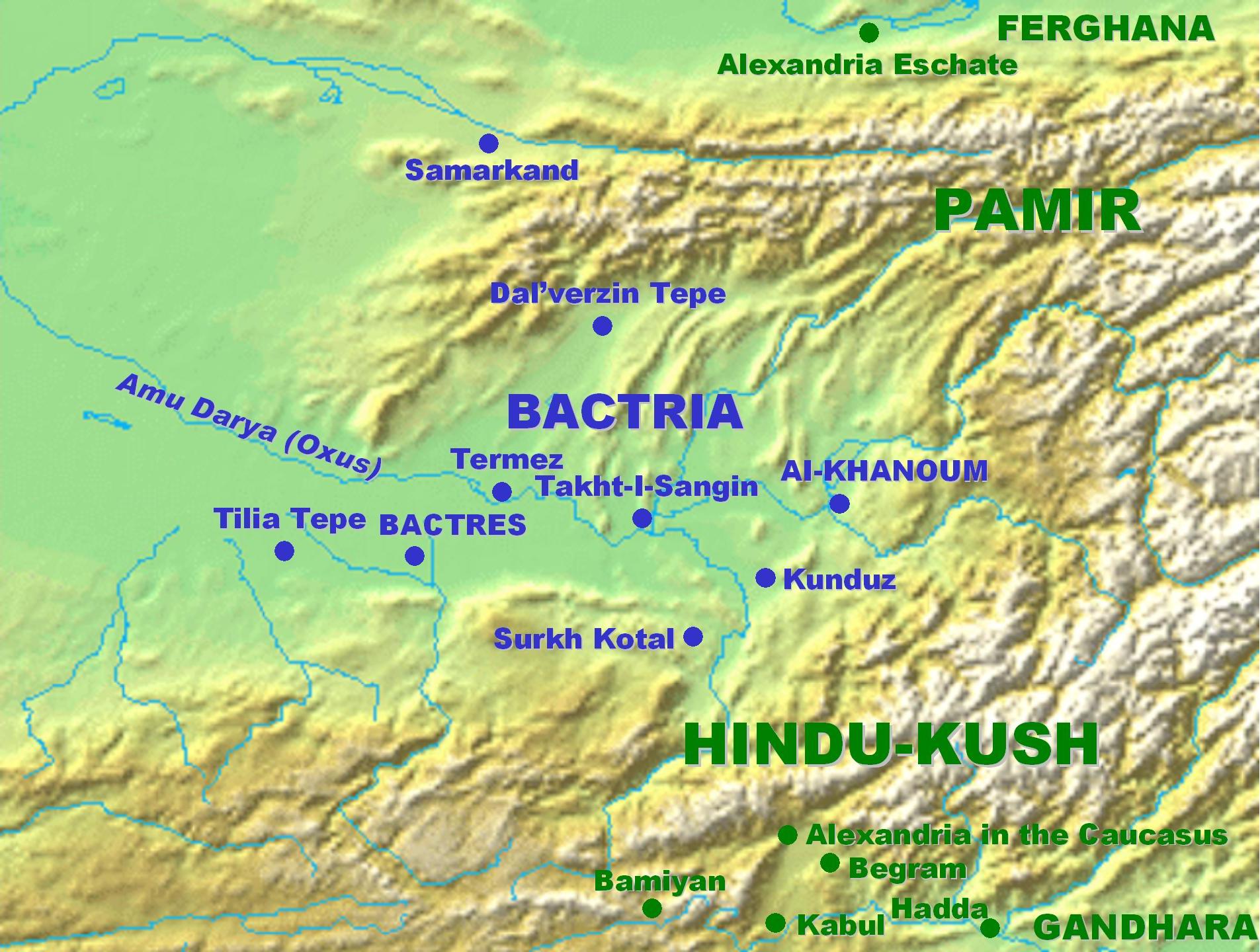
Photo: World Imaging, Public domain
Alexandria Eschate
out of 5 0 ratingsAlexandria Eschate
On the outskirts of Khujand, where the modern city gives way to quiet fields and the distant outline of mountains, lies a place few travelers seek out. Those who do find something more intriguing than ruins or reconstructed monuments. Alexandria Eschate, or "Alexandria the Furthest," doesn’t announce itself with grand columns or polished marble. It lingers in the landscape, a whisper of the past that refuses to fade. Here, the earth holds fragments of a story that began over two thousand years ago.
The name carries legend. Founded in 329 BCE by Alexander the Great during his eastward campaign, this was meant to be the final outpost of his empire, a fortress city marking the edge of the known world. Historians debate whether this was the Alexandria he intended—ancient records are sparse. But the location fits: perched on the banks of the Syr Darya, where the river bends toward the steppe, it would have been a strategic stronghold. Greek soldiers, local Sogdian tribes, and merchants from distant lands likely crossed paths here. The name "Eschate" suggests a boundary, a place beyond which even Alexander’s ambitions did not extend. The idea of it persists—a frontier settlement where the Hellenistic world met Central Asia’s ancient cultures.
Today, little remains. The ruins were swallowed long ago by Khujand’s growth, buried beneath roads, homes, and farmland. Archaeologists have uncovered traces of fortress walls, building foundations, and everyday objects like coins, pottery, and tools. These hint at a city that was more than a military garrison. In its time, this was a crossroads where caravans laden with silk, spices, and precious metals paused between China, India, and the Mediterranean. Greek and local traditions blended here—gods with unfamiliar names, architectural styles that borrowed from both worlds, and languages mixed in the marketplace.
What makes Alexandria Eschate unusual is its unassuming nature. No reconstructed temples, no restored mosaics, no signs pointing to where Alexander might have stood. The site is a fenced-off patch of land where you can walk along remnants of old walls and try to picture the city as it once was.
The Khujand Historical Museum displays artifacts unearthed here—coins stamped with the profiles of long-dead kings, fragments of pottery, and weapons once belonging to forgotten soldiers. But the real draw isn’t what’s on display. It’s the sense of standing where history feels tangible, even if it’s mostly invisible.
The Syr Darya still flows westward, though its course has shifted over centuries. The foothills of the Tian Shan rise in the distance, golden in summer, dusted with snow in winter. On a hot afternoon, the air shimmers above the fields. The only sounds are the rustle of dry grass and the occasional call of a bird. It’s not hard to imagine this place as it was in Alexander’s time—a fortified settlement clinging to the edge of an empire, where soldiers far from home wondered what lay beyond the next ridge.
For locals, Alexandria Eschate is a reminder of Khujand’s deep roots. The city is one of the oldest in Central Asia, with a history stretching back long before the Silk Road. Unlike more famous sites, this one doesn’t demand attention. There’s dignity in the way it exists—not as a spectacle, but as a fragment of the past that has endured. Visitors aren’t met with fanfare. They’re left to wander, to touch the weathered stones, and to let their imagination fill the gaps.
Khujand is a city of contrasts. Its bazaars buzz, its streets lined with Soviet-era buildings and modern shops. But a short drive from the center, the noise fades. The landscape opens up. The air smells of sage and river water. The only movement is the slow drift of clouds.
In moments like these, you feel the layers of time. The ancient city beneath your feet. The caravans that once passed through. The soldiers who marched here and never returned. Alexandria Eschate doesn’t offer grand revelations. It offers something rarer—a chance to stand where history isn’t just remembered, but felt.
If you find yourself in Khujand, make the trip. Don’t expect a dramatic spectacle or a neatly packaged experience. This isn’t a place that tries to impress. It simply is. And perhaps that’s why it lingers in the mind after you’ve left. Alexandria Eschate is like a page from an old book. Hold it up to the light, and the past flickers through. The words may be faded, the edges worn, but the story is still there—waiting for those willing to listen.
Day around this place
Where else to go on the same day
Building the day…
Where it is
40.28611, 69.61722
