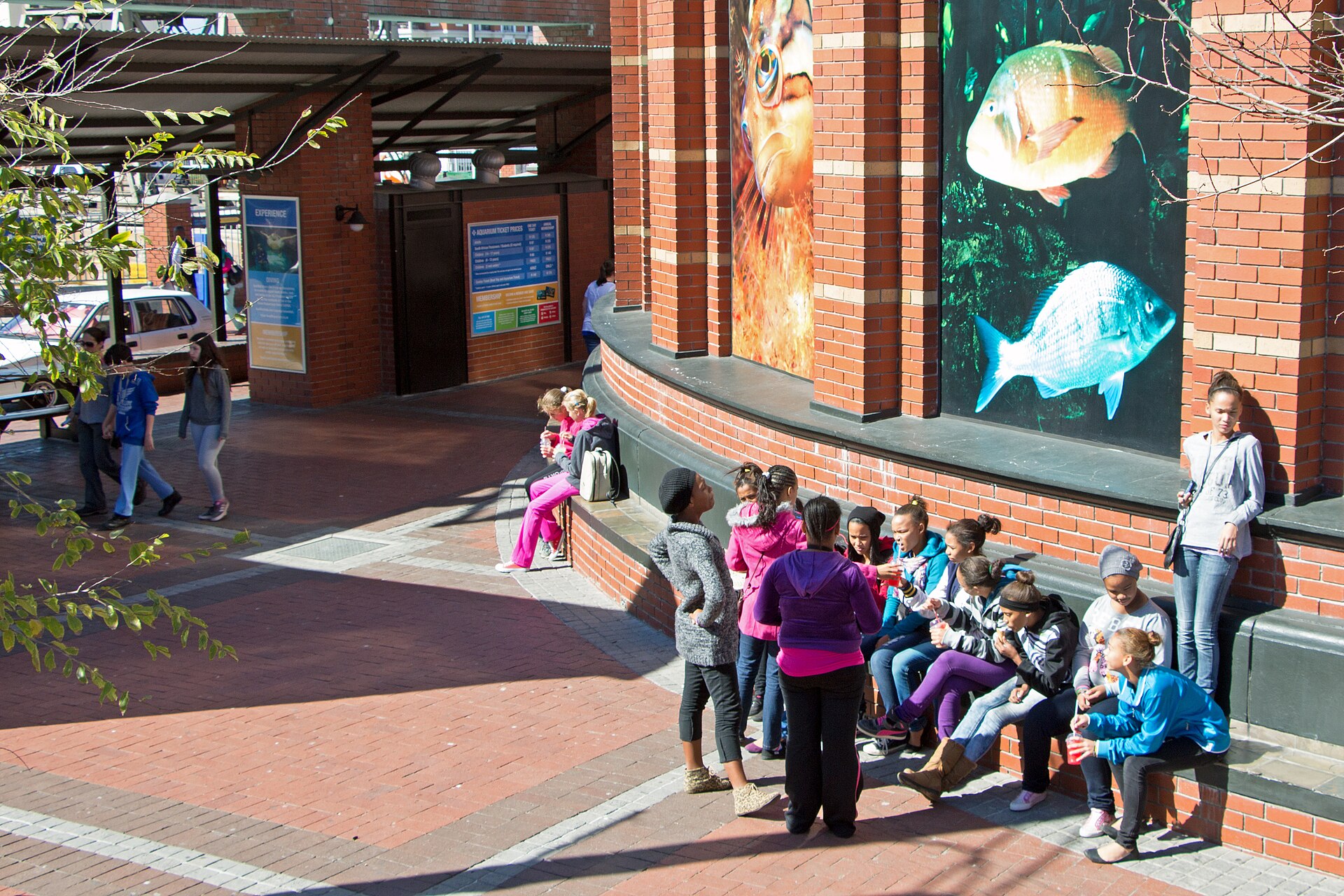
The Two Oceans Aquarium stands where Cape Town’s energy meets the quiet vastness of the sea. It’s part of the Victoria & Alfred Waterfront, a place where the city’s history and the ocean’s presence feel equally strong. The name refers to the Atlantic and Indian Oceans converging at the Cape of Good Hope, their currents mixing to create one of the most biologically diverse stretches of water on earth. The aquarium brings that meeting point indoors, showing two worlds that rarely overlap so closely.
The building blends with the waterfront’s industrial charm. Its low profile and glass facades let light in, while inside, the architecture shifts perspective. Walk through the underwater tunnels, and the ocean presses in from all sides. Rays glide overhead, sharks drift past at eye level, and schools of fish move like shifting shadows. The largest tank holds enough water to fill a small swimming pool. Stand in front of it, and you see an entire ecosystem—predators, prey, and everything in between.
This aquarium balances wonder with purpose. Exhibits explain why marine life matters. Displays show how oceans regulate the planet’s climate, why coral reefs need protection, and how plastic waste travels from city streets to the deepest trenches. Kids can touch sea stars or learn how fish breathe. Adults might notice that octopuses mimic not just colors but textures, turning their skin into coral or rock. These details change how you see these creatures.
The penguin exhibit draws crowds. African penguins, native to this coast, now face extinction. The colony here is part of a conservation effort. Watch them dart through the water or hop onto rocks. They’re social animals, and you might see them playing or squabbling, their personalities as vivid as their black-and-white feathers.
The café overlooks the harbor, where gulls wheel above the water and ships come and go. The place feels like a bridge between land and sea. Locals visit as often as tourists, drawn by the chance to slow down and remember how strange and beautiful the ocean is.
The aquarium opened in 1995 to combine science, education, and leisure. Today, it’s one of the largest in the Southern Hemisphere, home to over three thousand animals, from seahorses to ragged-tooth sharks.
Behind-the-scenes tours show the work that keeps the aquarium running. You can see how food is prepared, how water filtration systems work, or how staff care for sick animals. Scientists sometimes give talks about their research or the impact of human activity on the ocean. These moments turn a visit into more than observation—they make you part of the conversation.
What stays with you isn’t just a memory of a fish or exhibit. It’s the sense of stepping into another world, where time moves differently. The water, the light, the slow drift of creatures—it all creates quiet immersion. You leave with awe and curiosity, the kind that makes you want to learn more about what lies beneath the waves. The ocean remains one of the planet’s last mysteries, and this aquarium lets you touch it without getting wet.