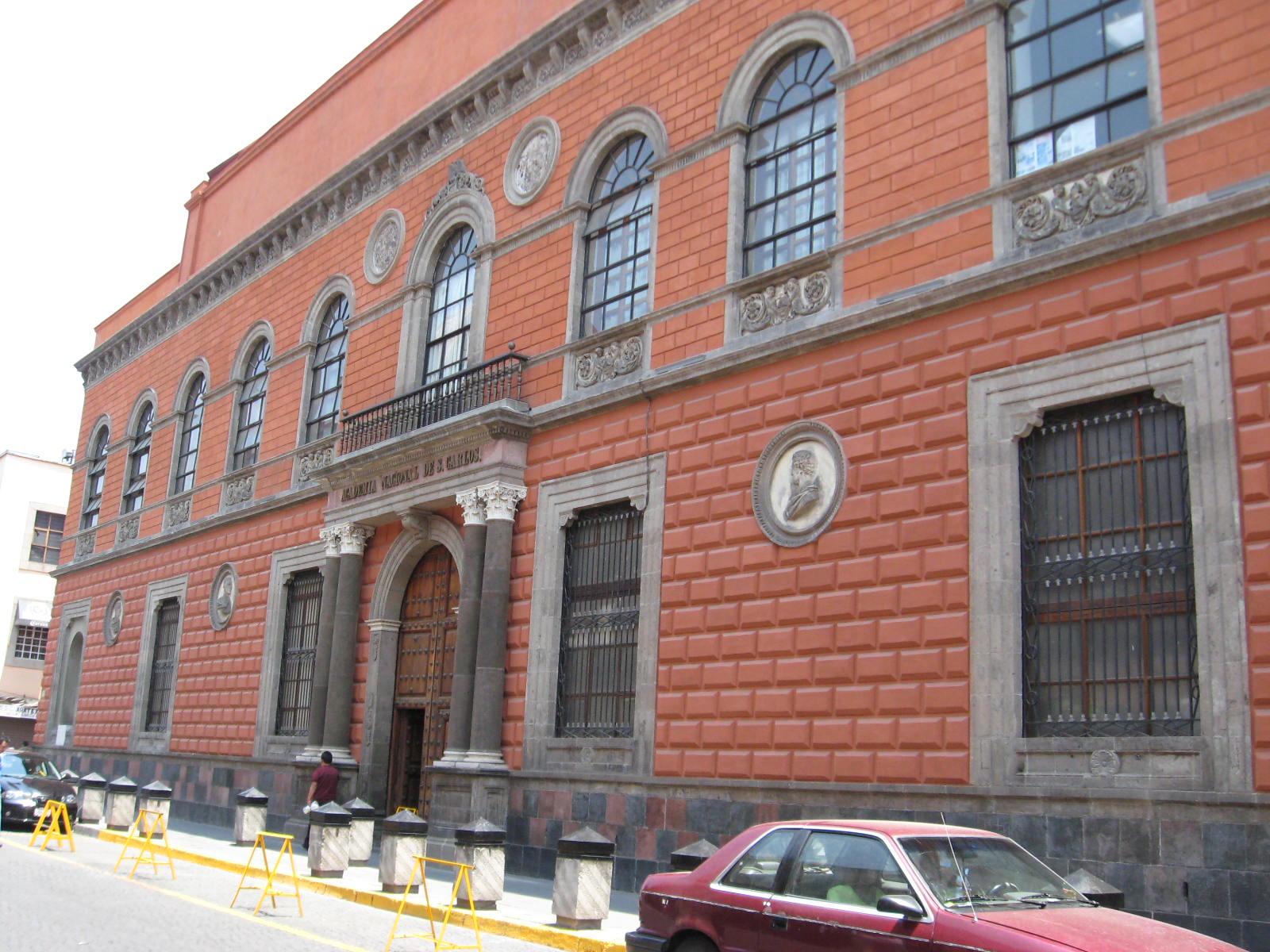
San Carlos Academy is one of those rare places in Mexico City where the weight of art history lingers in the air. Founded in the late 18th century, it was the first art academy in the Americas, and it remains a quiet but vital part of the city’s cultural life. Unlike the grand museums or colonial landmarks that draw crowds, this institution has always been about something more intimate: the slow, deliberate work of shaping artistic tradition at the crossroads of Europe and Mexico. The building itself, tucked away in the historic center, doesn’t demand attention like the nearby cathedrals or palaces, but its presence is just as enduring.
The academy was established in 1781 under Spanish rule, part of an effort to bring order to artistic education in the colonies. At the time, art in New Spain was largely tied to the church and aristocracy, and the academy was meant to provide a structured, European-style education for young artists. Its first director was Jerónimo Antonio Gil, a Spanish painter, and early instructors were brought over from Madrid. Yet almost from the beginning, the institution took on a distinctly Mexican character. By the early 19th century, it was training artists who would later define the country’s visual identity, blending imported techniques with local themes and sensibilities.
Today, the academy still functions as a school, but its doors are open to visitors. The small museum inside houses works by students and teachers from different eras, offering a glimpse into how Mexican art has evolved over two centuries. The collection isn’t vast, but that’s part of its charm—here, you can trace the shifts in style and subject matter without the overwhelming scale of larger museums. The galleries hold academic paintings from the 19th century, portraits that capture the era’s social hierarchies, early 20th-century modernist experiments, and even contemporary student projects. What stands out is how European techniques were gradually adapted to Mexican realities, moving from religious scenes to depictions of indigenous life and everyday struggles.
The building itself is a fine example of neoclassical architecture, a style that was fashionable in Europe at the time of its construction. The facade is restrained, with columns and symmetrical windows, but the interior feels surprisingly open. A central courtyard with a fountain and arched walkways evokes the layout of old Spanish universities, while high ceilings and large windows create a sense of space that’s rare in the dense historic center. Some of the original decorative details, like frescoes and plasterwork, have survived, though much of the interior was updated in the 20th century to accommodate modern teaching needs.
San Carlos has always been more than just a school—it’s been a place where artistic debates took shape. In the 19th century, it hosted exhibitions that showcased both established masters and emerging talents. By the 20th century, it became one of the spaces where Mexican muralism began to take form, a movement that would redefine public art not just in Mexico but around the world. While the most famous muralists, like Diego Rivera and José Clemente Orozco, weren’t students here, their influence on the academy was profound. Many of its teachers and graduates went on to contribute to the monumental murals that now adorn buildings across the country, turning walls into canvases for national history and social commentary.
The academy remains an active school, but visitors are welcome to explore its museum, which is free to enter. The schedule of exhibitions can vary, and it’s rarely crowded—most tourists head to the more famous museums nearby. That’s part of what makes San Carlos special. There’s no rush here, no need to navigate through crowds. You can wander the galleries at your own pace, lingering over paintings and sculptures that might go unnoticed elsewhere. Occasionally, the academy hosts open lectures or workshops, and on those days, the place comes alive with discussion and creativity.
Located just a short walk from the Zócalo and the Metropolitan Cathedral, the academy sits in the heart of Mexico City’s historic center. The surrounding streets are chaotic and noisy, but stepping through the arched entrance feels like entering another world. The courtyard is quiet, the only sounds the trickle of the fountain and the occasional footsteps of visitors. It’s easy to imagine the students who walked these halls two centuries ago, carrying sketchbooks and debating the finer points of composition. Time moves differently here, and that’s evident from the moment you arrive.
For anyone interested in the history of Mexican art, San Carlos is a must-visit. It doesn’t have the blockbuster names of Frida Kahlo or David Alfaro Siqueiros, but that’s precisely why it matters. The museum’s collection includes works by lesser-known artists who played their part in shaping the country’s artistic tradition. Sometimes, contemporary student projects are on display, a reminder that the academy isn’t stuck in the past. It’s still evolving, still teaching, still contributing to the conversation about what Mexican art can be.
A visit to San Carlos isn’t just about seeing art—it’s about experiencing a place where art is made and passed down. There’s no grand spectacle here, no carefully curated spectacle for tourists. Instead, there’s a sense of authenticity in the details: the smell of paint and plaster in the studios, the old photographs of graduates lining the walls, the student sketching in the courtyard. This isn’t a place for those looking for entertainment. It’s for those who want to understand how art becomes woven into the fabric of life, how tradition is kept alive not by freezing it in time, but by letting it grow.