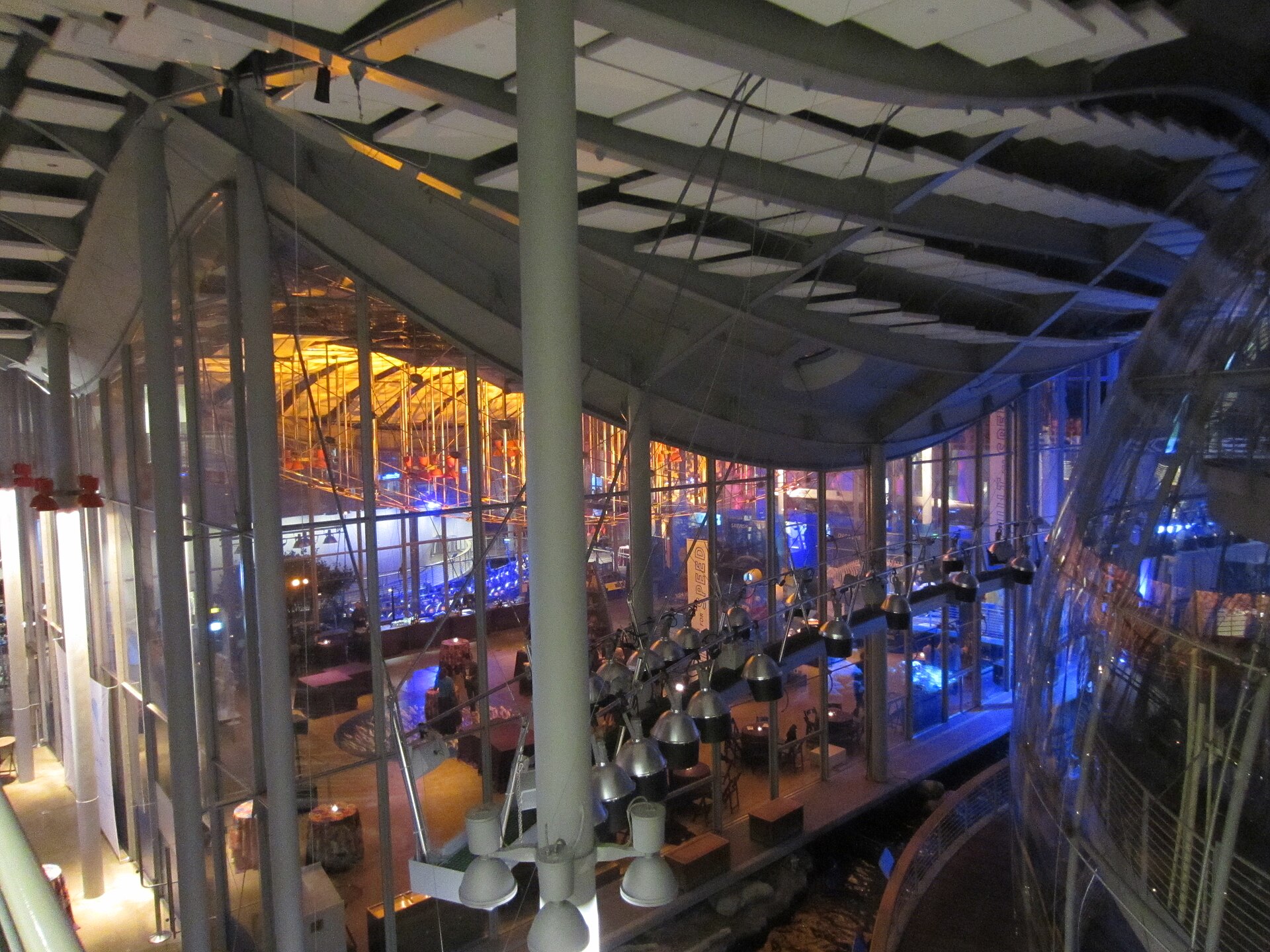
The California Academy of Sciences sits quietly in San Francisco’s Golden Gate Park, a place where the boundaries between the natural world and human curiosity dissolve. It’s not just a museum or an aquarium—it’s a living, breathing space where science feels immediate, almost tangible. The building itself seems to grow from the earth, its design blending seamlessly with the surrounding trees and meadows. Inside, the air hums with the sounds of water, the rustle of leaves, and the occasional squawk of a parrot, as if the outside world has been gently folded into the architecture.
The structure is a marvel in its own right, designed by Renzo Piano to exist in harmony with its environment. The most striking feature is the living roof, a rolling landscape of native plants that undulates like the hills of Northern California. It’s not just for show. The roof insulates the building, reducing energy costs, while its plants filter rainwater and provide a habitat for birds and insects. On warm days, the scent of wildflowers drifts through the open-air spaces, and the glass walls make the interior feel like an extension of the park. Even the temperature inside seems to shift with the seasons, cooler in the morning fog and warmer when the sun breaks through.
Step inside, and the first thing you notice is the Steinhart Aquarium, a window into the Pacific Ocean’s depths. The tanks are alive with movement—sharks glide past coral reefs, jellyfish pulse in the dim light, and schools of fish dart through artificial currents. One of the most mesmerizing exhibits is the Philippine Coral Reef, a towering structure that mimics the biodiversity of one of the world’s most vibrant marine ecosystems. Nearby, the Flooded Amazon exhibit immerses visitors in the murky waters of a South American river, where piranhas and electric eels lurk beneath the surface. The aquarium doesn’t just display marine life; it recreates entire ecosystems, complete with the sounds and smells of the wild.
Above the aquarium, the Osher Rainforest rises like a glass dome, a slice of the tropics transplanted into the heart of the city. The air is thick with humidity, and the calls of birds echo through the dense foliage. Butterflies flit between the leaves, sometimes landing on visitors’ shoulders, while poison dart frogs hide in the undergrowth. The exhibit is a reminder of how fragile these environments are, how easily they can be disrupted by human activity. It’s also a rare chance to stand in the middle of a rainforest without leaving the city, to feel the weight of the air and the dampness of the soil underfoot.
For those who prefer to look upward rather than inward, the Morrison Planetarium offers a journey through the cosmos. The dome is one of the largest in the world, and the shows projected onto it are designed to make the vastness of space feel intimate. One moment, you’re floating above Saturn’s rings; the next, you’re watching the birth of a star in a distant galaxy. The planetarium doesn’t shy away from the complexities of astronomy—it explains black holes, dark matter, and the ever-changing definitions of what makes a planet. The shows rotate regularly, so even repeat visitors will find something new to marvel at.
The Academy’s natural history collections are just as impressive, though they take a more grounded approach. The Kimball Natural History Museum houses everything from towering dinosaur skeletons to delicate fossils of ancient insects. One of the most striking exhibits is the Tusher African Hall, where dioramas depict the continent’s wildlife in meticulous detail. The taxidermy is so lifelike that it’s easy to forget the animals aren’t real, their glass eyes seeming to follow you as you move. Nearby, the Gem and Mineral Hall glitters with crystals and rare stones, their colors shifting under the light. The museum doesn’t just display these artifacts; it tells the story of how they came to be, how life on Earth has evolved and adapted over millions of years.
What sets the Academy apart from other museums is its emphasis on active discovery. The Science in Action exhibits invite visitors to participate rather than just observe. In the Project Lab, researchers work on real scientific studies, and the public is encouraged to ask questions or even assist with experiments. Kids can dissect owl pellets, build simple robots, or learn to identify local birds by their calls. The Academy also hosts evening events, where adults can sip wine on the living roof while listening to lectures on topics like climate change or deep-sea exploration. These gatherings have a relaxed, almost festive atmosphere, as if science itself is something to be celebrated rather than feared.
The Academy isn’t just a place to visit—it’s a place to linger. The café offers a quiet spot to sit with a coffee and watch the park through the windows, while the gift shop sells everything from field guides to sustainable toys. On a clear day, the roof is the best place to be, the city sprawling below and the Golden Gate Bridge visible in the distance. It’s a reminder that this institution isn’t just about preserving the past or studying the present; it’s about understanding how everything is connected—the oceans, the forests, the stars, and the people who walk among them.
If you’re in San Francisco for any length of time, the Academy of Sciences is worth a visit, not just for the exhibits but for the way it makes you see the world differently. It’s a place where science feels alive, where the line between observer and participant blurs, and where even the most familiar concepts—like the changing of the seasons or the life cycle of a butterfly—take on new meaning. You might come for the sharks or the dinosaurs, but you’ll leave with something deeper: a sense of wonder, and the quiet realization that we’re all part of something much larger than ourselves.