- Home
- Egypt
- Al-Amria 2
- Abu Mena
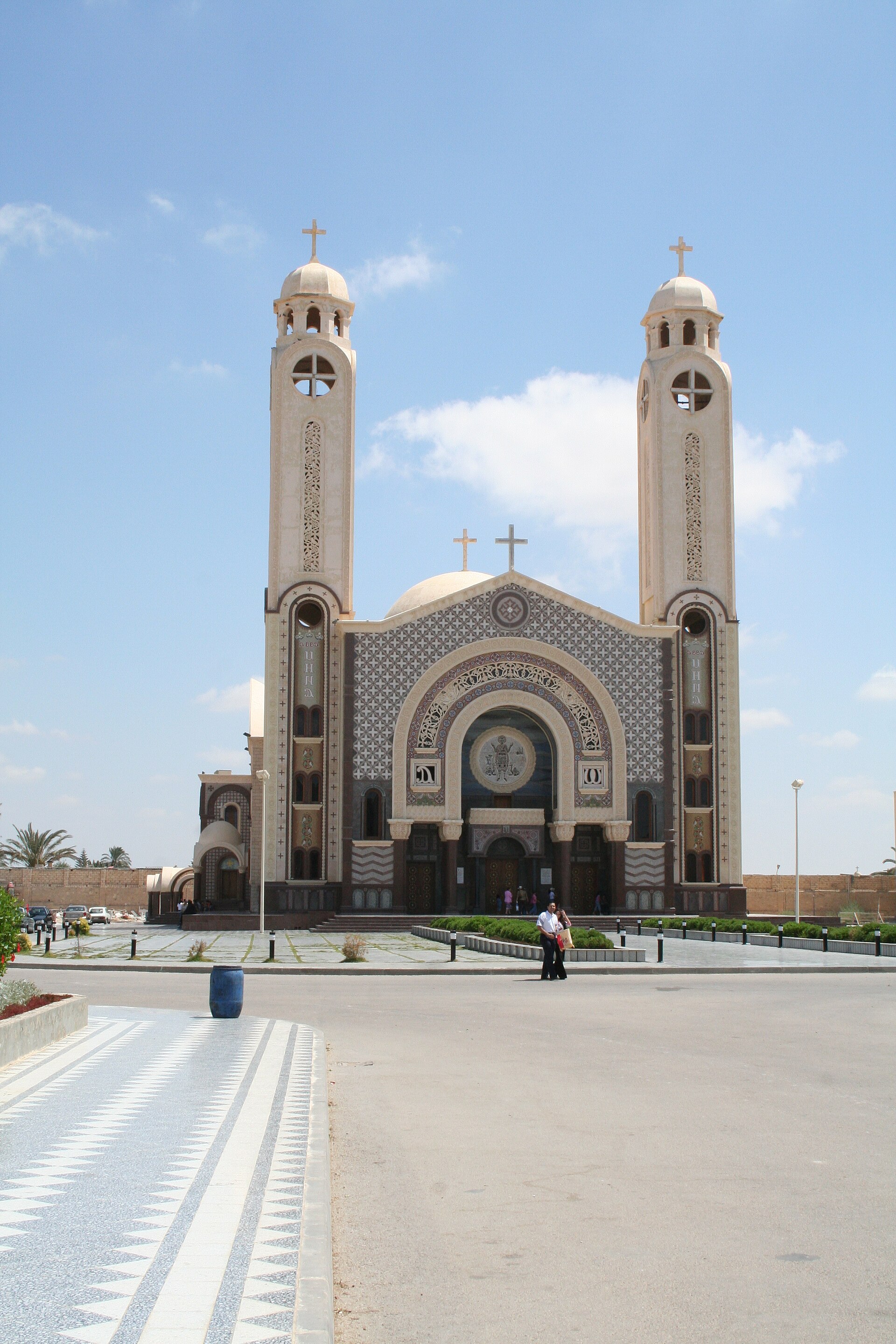
Photo: Einsamer Schütze, CC BY-SA 3.0
Abu Mena
out of 5 0 ratingsAbu Mena is one of Egypt’s quietest historical treasures, a place that rarely makes it into guidebooks yet holds a story profound enough to surprise even those who know the country well. Tucked away in the desert southwest of Alexandria, this ancient settlement was once one of the most important Christian centers in the Mediterranean world. Today, the only sounds that break the silence are the whisper of wind through the sand and the occasional voices of archaeologists or the few travelers who venture here. It’s a place where the past feels closer than anywhere else, not because of grand reconstructions or crowds, but because of the stillness that lets you hear its echoes.
The story of Abu Mena begins in the 3rd century with the burial of Saint Menas, an Egyptian soldier and martyr revered in early Christian tradition. According to legend, his tomb became a pilgrimage site, and over time, a thriving city grew around it. By the 4th to 7th centuries, Abu Mena had flourished into a major religious hub of the Byzantine Empire. Basilicas, monasteries, pilgrim hostels, and even hospitals were built here, turning the city into a destination as significant as Jerusalem or Rome. Its influence stretched far beyond Egypt, drawing visitors from across the Christian world who came to venerate the saint’s relics.
The architecture of Abu Mena reflects how Christianity took root in the Egyptian landscape. The Great Basilica, constructed in the 5th century, was the centerpiece of the complex, its vast size and intricate decorations leaving visitors in awe. Mosaic floors depicted biblical scenes, while underground crypts housed the remains of Saint Menas. The city was meticulously planned, with residential quarters, public baths, and warehouses, as well as advanced infrastructure like water systems and street lighting. The ruins that remain today, though fragmented, still convey the grandeur of what was once a bustling urban and spiritual center.
Abu Mena’s decline began in the 7th century after the Arab conquest of Egypt. Pilgrimages dwindled, buildings fell into disrepair, and the desert slowly reclaimed the city. By the 10th century, it had been abandoned, its location forgotten until archaeologists rediscovered the ruins in the early 20th century. Since then, excavations have uncovered more of its past, revealing how a once-thriving community could vanish beneath the sands.
Now a UNESCO World Heritage site, Abu Mena is primarily an archaeological site, where visitors can wander among the remnants of columns and walls, imagining the city in its prime. The Great Basilica is the most striking feature—its ruins, though weathered, still carry a sense of majesty. Fragments of mosaics, with their geometric patterns and Christian symbols, hint at the artistry that once adorned the floors. The crypt where Saint Menas’ relics were kept is also accessible, though little remains of its original splendor.
Unlike Egypt’s more famous attractions, Abu Mena offers an atmosphere of solitude and reflection. There are no crowds, no souvenir vendors, no guides competing for attention. Instead, the open desert and the quiet ruins create a space where history feels tangible, not just displayed. The wind, the sand, and the scattered stones become guides of their own, leading visitors through layers of time and belief.
Visiting Abu Mena is less about ticking off sights and more about stepping into a different kind of history. It’s a reminder that Egypt’s story isn’t just about pharaohs and pyramids—it’s also about the early Christian communities that shaped the region. Byzantine mosaics stand alongside traces of older traditions, while the Arab conquest marked the end of one era and the beginning of another. Abu Mena is a crossroads of cultures and centuries, and that’s what makes it so compelling.
For those who make the journey, it’s worth noting that the site has almost no modern amenities. There are no cafes, shops, or paved parking lots—just the desert, the ruins, and a few signs. It’s best to come with a tour or a rented car, bringing water and sun protection. Some locals from nearby villages may offer to guide you, but their stories often blend fact with folklore. Even without detailed explanations, though, Abu Mena leaves a lasting impression.
This isn’t a place for those seeking entertainment or instant gratification. It’s for travelers who are willing to listen to the silence, to study the stones, and to try to understand how people lived here over a thousand years ago. Abu Mena doesn’t shout its significance—it quietly preserves it, letting each visitor discover it in their own way. And perhaps that’s what makes it so special.
Day around this place
Where else to go on the same day
Building the day…
Where it is
30.84105, 29.66349