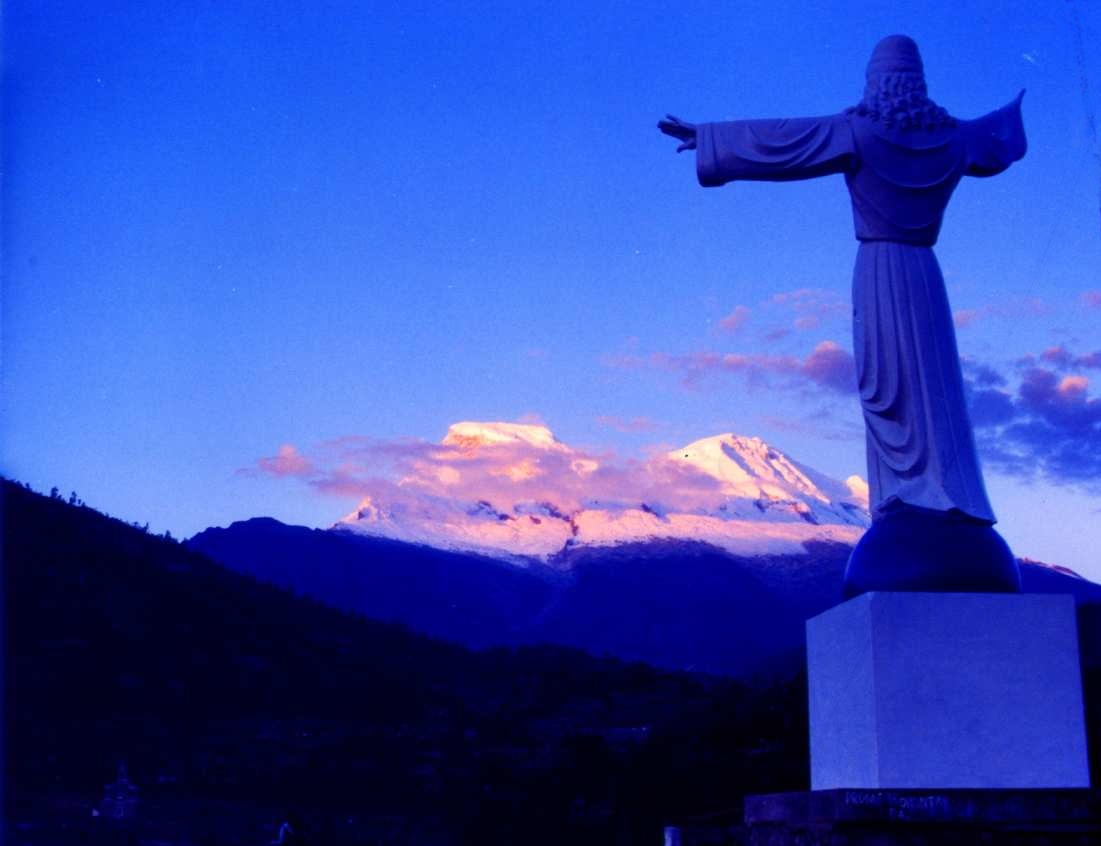
Plaza de Yungay
Peru · 2 places
Photo: Fmendez46, Public domain
Nestled in the Callejón de Huaylas valley, Yungay sits quietly beneath the towering peaks of the Cordillera Blanca, the highest tropical mountain range in the world. The air here is thin, the sky vast and close enough to touch. The town itself is small, its narrow streets lined with low adobe houses, their earthy tones blending into the landscape. On weekends, the central square comes alive with locals gathering, their voices mingling with the distant bells of the old church and the occasional cry of an alpaca grazing on the hillsides.
Yungay is not a place for crowds or hurried footsteps. There are no neon signs or bustling tourist traps, just the steady rhythm of life moving at its own pace. The town carries a quiet dignity, a sense of resilience shaped by its past. In 1970, an earthquake triggered a catastrophic avalanche from Mount Huascarán, burying the original town beneath mud, ice, and debris in a matter of minutes. Thousands perished, and today, the site of the old Yungay is a memorial park, a place of reflection and remembrance. Among the greenery, monuments stand as silent witnesses to the tragedy, while a towering cross on a nearby hill serves as a landmark visible from afar. Beneath protective glass, the ruins of buildings remain preserved, a stark reminder of nature’s power. Visitors often find themselves moved by the solemn atmosphere, a place where grief and respect still linger in the air.
The new Yungay was rebuilt nearby, a modest town that feels more like a close-knit community than a tourist destination. There are no grand hotels here, just family-run guesthouses where the food is simple and hearty—potatoes, corn, alpaca meat, and vegetables grown in the surrounding terraced fields. The local market is a hub of activity in the mornings, with farmers selling fresh cheese, milk, and produce. Life here unfolds slowly, measured by the changing light on the mountains and the small pleasures of daily existence: a cup of herbal tea made from local plants, a conversation with neighbors in the square, or an evening walk along the quiet paths that wind through the hills.
For many, Yungay is a gateway to adventure. The town serves as a starting point for treks into Huascarán National Park, where trails lead to glaciers, high-altitude lakes, and passes offering breathtaking views of snow-capped peaks. One of the most popular routes takes hikers to Laguna Llanganuco, a lake so clear it seems to glow with an otherworldly light. The park is home to elusive wildlife like vicuñas, chinchillas, and the rare spectacled bear, though spotting one is a rare and fleeting privilege. For those who prefer to take in the scenery without the trek, the road through the valley offers stunning vistas, with plenty of viewpoints to pause and soak in the grandeur of the mountains.
But Yungay’s true charm lies in its stillness. It’s a place for those who seek quiet, who want to step away from the noise of the world and immerse themselves in the rhythms of Andean life. There’s no need for grand gestures or constant activity here. Sometimes, the most memorable moments come from simply sitting on a bench in the square, listening to the wind rustle through the eucalyptus trees, and watching as the setting sun paints the snow-capped peaks in shades of pink and gold. In those moments, it’s easy to understand why this corner of the world feels so alive, yet so peaceful—a place where the mountains seem to breathe with you.
Eat & Drink
0 placesNothing in this category yet — the catalogue is still growing.
All placesPlaces on the map
Marker colour follows the categoryClimate and weather
Detailed weather: Plaza de Yungay- Average temperature
- 15 °C
- Precipitation per year
- 1459 mm
Average air temperature
°C
15
15
15
15
15
15
16
16
16
17
16
16
Jan
Feb
Mar
Apr
May
Jun
Jul
Aug
Sep
Oct
Nov
Dec


