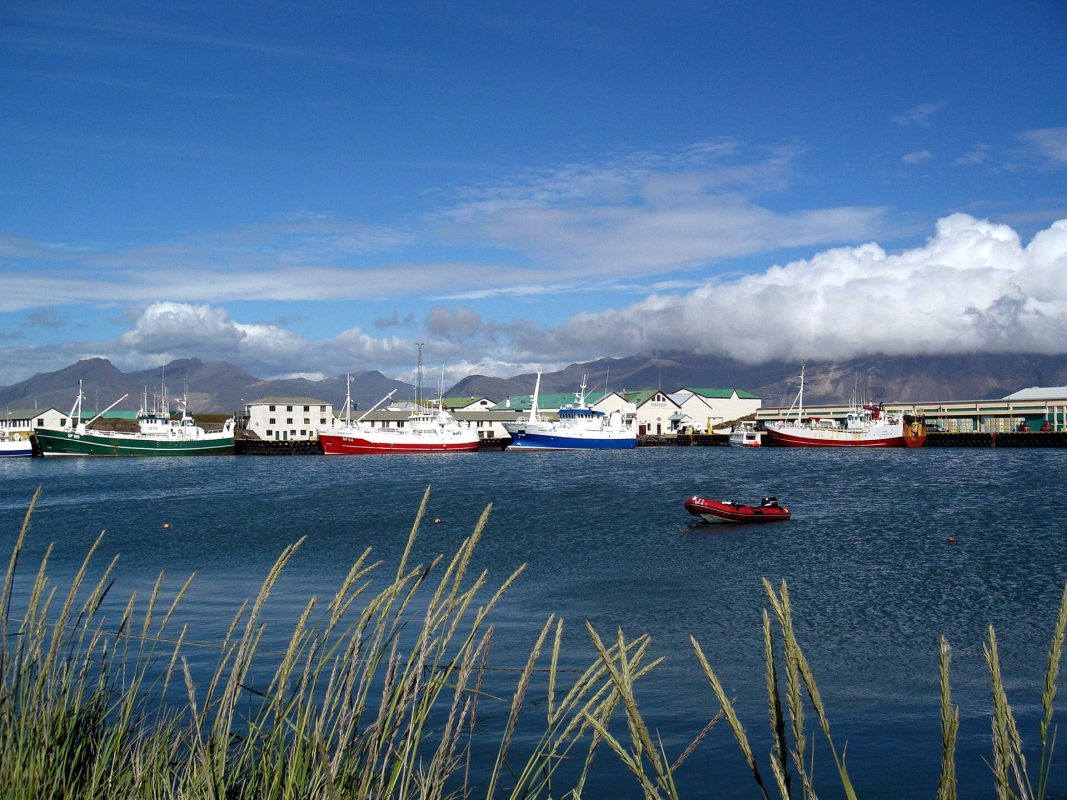
Weather overview
Хёбн sits on Iceland’s southeastern coast, where the climate is shaped by the North Atlantic. Winters here are mild compared to much of Iceland, with temperatures rarely dropping far below freezing. Summers remain cool, making Хёбн a place where layers are always useful.
From November to March, Хёбн sees frequent rain and occasional snow, though heavy snowfall is uncommon. The shoulder seasons—April to May and September to October—offer a mix of crisp air and changing skies, with fewer crowds than in summer. The brief June to August window brings the most stable weather, though even then, rain can arrive without warning.
Temperature
In Хёбн, the coldest months are January and February, when average temperatures hover around +0.5 °C to +1.7 °C, with lows occasionally dipping to -2.6 °C. By April, the air warms slightly to +3.8 °C, and by June, daytime highs reach +11.8 °C. The warmest period is July, with averages of +11.2 °C and highs near +13.6 °C.
Even in summer, nights in Хёбн stay chilly, often dropping to +6.9 °C in June or +8.4 °C in August. By September, temperatures begin to fall, and by November, the average returns to +3.5 °C. The ocean moderates extremes, so while winters are damp, they’re rarely severe.
| Month | Minimum | Maximum |
|---|---|---|
| January | -2.6 | 2.8 |
| February | -1 | 3.8 |
| March | -0.7 | 4.6 |
| April | 0.8 | 6.3 |
| May | 4.4 | 9.5 |
| June | 6.9 | 11.8 |
| July | 8.8 | 13.6 |
| August | 8.4 | 13.2 |
| September | 5.8 | 10.6 |
| October | 2.8 | 7.7 |
| November | 1.3 | 5.7 |
| December | -3.2 | 1.8 |
Precipitation
Хёбн is one of Iceland’s wetter towns, with rain or drizzle possible in any month. The wettest period runs from October to February, when monthly rainfall often exceeds 170 mm. February is the peak, with 218.9 mm on average, while July and August are drier, with around 93–96 mm.
Snow is most likely in December and January, though it rarely accumulates for long. Even in the drier months, rain can arrive suddenly, so waterproof gear is essential year-round. The May to July stretch offers the best chance of extended dry spells, though even then, showers are common.
| Month | Precipitation |
|---|---|
| January | 178 |
| February | 218.9 |
| March | 213 |
| April | 150.2 |
| May | 110.7 |
| June | 135.4 |
| July | 93.2 |
| August | 96.5 |
| September | 200 |
| October | 193.5 |
| November | 213.8 |
| December | 93.2 |
What to pack
For a trip to Хёбн in winter, pack warm layers, a waterproof jacket, and sturdy footwear for rain or slush. Gloves and a hat are useful, but heavy winter gear is often unnecessary—temperatures rarely drop below -3 °C. A windproof layer helps against coastal gusts.
In summer, lightweight wool or fleece works well for cool evenings, while a waterproof shell is still a must. Even in July, temperatures may not rise above +13 °C, so shorts are rarely practical. For spring or autumn, bring a mix of medium-weight layers and a reliable raincoat—sunshine is never guaranteed.
| Month | Wind speed |
|---|---|
| January | 7.6 |
| February | 7.1 |
| March | 6.9 |
| April | 5.5 |
| May | 5.8 |
| June | 5.4 |
| July | 4.4 |
| August | 4.1 |
| September | 5.4 |
| October | 6.1 |
| November | 7.2 |
| December | 6.8 |

