Hanga Roa
Chile · 6 places
Photo: Pavel Špindler, CC BY 3.0
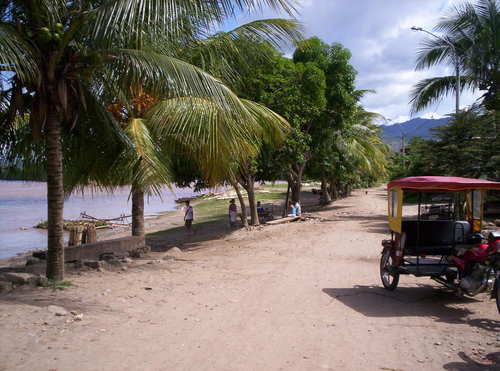
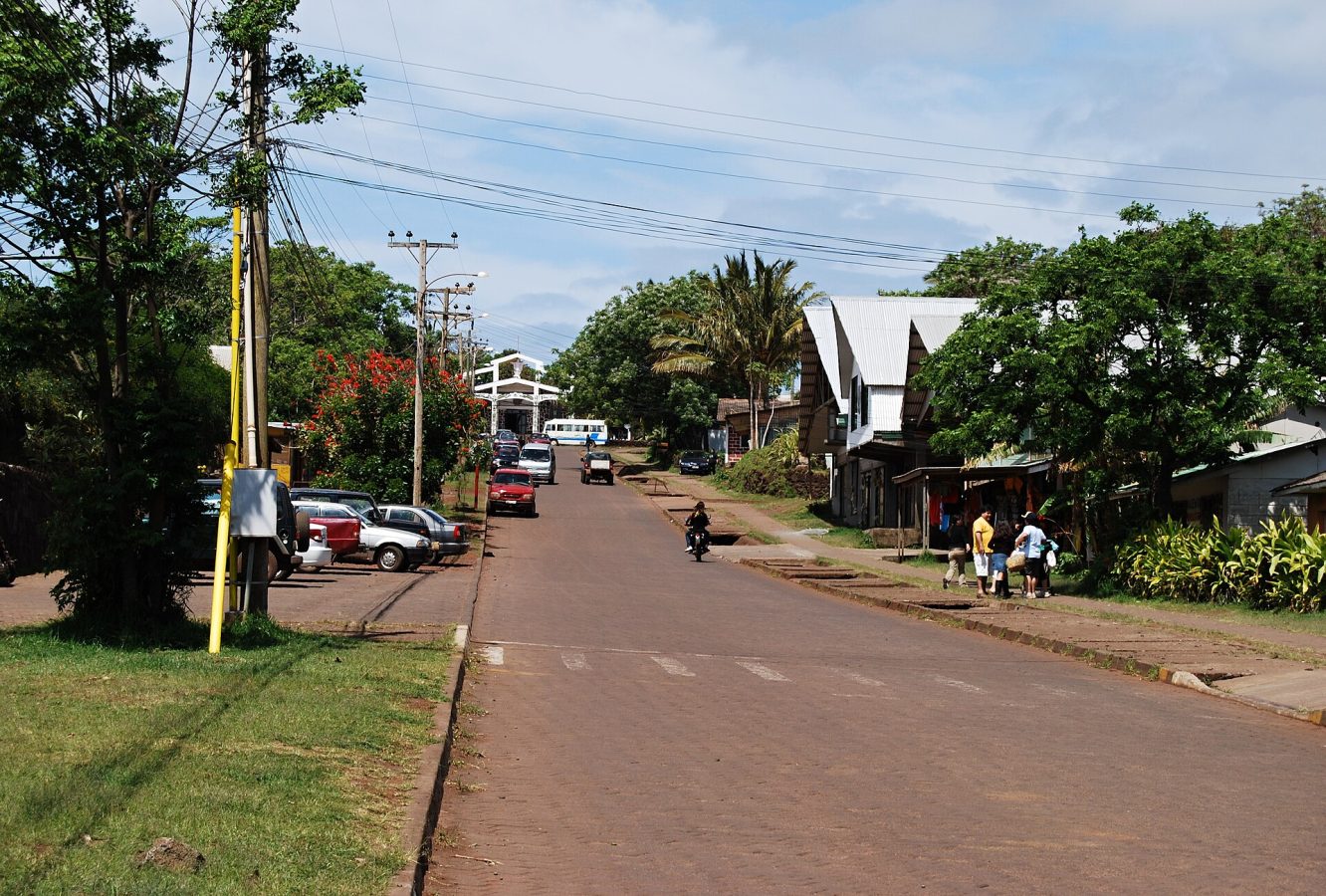
Hanga Roa is the only town on Easter Island, a speck of human life adrift in the vast Pacific. With around seven thousand residents, it feels like both the center of the world and its farthest edge. The town clings to the coastline, where low hills roll gently toward the ocean, their reddish earth stark against the endless blue of the waves. The streets are quiet, lined with modest houses and dusty roads that carry the scent of salt and seaweed on the wind.
Life here moves to the rhythm of the ocean and the seasons. Mornings begin with fishermen returning to the harbor, their boats heavy with the day’s catch. Locals gather at the market near the water, where stalls overflow with fresh tuna, spiny lobsters, and tropical fruit. Handmade souvenirs—carvings, woven baskets, and shell jewelry—hint at the island’s deep cultural roots. By evening, the town settles into stillness, the only sounds the crash of waves and the occasional murmur of voices drifting from a café or a porch.
At the heart of Hanga Roa stands a small white church, its doors open on Sundays for a congregation that blends Rapa Nui traditions with Catholic faith. Nearby, a handful of restaurants serve simple but flavorful meals—grilled fish, sweet potato, and dishes infused with local herbs. The town itself is unassuming, with no grand hotels or bustling nightlife, just a few guesthouses and family-run lodgings where visitors can stay. What it lacks in luxury, it makes up for in raw, unfiltered beauty: the ocean is always in sight, the stars at night are impossibly bright, and the air carries the weight of something ancient.
From Hanga Roa, the island’s mysteries unfold. The famous moai statues, those silent sentinels of stone, are scattered across the landscape, their origins still debated by historians. The closest sites are just a short journey away—Rano Raraku, the volcanic quarry where the statues were carved, and Ahu Tongariki, where fifteen moai stand in a row, their backs to the sea. Visitors can explore on foot, by bike, or on horseback, or join a guided tour led by a local who can share the stories passed down through generations. The island’s history is written in its landscapes, from the ceremonial platforms of Orongo to the hidden caves where the first settlers are said to have lived.
Hanga Roa is a place where worlds collide. Descendants of the Rapa Nui people live alongside Chileans from the mainland and travelers from every corner of the globe. The island’s small museum holds artifacts from its pre-Columbian past, while on the outskirts, the cave of Ana Kena is said to be where the first Polynesian voyagers made their home. There are no shopping malls or nightclubs here, no white-sand beaches or luxury resorts. Instead, there’s the quiet hum of daily life, the slow pace of a community that has learned to exist in harmony with its isolation.
What makes Hanga Roa special is its refusal to perform. It doesn’t cater to tourists or pretend to be something it’s not. The town simply is—unpolished, unhurried, and deeply real. To visit is to step into a different kind of time, one where the past feels as present as the ocean breeze. Easter Island isn’t just a dot on a map; it’s a place where the earth’s mysteries are still alive, waiting to be discovered.
Eat & Drink
0 placesNothing in this category yet — the catalogue is still growing.
All placesPlaces on the map
Marker colour follows the categoryClimate and weather
Detailed weather: Hanga Roa- Average temperature
- 21 °C
- Precipitation per year
- 788 mm
- Sunshine hours per day
- 5.3 h
Average air temperature
°C
23
24
23
22
21
19
18
18
18
19
21
22
Jan
Feb
Mar
Apr
May
Jun
Jul
Aug
Sep
Oct
Nov
Dec