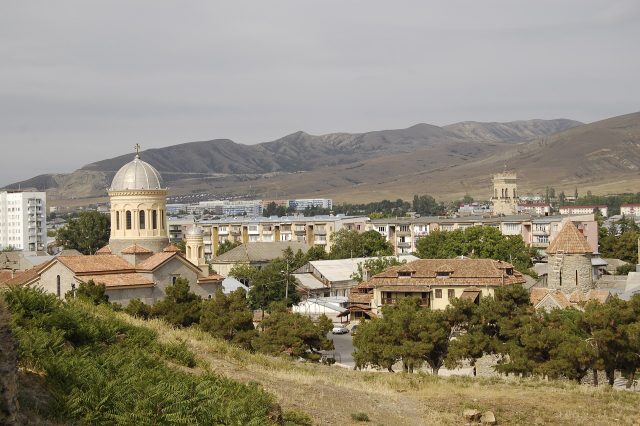
Haffa
Syria · 8 places
Photo: JYB Devot, CC BY-SA 4.0
Haffa is a quiet town nestled in the folds of Syria’s Ansariya Mountains, where the past lingers in the air like the scent of baking bread and wild thyme. The streets wind between low stone houses, their wooden balconies sagging slightly with age, as if leaning in to share a secret. There’s no rush here, no hum of traffic or neon glow—just the slow, steady rhythm of a place that has learned to move with the seasons rather than against them. On clear days, the Mediterranean shimmers in the distance, a blue promise just beyond the olive groves and pine forests that cloak the hills.
History has passed through Haffa like a traveler pausing for water, leaving behind only faint traces. The town was never a capital or a battlefield, just a waypoint for merchants, pilgrims, and the occasional army. What remains are the quiet markers of time: a crumbling caravanserai where traders once rested, a mosque with a minaret worn smooth by centuries of wind, and the old souk, its arched ceilings sheltering stalls that still sell spices, dried figs, and handwoven baskets. The locals will point out the ancient wells, their stone lips worn by generations of hands, or the public fountains where women once gathered to wash clothes and exchange news. These places aren’t grand, but they feel lived-in, as if the past isn’t something to be preserved behind glass but something that still breathes in the present.
Life here unfolds at its own pace. Mornings begin with the call to prayer drifting over the rooftops, followed by the clatter of copper cezves as coffee is brewed strong and dark. The market stirs to life slowly, with vendors arranging pyramids of pomegranates, strings of garlic, and wheels of salty white cheese made from sheep’s milk. By midday, the streets grow quiet again as people retreat indoors to escape the heat, but the town doesn’t sleep—it simply waits. Evenings belong to the old men playing backgammon in the shade of a plane tree, to the women sitting on doorsteps, shelling almonds or stitching embroidery, and to the children darting between the houses, their laughter echoing off the stone walls. There’s no need to hurry. Tea is sipped slowly, conversations meander, and the day stretches out like the shadows of the mountains.
Haffa isn’t a place for those seeking grand monuments or bustling nightlife. It’s for travelers who want to step off the map for a while, to wander without a plan and let the town reveal itself in small, unexpected ways. You might stumble upon a courtyard where figs dry in the sun, or a hidden staircase leading to a viewpoint where the whole valley unfolds below. The real draw isn’t what you see but how you feel—like you’ve slipped into a rhythm older than memory, where time isn’t measured in hours but in the changing light, the ripening of fruit, the slow turning of the seasons.
Beyond the town, the landscape opens up into something wilder. Footpaths wind through forests of oak and pine, leading to abandoned villages where stone houses stand empty, their roofs long collapsed. In spring, the hills are carpeted with wildflowers; in autumn, the air is thick with the scent of damp earth and woodsmoke. Locals will tell you where to find the best honey, harvested from hives tucked into the cliffs, or which trails lead to hidden springs. In winter, snow sometimes dusts the rooftops, turning Haffa into a place out of a storybook. But even then, life goes on as it always has—unhurried, unchanging, and quietly defiant of the world beyond the mountains.
See & Do
8 places
Places on the map
Marker colour follows the categoryClimate and weather
Detailed weather: Haffa- Average temperature
- 21 °C
- Precipitation per year
- 1064 mm
Average air temperature
°C
13
13
16
19
22
25
28
28
26
23
19
14
Jan
Feb
Mar
Apr
May
Jun
Jul
Aug
Sep
Oct
Nov
Dec