Vyborg
Russia · 12 places
Photo: Wikimedia Commons, Pixabay Content License
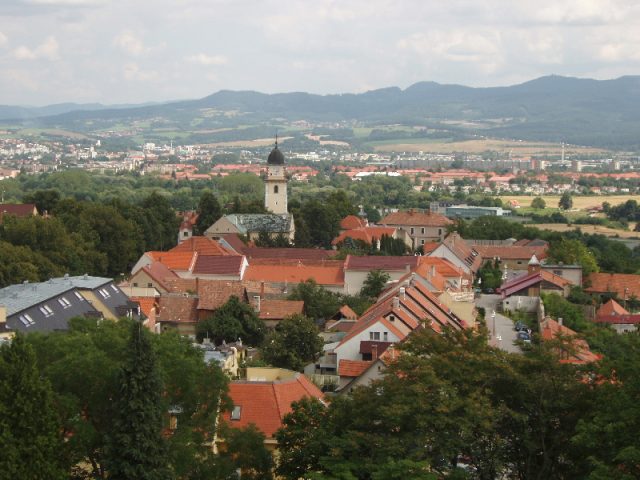
Vyborg sits where the Baltic Sea meets the northern forests, a quiet town shaped by centuries of shifting borders and cultures. The air carries the scent of saltwater and pine, and the streets wind past layers of history—medieval towers stand beside grand imperial estates, while Scandinavian-style houses with steep roofs share the skyline with Soviet-era apartment blocks. There’s no rush here, no hum of a metropolis. Instead, the pace slows to match the rhythm of the waves lapping against the shore, inviting you to wander without purpose, discovering carved window frames, wrought-iron lampposts, or a hidden courtyard where time seems to have paused.
At the heart of the town rises the fortress, its stone walls weathered by centuries of wind and war. Built by the Swedes in the twelfth century to guard trade routes, it changed hands countless times—Russian, Finnish, Swedish—each ruler leaving their mark on its ramparts. Today, the fortress is less a relic than a living part of the city. You can climb its towers for a view of the gulf, where the water shimmers under the sun, or explore the museums tucked within its walls. In autumn, the fortress is wrapped in a golden haze, the air thick with the smell of damp earth and sea salt. Even in silence, it tells stories of sieges and treaties, of merchants and soldiers who once stood where you stand now.
Vyborg’s past as a Finnish city lingers in the details. Before 1940, it was Viipuri, a thriving port with its own character, and traces of that era remain in the architecture, the street names, even the way coffee is served in a corner café. Some buildings still bear Finnish inscriptions, their letters faded but legible, and locals might share stories of a time when the town was part of a different country. The border is just a short drive away, and the influence of Finland is still felt in the quiet efficiency of the bakeries, the design of the parks, or the way the light falls on the cobblestones in the evening.
The surrounding landscape is as much a part of Vyborg’s identity as its history. Forests stretch in every direction, broken only by lakes and rocky outcrops that glow amber in the autumn light. In summer, the woods are alive with the chatter of squirrels and the rustle of leaves underfoot; in winter, they transform into a silent, snow-dusted world where the only sound is the crunch of boots on frozen paths. The gulf offers its own kind of beauty—long, empty beaches where the wind carries the cry of gulls, and cycling trails that follow the shoreline, winding past fishing villages and abandoned piers. Nearby, the Mon Repos Park unfolds like a scene from a nineteenth-century painting, with its manicured lawns, neoclassical pavilions, and hidden grottos where the water reflects the sky.
Life in Vyborg moves at its own unhurried pace. There’s no grand spectacle here, no crowds of tourists snapping photos in front of landmarks. Instead, the town reveals itself slowly—over a cup of tea in a café with lace curtains, during a stroll along the waterfront as the sun sets, or in the quiet of a library where the scent of old books mingles with the salt air drifting through an open window. It’s a place where history isn’t just preserved in museums but woven into the fabric of everyday life, where the past and present coexist without fanfare. And if you listen closely, the wind might just carry a story or two.
See & Do
All of them


Places on the map
Marker colour follows the categoryClimate and weather
Detailed weather: Vyborg- Average temperature
- 6 °C
- Precipitation per year
- 749 mm
Average air temperature
°C
-6
-4
-1
4
11
16
19
17
12
6
1
-3
Jan
Feb
Mar
Apr
May
Jun
Jul
Aug
Sep
Oct
Nov
Dec