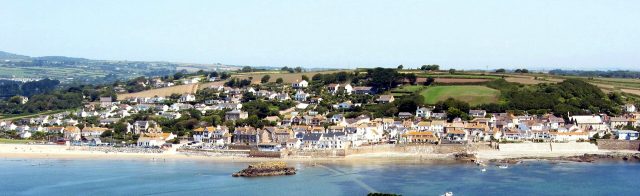
Vidin
Bulgaria · 8 places
Photo: Lilia Borissova, CC SA 1.0
VidinVidin clings to Bulgaria’s northwestern edge, where the Danube bends around streets that have seen empires rise and fall. The river here is a border and a bridge—Romania lies just across the water, Serbia a little farther upstream. Unlike Bulgaria’s tourist-packed Black Sea coast or the restored grandeur of Plovdiv, Vidin feels like a place that time forgot. The streets are quiet enough to walk for hours without meeting another soul. The only sounds are the scrape of a bicycle pedal or the low chug of a riverboat engine.
The city has been many things: a medieval capital, an Ottoman stronghold, a cradle of Bulgaria’s national revival. Each era left traces—not just in Baba Vida fortress, which has stood since the 10th century, but in the way the city moves. Serbian phrases drift through the air, Romanian produce fills market stalls, and the occasional Habsburg-style building hints at a time when Vidin was part of a larger world. The Danube here isn’t just water; it’s a line that has both separated and united people for centuries.
The old town is a tangle of narrow streets lined with houses whose red-tiled roofs sag with age. The main square is quiet, home to locals sipping coffee in the shadow of the old synagogue, one of the Balkans’ largest. Nearby, a mosque’s minaret rises above the rooftops, its presence as natural as the domes of the Orthodox cathedral, built after Bulgaria regained independence. Vidin doesn’t try to explain its history—it just lets the layers sit side by side, as they always have.
This isn’t a city that tries to impress. There are no slick museums or hip cafes, no carefully staged experiences. Instead, there’s the rhythm of daily life: fishermen mending nets at dawn, grandmothers selling homemade cheese and pickles at the market, children playing soccer against the fortress walls. Summer brings folk festivals and regattas on the Danube; winter wraps the city in silence, broken only by the foghorn of a passing barge. Vidin is Bulgaria without the polish, a place that lives for itself, not for visitors.
From here, you can cross into Romania via the Bridge of Friendship or follow the Danube upstream to Serbian towns. But many travelers stay longer than they planned. Maybe it’s because Vidin has a way of making time slow down. There’s no need to rush, no checklist to follow—just the river’s steady flow and the quiet realization that sometimes the best trips are the ones that let you stop. Sit on the embankment long enough, and you might start to feel the city’s pulse, slow and steady, like the water itself.
Stay
0 placesNothing in this category yet — the catalogue is still growing.
All placesPlaces on the map
Marker colour follows the categoryClimate and weather
Detailed weather: Vidin- Average temperature
- 13 °C
- Precipitation per year
- 562 mm
- Sunshine hours per day
- 6.2 h
Average air temperature
°C
1
4
7
13
17
22
24
24
18
12
7
3
Jan
Feb
Mar
Apr
May
Jun
Jul
Aug
Sep
Oct
Nov
Dec