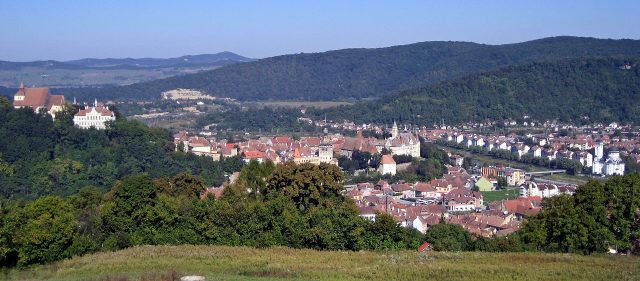
Valletta
Malta · 9 places
Photo: Mandyy88, CC BY-SA 4.0
Valletta feels like a place plucked from the pages of an old tale—one of knights, sailors, and sun-bleached stone. Perched on a rocky peninsula between two harbors, the city rises from the water in layers, its streets climbing upward as if reluctant to leave the sea behind. History lingers in every corner: the narrow lanes paved with honey-colored limestone, the towering bastions that once repelled invaders, the grand palaces where the Knights of Malta ruled. Yet for all its grandeur, Valletta is no open-air museum. It’s alive with the clatter of café chairs, the scent of fresh pastizzi drifting from bakeries, and the hum of conversations in Maltese, Italian, and English.
Founded in the 16th century by Jean Parisot de Valette, the Grand Master of the Order of St. John, the city was built in haste after the Great Siege of Malta. What emerged was one of Europe’s first planned capitals—a fortress-city designed not just for defense but for living. Architects of the time engineered a clever grid of streets to catch the sea breeze, along with an intricate water system to sustain its inhabitants. Today, the layers of history are visible everywhere: Renaissance facades stand beside Baroque churches, medieval fountains share space with modern art installations, and the past feels as present as the midday sun.
Walking through Valletta is like stepping through time. You might start at the City Gate, where merchants and diplomats once arrived, then pass the Grandmaster’s Palace—still home to Malta’s government—before reaching Republic Square, where a statue of Queen Victoria watches over the crowds. Nearby, St. John’s Co-Cathedral dominates the skyline, its unassuming exterior hiding a dazzling interior of marble, gold leaf, and Caravaggio’s masterpiece, *The Beheading of St. John the Baptist*. Climb to the upper bastions, and the view unfolds: yachts bob in the harbor, fishing boats drift toward the open sea, and the Three Cities across the water look like a child’s toy set against the blue.
For all its compact size, Valletta is full of contrasts. One moment, you’re sipping coffee in a quiet courtyard, listening to the distant chime of cathedral bells; the next, you’re swept into the chaos of the daily market, where vendors sell everything from aged goat cheese to antique coins. In summer, the city buzzes with visitors, but even at its busiest, there are hidden corners to escape to—the lower bastion terraces, where bougainvillea spills over stone walls, or a dimly lit church where the scent of incense lingers. As evening falls and the heat eases, locals reclaim the streets. Music spills from open doorways, children chase each other across squares, and old men play cards on benches, their laughter mingling with the sound of waves against the harbor walls.
Valletta doesn’t give up its secrets easily. There’s no metro, and cars are rare—many streets are too narrow for anything but footsteps. That’s part of the charm. You can wander for hours, stumbling upon a tiny ceramics shop tucked into an alley or a café serving the best fish soup on the island. If you’re lucky, you might find the places that don’t make it into guidebooks: a crumbling well with intricate carvings, a rooftop garden overgrown with wild herbs, or a workshop where craftsmen still build the traditional *luzzu* boats by hand. The city moves at its own pace, and the best way to know it is slowly, like rereading a favorite book—each visit revealing something new.
Stay
0 placesNothing in this category yet — the catalogue is still growing.
All placesPlaces on the map
Marker colour follows the categoryClimate and weather
Detailed weather: Valletta- Average temperature
- 20 °C
- Precipitation per year
- 442 mm
- Sunshine hours per day
- 8.1 h
Average air temperature
°C
13
13
15
17
20
25
28
28
25
22
18
15
Jan
Feb
Mar
Apr
May
Jun
Jul
Aug
Sep
Oct
Nov
Dec