Urbino
Italy · 7 places
Photo: Il conte di Luna, CC BY-SA 2.0
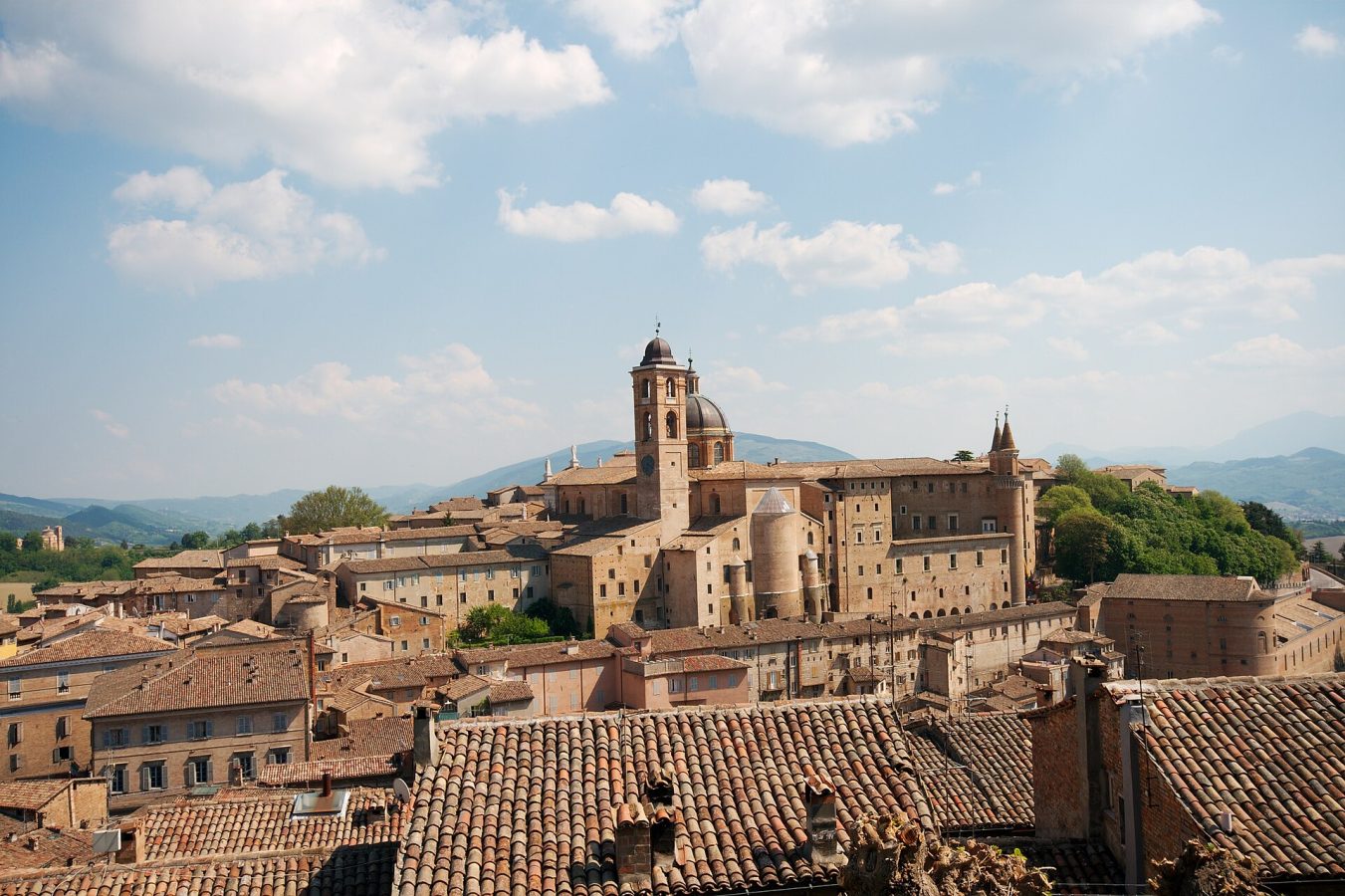
Perched on the rolling hills of Le Marche, Urbino feels like a place where time has settled into a slower, deeper rhythm. It doesn’t announce itself with grand monuments or tourist crowds, but rather unfolds quietly, revealing its layers to those who linger. The city’s medieval streets wind past Renaissance palaces, their stone facades softened by the golden light of late afternoon, while students from the local university add a touch of youthful energy to the quiet squares. From a distance, Urbino’s silhouette resembles a storybook fortress, its towers and rooftops rising above vineyards and olive groves. There’s no urgency here, no need to rush—just the steady pulse of history woven into the very fabric of the streets.
At the heart of Urbino stands the Palazzo Ducale, a masterpiece of Renaissance architecture commissioned by Federico da Montefeltro in the 15th century. Unlike the imposing castles of other Italian cities, this palace feels more like an intellectual sanctuary, where every arch and courtyard was designed with purpose. Inside, the halls are adorned with intricate frescoes and carved ceilings, while the Studiolo of Federico—a small, wood-paneled room—plays with perspective through its illusionistic inlays. It was here that the duke kept his books and treasures, and today, the space retains an air of quiet contemplation, as if the past is still lingering in the corners.
Urbino is also the birthplace of Raphael, one of the greatest painters of the Renaissance. Though he spent much of his life elsewhere, the city shaped his early vision. His childhood home, now a small museum, feels remarkably intimate, as if the artist might return at any moment. The rooms display copies of his early works, while the courtyard holds a grapevine said to have been planted during his lifetime. Locals speak of how the soft light and gentle landscapes of Urbino influenced his art, teaching him to capture grace and harmony in his compositions.
Beyond its history, Urbino remains a vibrant place, thanks in part to its university, founded in the 16th century. Students fill the narrow streets, their laughter spilling from cafés and piazzas, while the old funicular climbs to the upper town, offering sweeping views of the surrounding countryside. The food here is simple but unforgettable—handmade pasta with truffles, game meats slow-cooked in local wine, and pecorino cheese aged to perfection. The wines, too, carry the taste of the land, rich and earthy, much like the city itself.
Urbino doesn’t try to impress or entertain; it simply exists, unhurried and dignified. There are no tourist traps or guided routes—just the freedom to wander. You might stumble upon an elderly woman hanging laundry in a sunlit alley, or step into a tiny shop selling olive oil and dried herbs. In the evening, the city’s walls become the perfect place to watch the sun dip behind the hills, painting the sky in shades of amber and rose. Urbino doesn’t offer instant gratification, but it leaves you with something far more lasting—a sense of having touched a piece of Italy that feels timeless, as if the past and present have quietly merged.
Stay
0 placesNothing in this category yet — the catalogue is still growing.
All placesPlaces on the map
Marker colour follows the categoryClimate and weather
Detailed weather: Urbino- Average temperature
- 14 °C
- Precipitation per year
- 1047 mm
Average air temperature
°C
5
7
8
12
16
22
25
24
19
15
10
7
Jan
Feb
Mar
Apr
May
Jun
Jul
Aug
Sep
Oct
Nov
Dec


